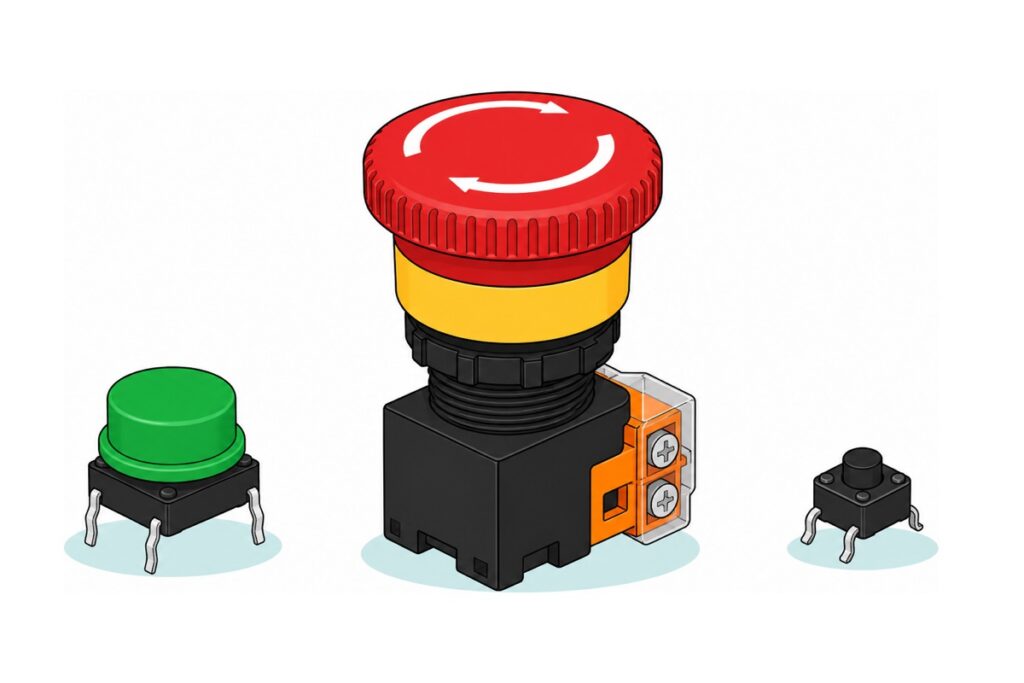
Momentary, latching or maintained; NO versus NC and why every emergency stop is wired NC; why a floating pin presses itself and how INPUT_PULLUP fixes it; which two legs of a 6×6 tactile switch to use; and a millis() debounce that does not block the rest of your sketch.
Author Archives: MakerHub Helper
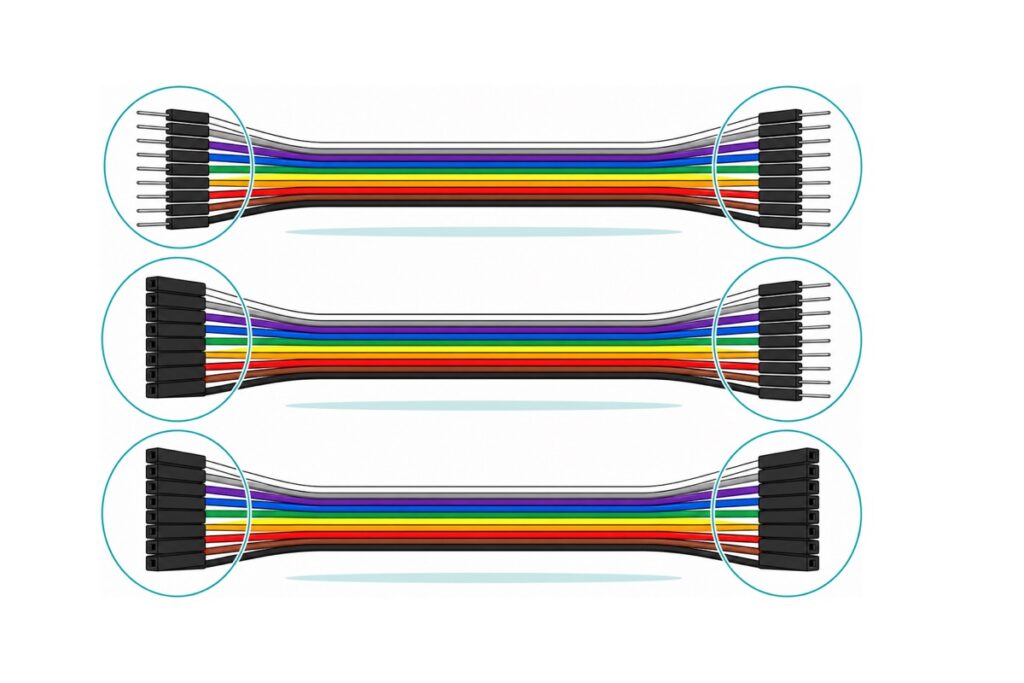
You never choose a jumper wire by preference — you read the two things you are joining and the gender falls out. The gender-chain rule, Dupont vs JST, and a job-to-SKU table.
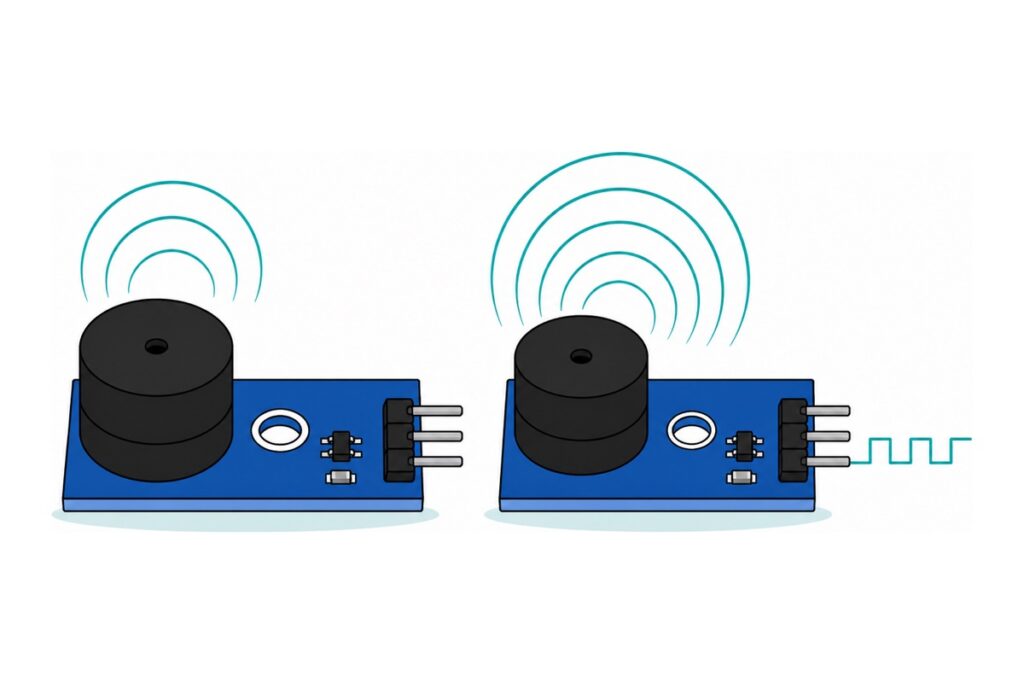
An active buzzer carries its own oscillator and holds one fixed note; a passive buzzer only makes the waveform you feed it. How to tell our lookalike modules apart, why both are silkscreened low-level trigger, how tone() melodies work, and a vibration alarm that only sounds when it should.
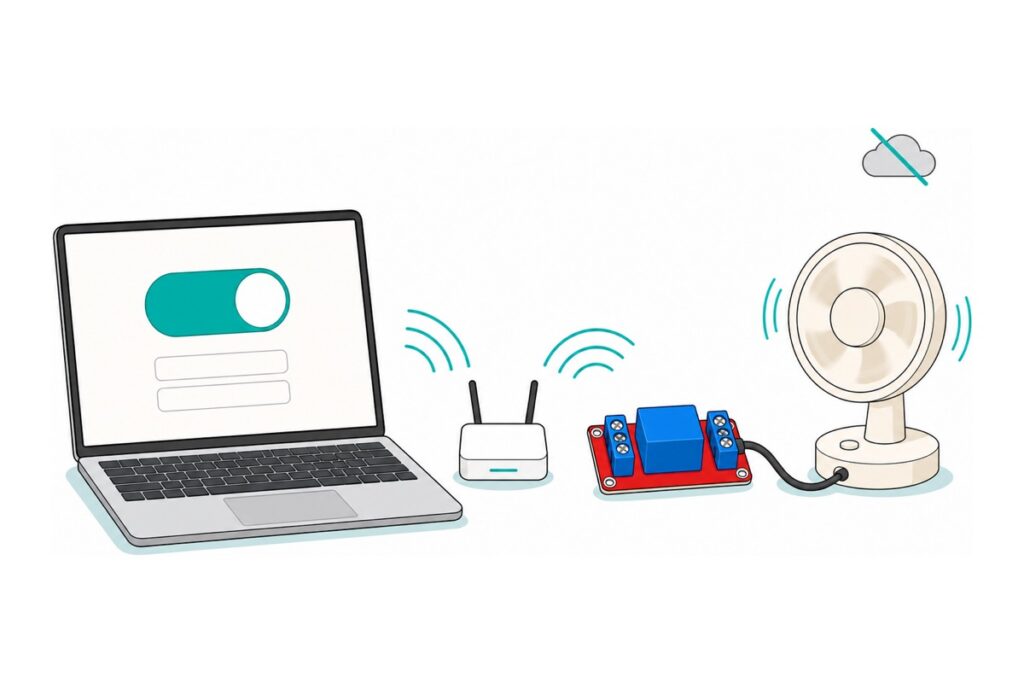
Flash one sketch and the ESP32 serves its own control page: open esp32.local or the board’s IP in any browser on your WiFi and two buttons switch a 5 V relay. No app, no account, no internet — with the full sketch, wiring table, boot-safe GPIO reasoning and an honest WebServer.h vs ESPAsyncWebServer call.
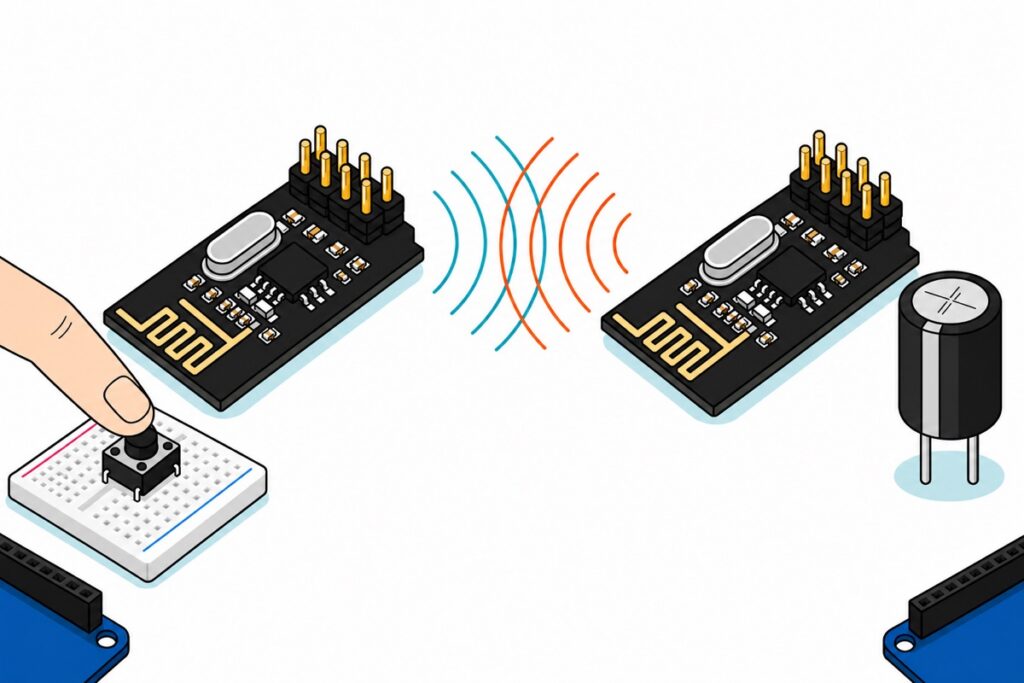
Two Arduinos, two nRF24L01 modules, one button and one capacitor. Working transmitter and receiver sketches, the full wiring table, and the arithmetic behind the 10–100 µF fix that turns a dead link into a reliable one.
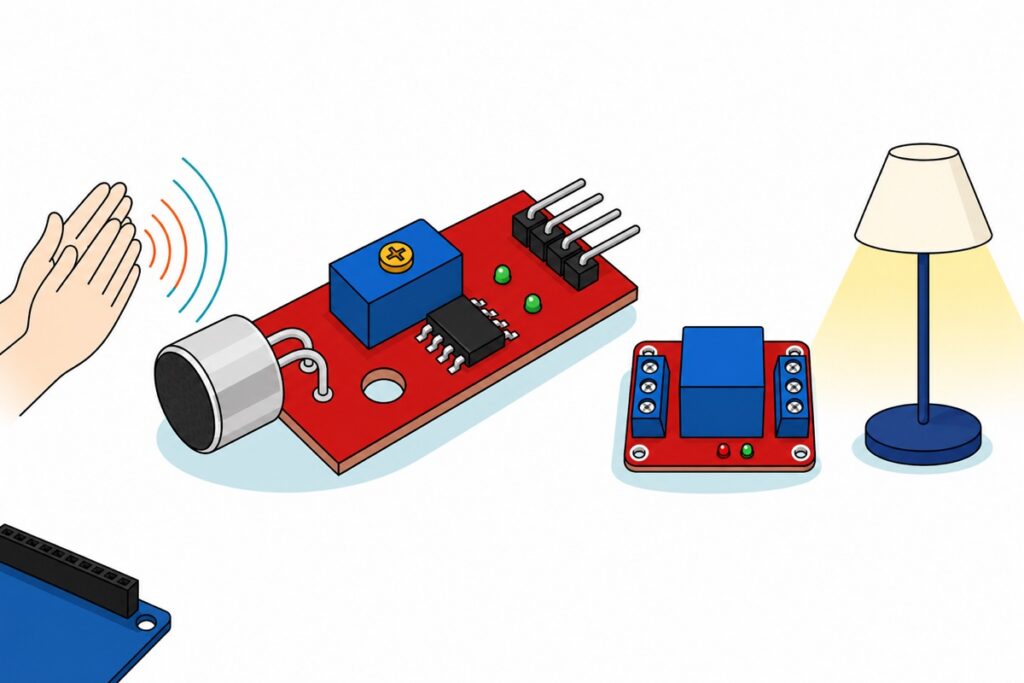
Read the KY-037’s analog pin instead of its trimmer-set digital one: measure the peak-to-peak swing in a 20 ms window, track the room’s noise floor, and let two claps 120–800 ms apart toggle a 5 V relay. Full Uno sketch, wiring table, and the mechanism behind why the usual build drifts.
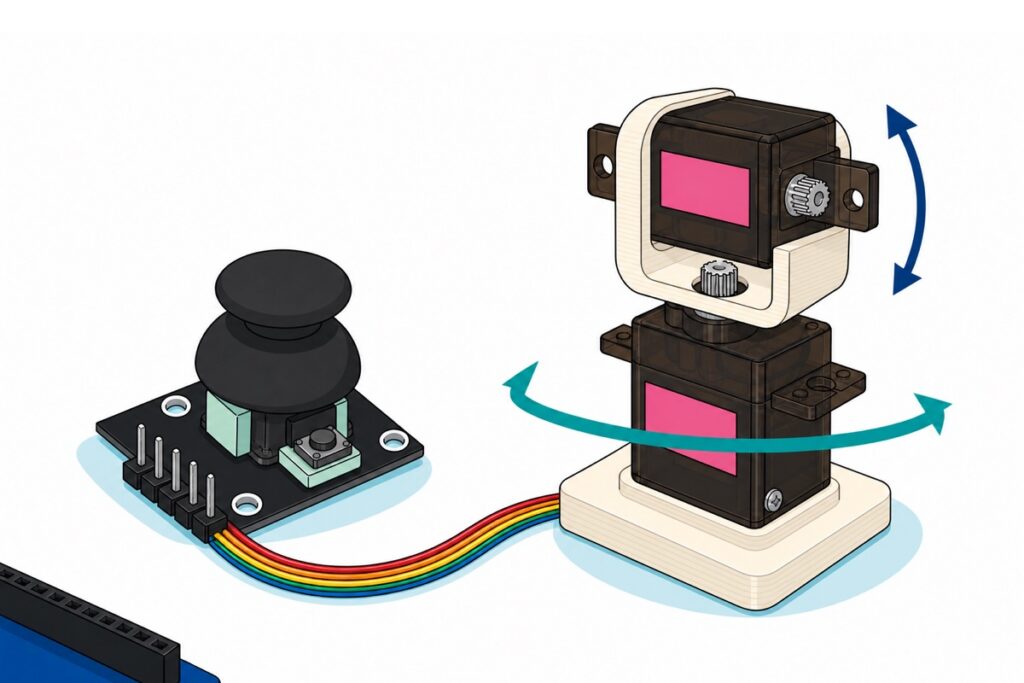
Two potentiometers and a button. How to read an analog joystick properly on an Arduino Uno, then drive two MG90S servos as a pan-tilt that stays where you point it.
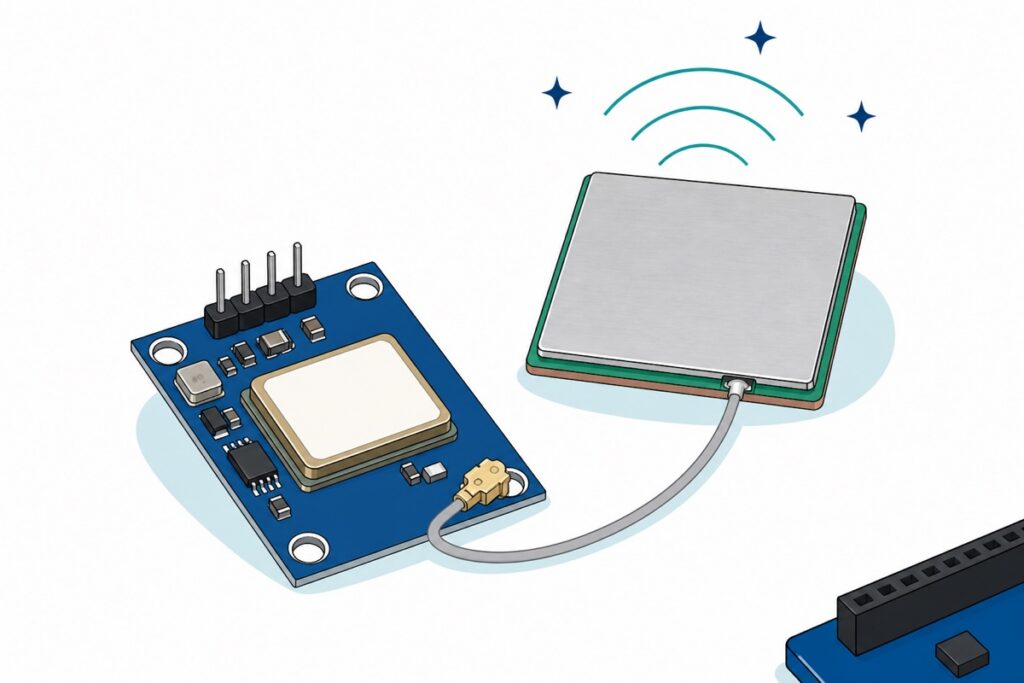
Three wires, TinyGPS++ and a clear view of the sky. Why a NEO-6M that never blinks indoors is working perfectly, and how to tell a wiring fault from a sky fault in two minutes.
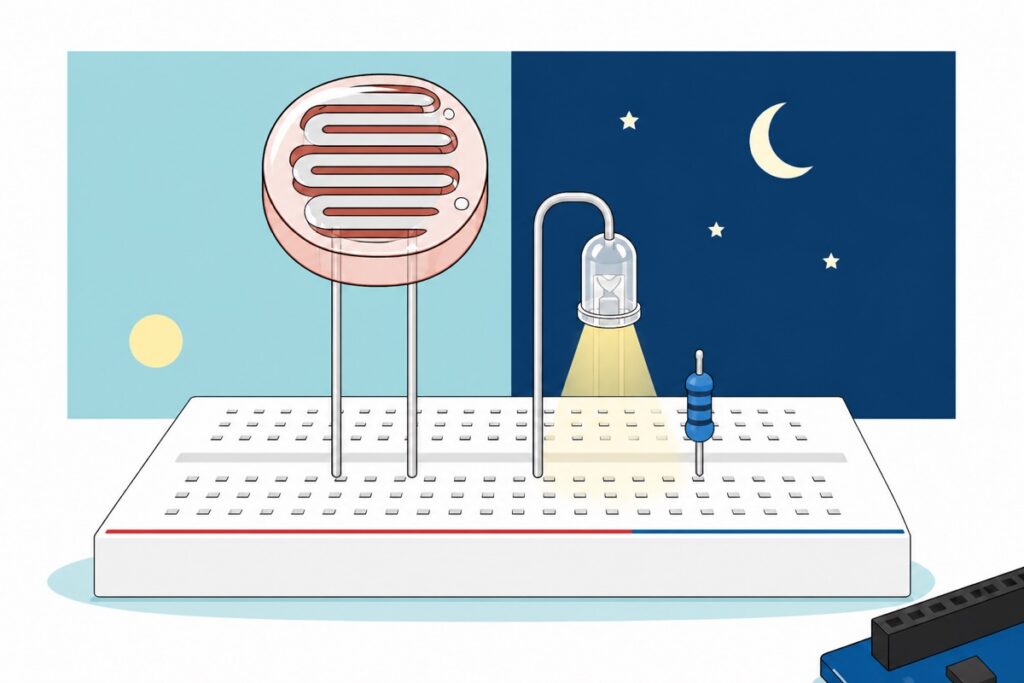
An LDR plus one fixed resistor makes a voltage divider on A0, and two thresholds in code keep a dusk light from flickering. Wiring, calibration and a 12V relay upgrade.
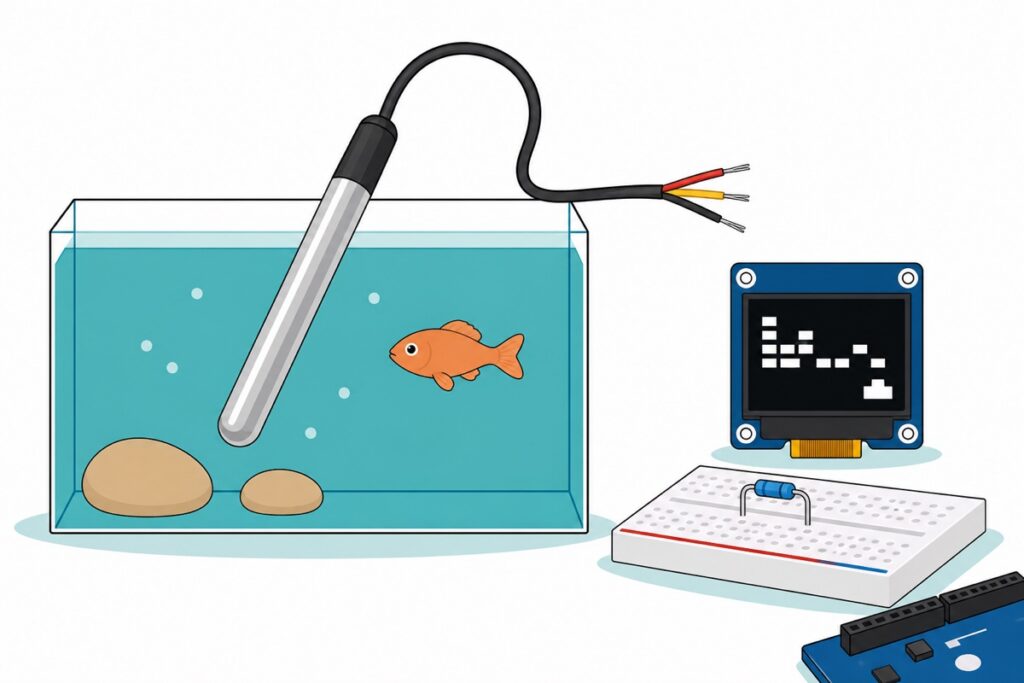
A waterproof DS18B20 reads water temperature over one Arduino pin — red to 5 V, black to GND, yellow to D2, and one mandatory 4.7 kΩ pull-up. Full OLED sketch, several probes on one pin, and what −127 and 85.00 are telling you.