24
Aug
Aug
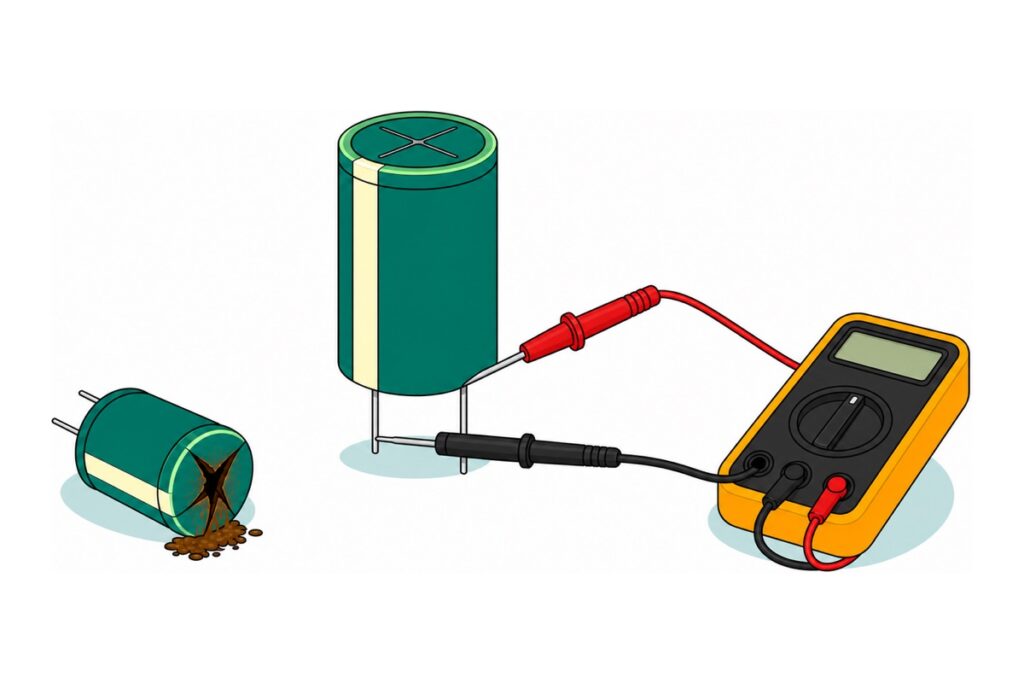
Your multimeter has no farad range, and it can still tell you whether a capacitor is good, open, shorted or leaky. The charge-and-discharge check, the safe way to drain one first, and the bulge and leak signs that need no test at all.


Your multimeter has no farad range, and it can still tell you whether a capacitor is good, open, shorted or leaky. The charge-and-discharge check, the safe way to drain one first, and the bulge and leak signs that need no test at all.
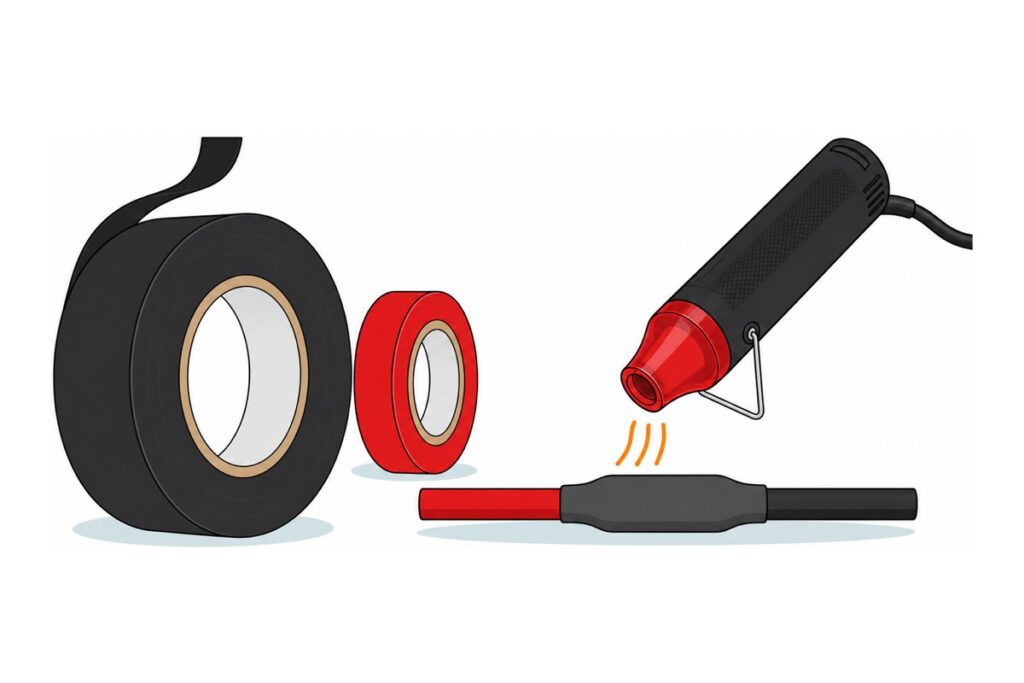
PVC electrical insulation tape, heat shrink tubing and solder sleeves fail in completely different ways. What each one survives, why tape unwinds in a hot enclosure, and the two-diameter arithmetic for sizing shrink tubing.
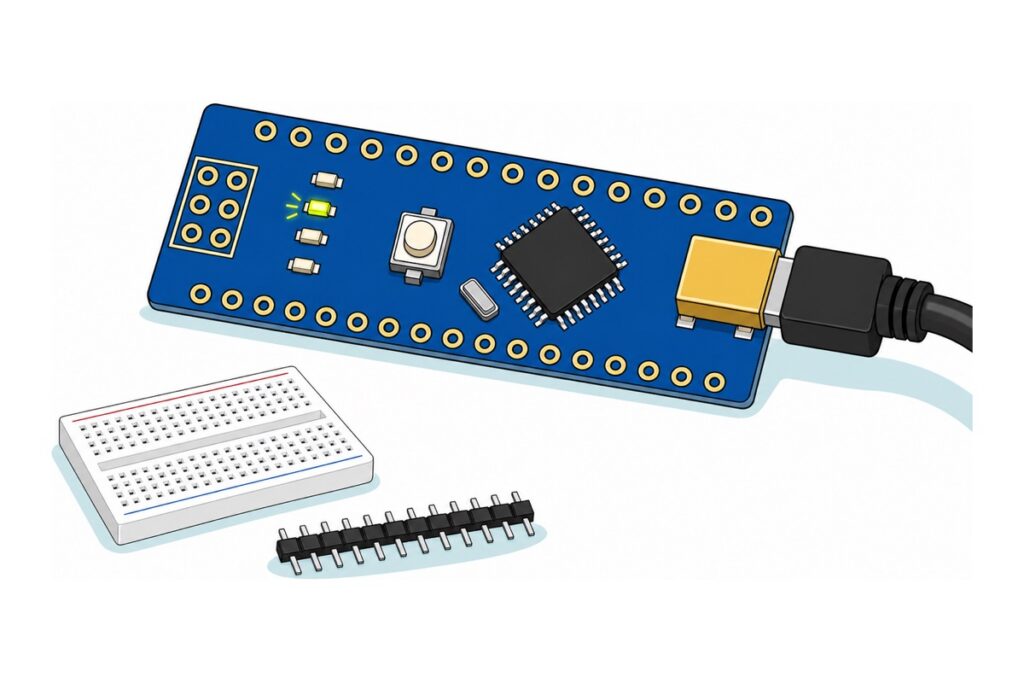
Three steps get an Arduino Nano V3 blinking: install the CH340 driver, choose Arduino Nano under Tools > Board, and set Tools > Processor to ATmega328P (Old Bootloader) — the menu that decides whether your first upload works. No soldering required, plus what cable the Mini-USB socket needs and when the Nano beats an Uno.
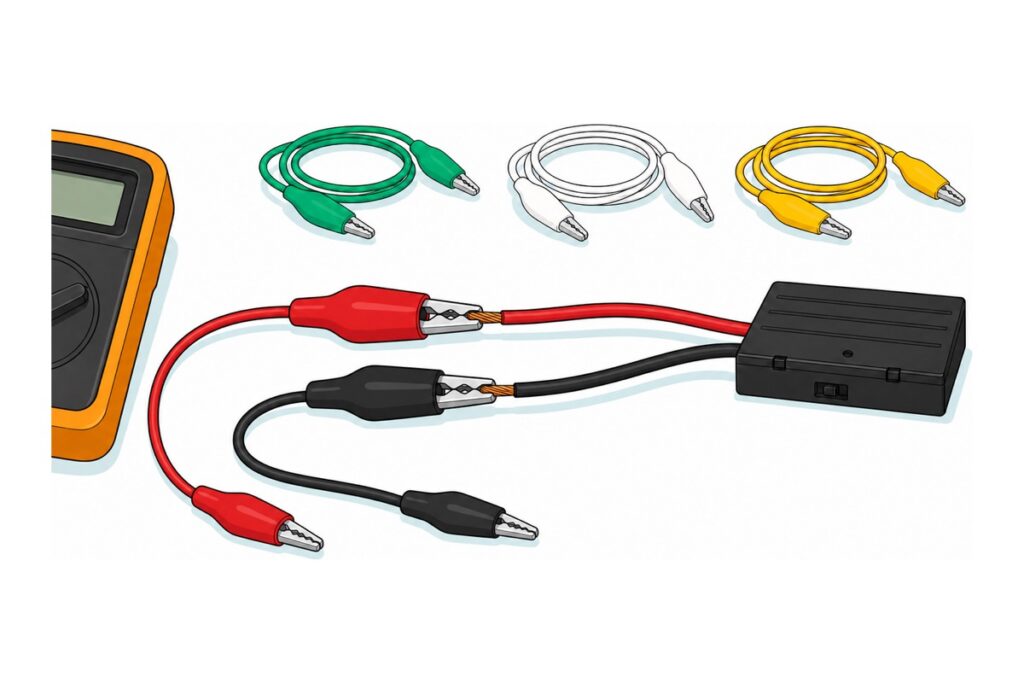
When a crocodile clip lead beats a dupont jumper — bare battery fly leads, stripped sensor wires, probe shafts — how the spring jaw actually grips, why it can never enter a breadboard tie point, and the hands-free discipline for taking a live low-voltage reading.
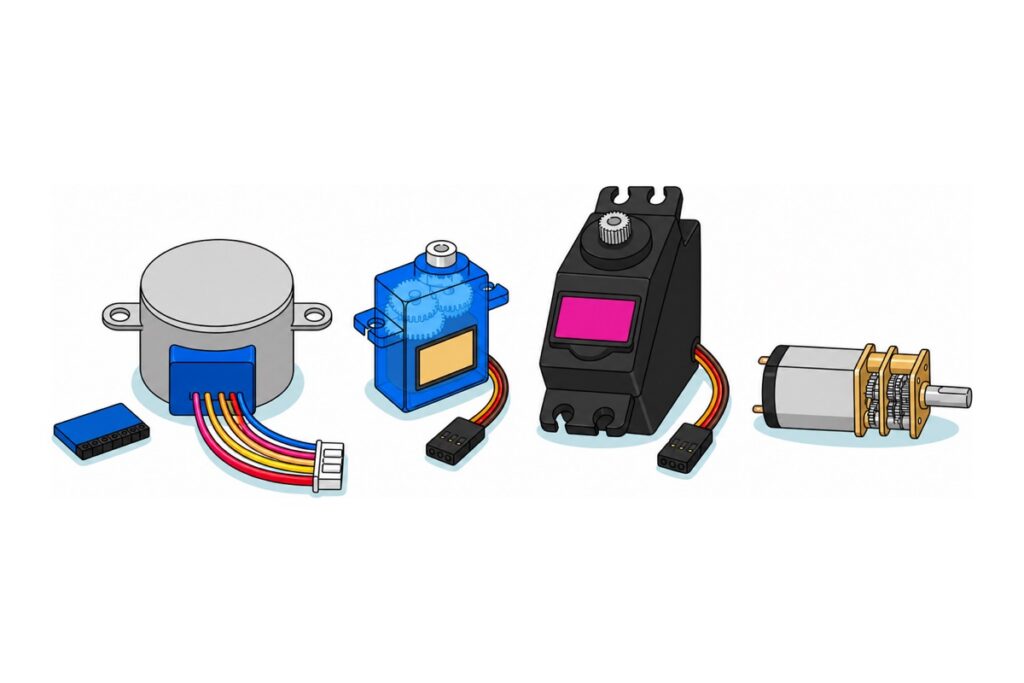
Servo, stepper or plain DC gear motor? The decision comes down to what each one does when you push against its shaft — and to the pin-and-amp arithmetic that decides how many an Arduino Uno can really drive.
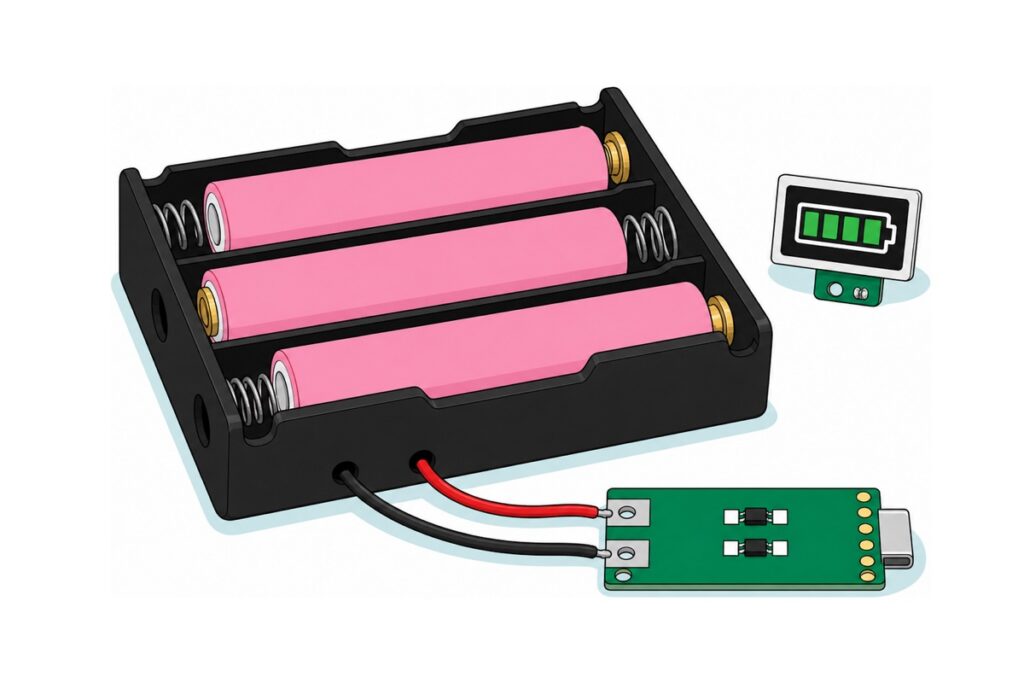
Multi-slot 18650 holders wire their slots in series, so three cells make an 11.1 V pack (12.6 V full) at one cell’s capacity — and a TP4056 can never charge it. A complete 3S build with a USB-C charging board and a four-bar capacity indicator, with the arithmetic behind every number.
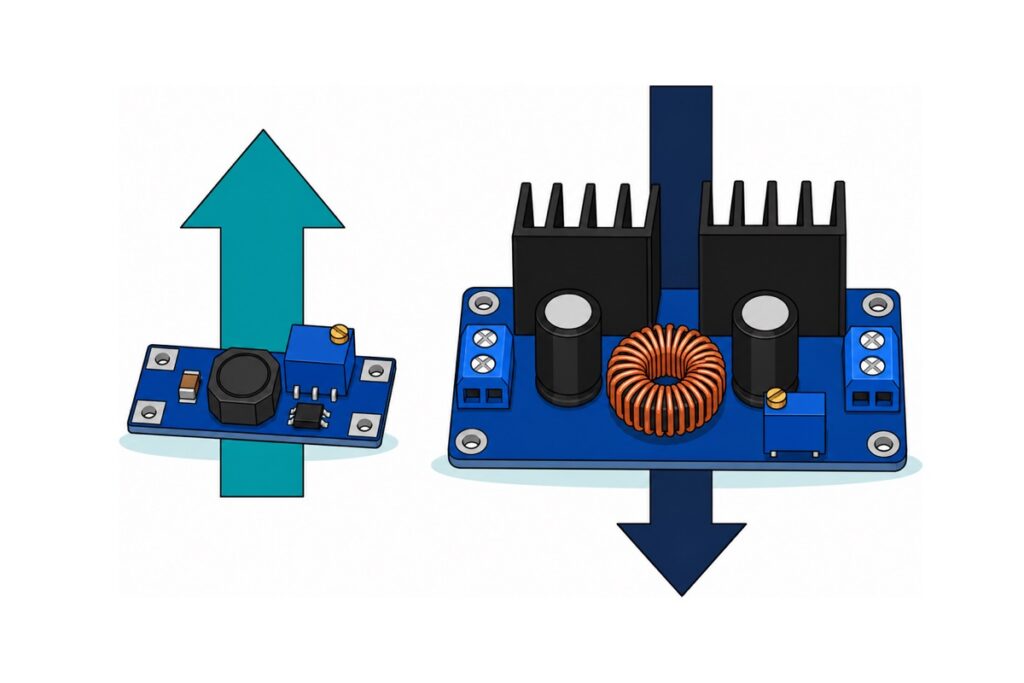
Compare your source voltage with the voltage your load needs: source higher means a buck (LM2596, XL4016), source lower means a boost (MT3608, XL6009). Includes the power-balance arithmetic behind every converter’s current rating, and why a linear regulator or a resistor divider is not a substitute.
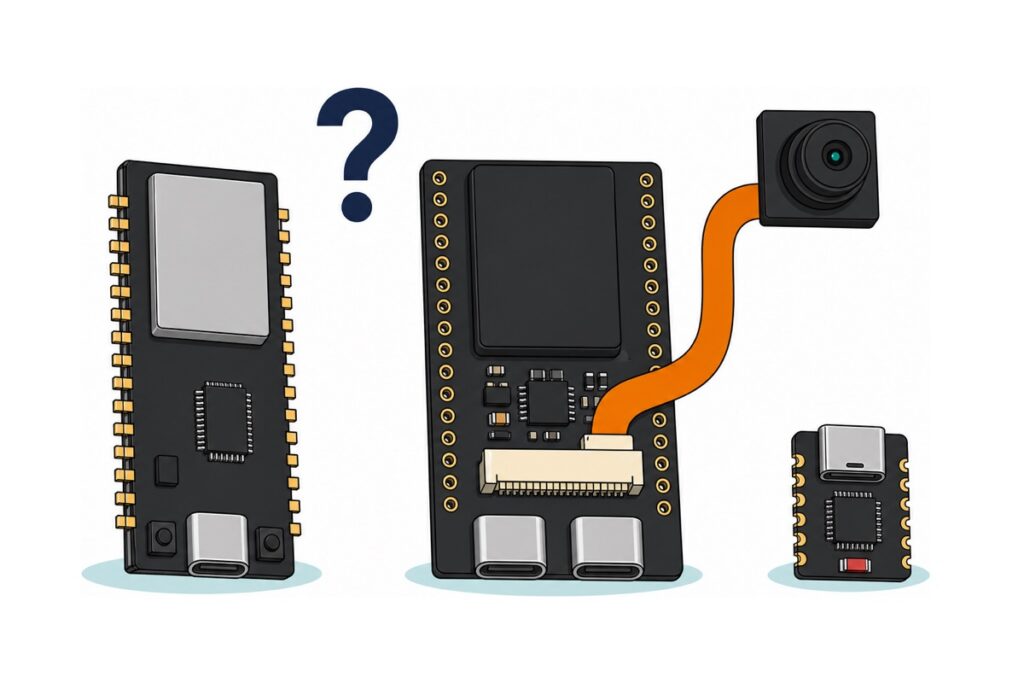
Five listings all say “ESP32” and differ in ways the shelf label never shows. This guide settles the four axes that decide which one you should buy: the USB chip (CH340 vs CP2102, and which board is Type-C), the header length (30 vs 38 pins, and how many of those eight extras are actually usable), the chip generation (classic LX6, S3 with PSRAM, C3 RISC-V), and the entry you pick in the Arduino IDE board list.
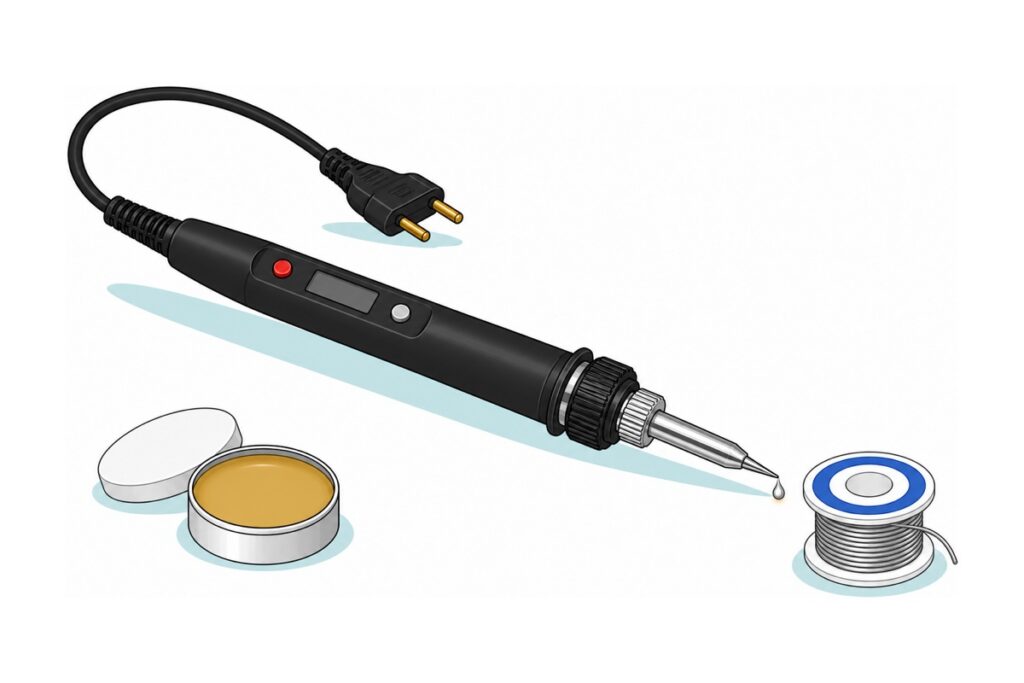
Which soldering iron to buy first, what flux actually does to the metal, and the five reasons a joint refuses to take — with the fix for each.
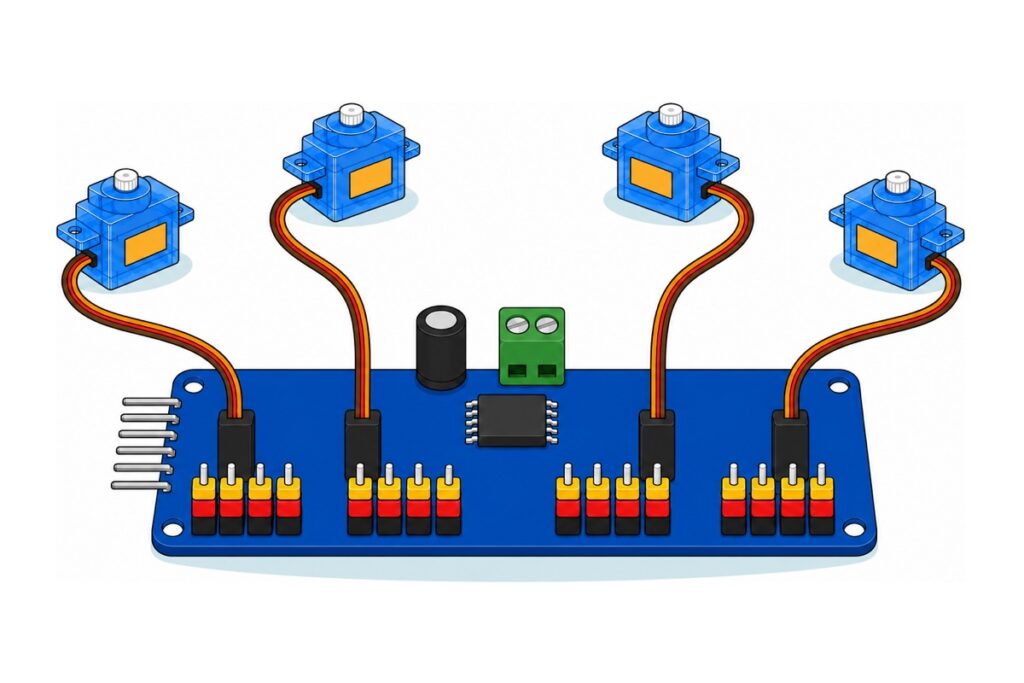
Servos brown out an Arduino because they pull amps from a rail rated in milliamps. The PCA9685 gives them their own power rail, two I2C wires, and 16 channels you calibrate per servo.
Log in to your MakerHub account