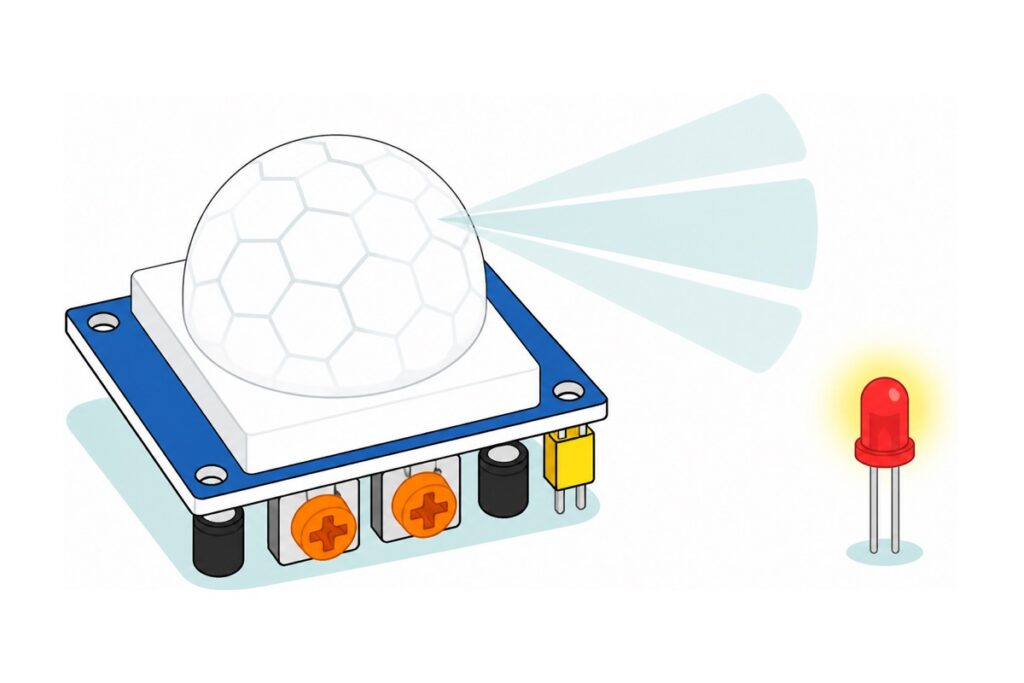
A PIR sensor detects change in infrared, not presence — which explains both the light that never switches off and the sensor that forgets you when you stand still. Wiring, the two orange trimmers, the H/L jumper, a non-blocking sketch and the three real causes of false triggers.
Author Archives: MakerHub Helper
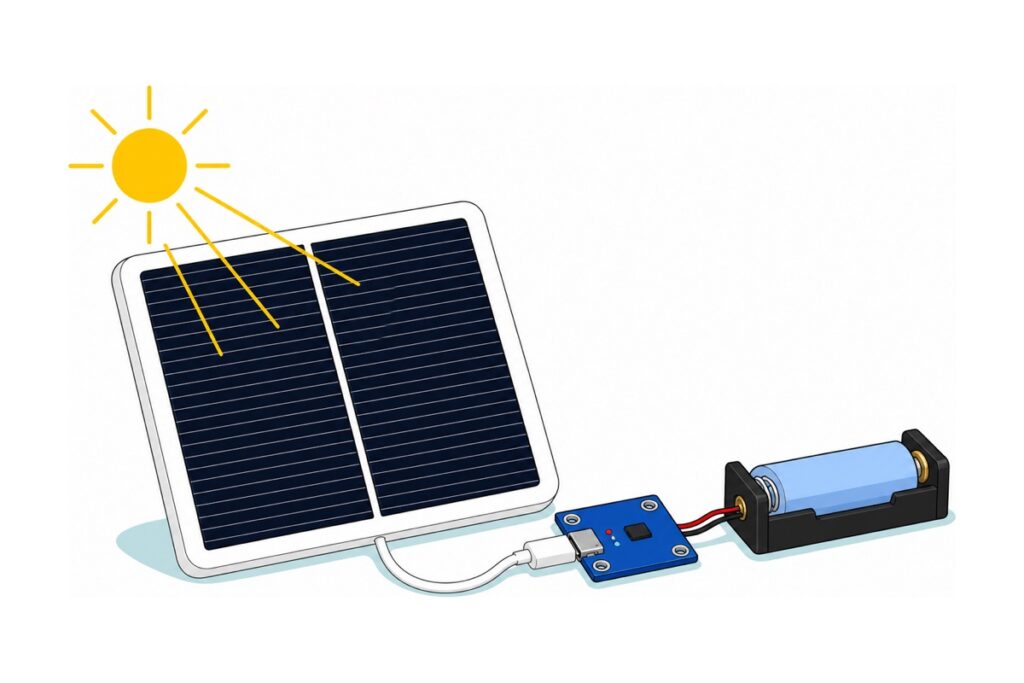
A solar panel does not run your Arduino — it refills an 18650, and the cell runs the board. Panel sizing against the TP4056’s 1 A ceiling, boosting to a steady 5 V, honest weatherproofing, and the night-budget arithmetic that decides whether your project survives until dawn.
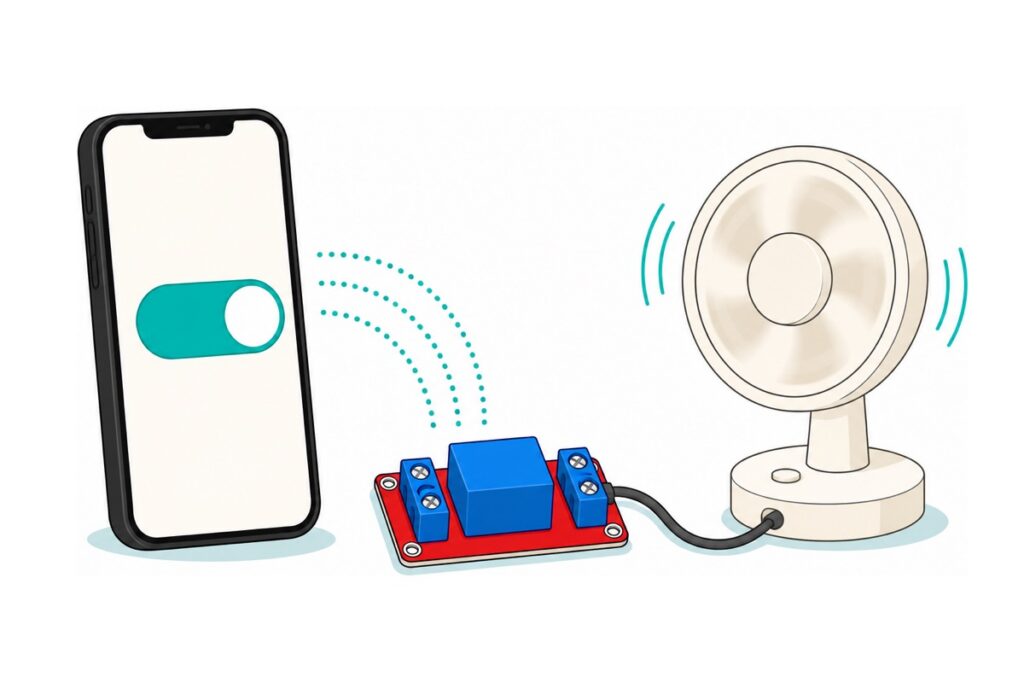
Switch a relay from your phone with the free Blynk IoT cloud and an ESP32: template and auth-token setup, three-wire relay wiring, and a sketch designed to keep working — BOOT-button override included — when the internet dies.
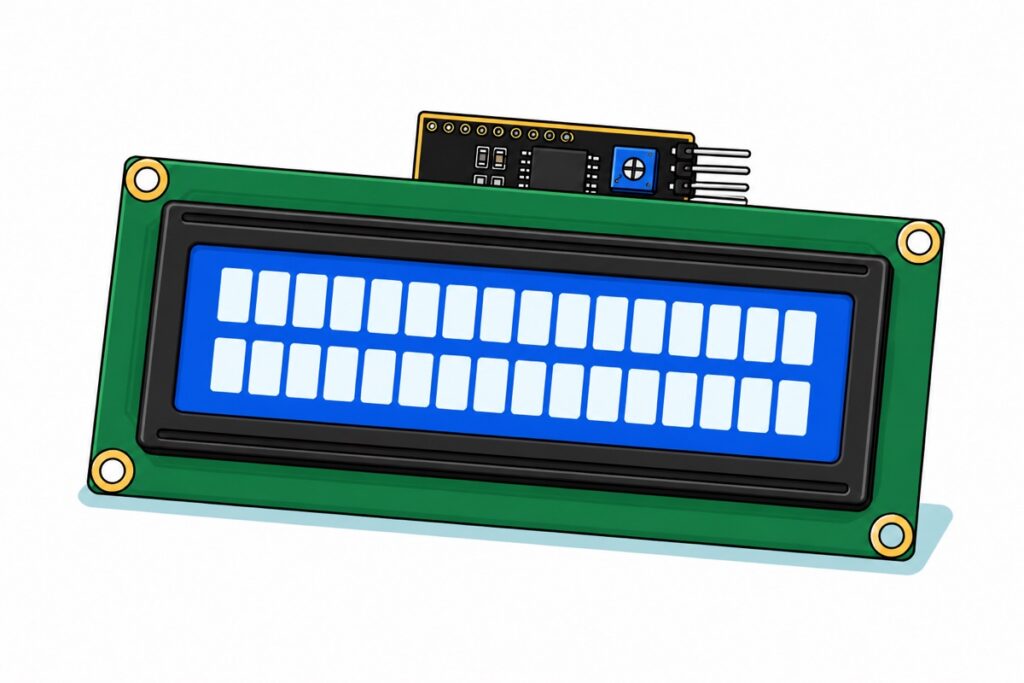
Wire an LCD1602 or LCD2004 with a pre-soldered I2C backpack to an Arduino Uno in four jumpers — the right library, the 0x27 vs 0x3F address scan, contrast tuning, and a symptom-by-symptom fix for blank or garbled screens.
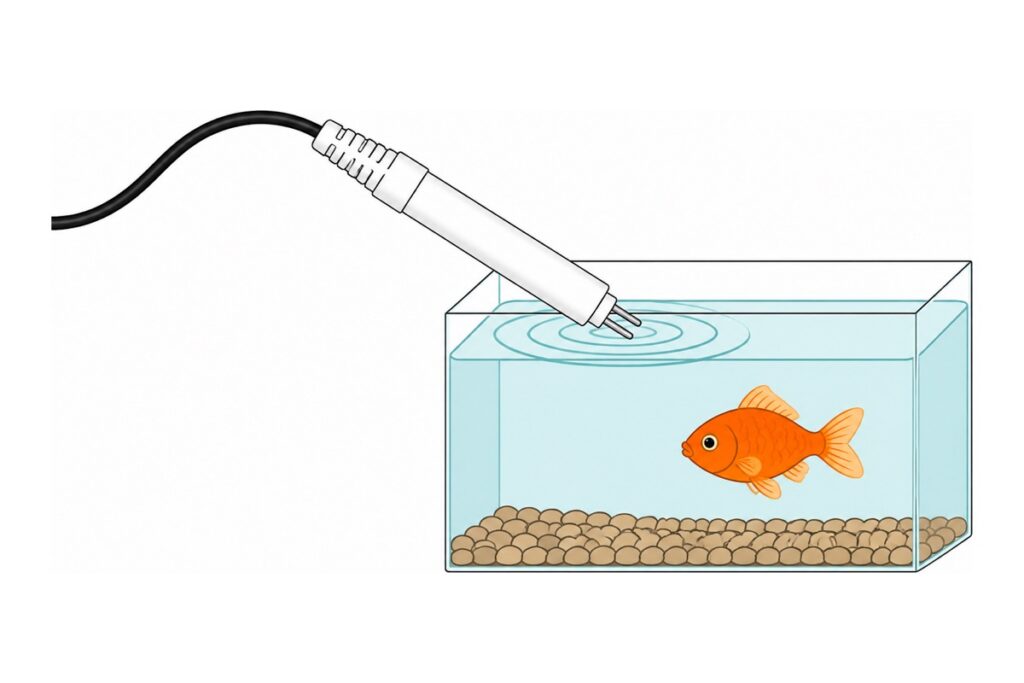
Wire a TDS probe to an Arduino Uno, show the ppm on an OLED, and compare tap, filter and aquarium water — including the one small solder job the board needs.
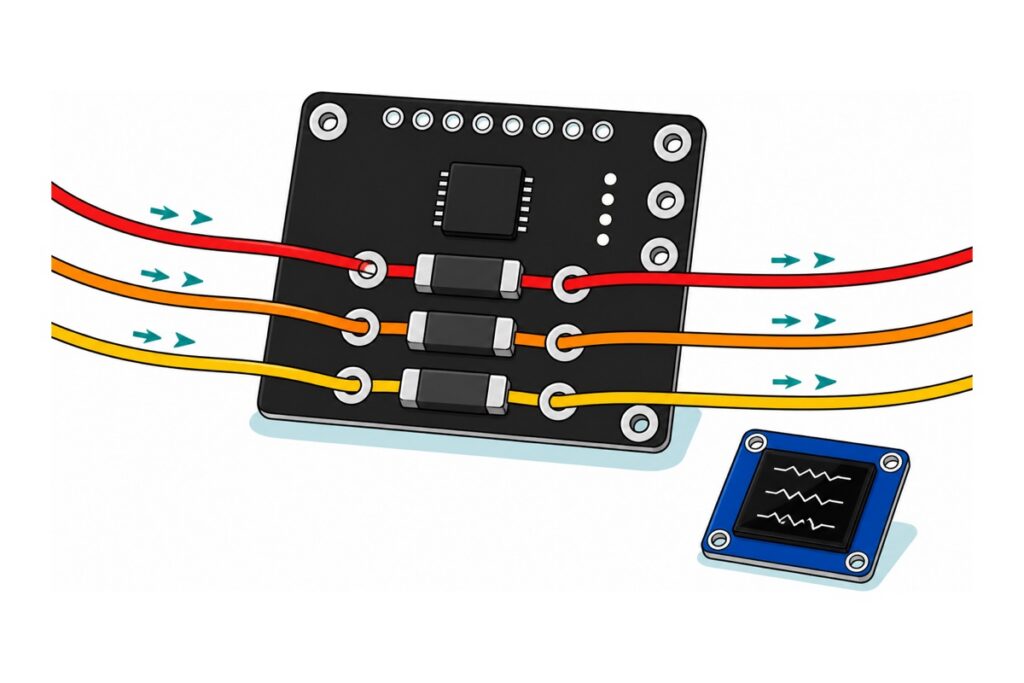
Route each rail through one of the INA3221’s three 0.1 Ω shunts and live voltage, current and power for all three lanes arrive over one I2C bus. This guide builds the full ESP32 + OLED monitor, from soldering to reading the numbers honestly.
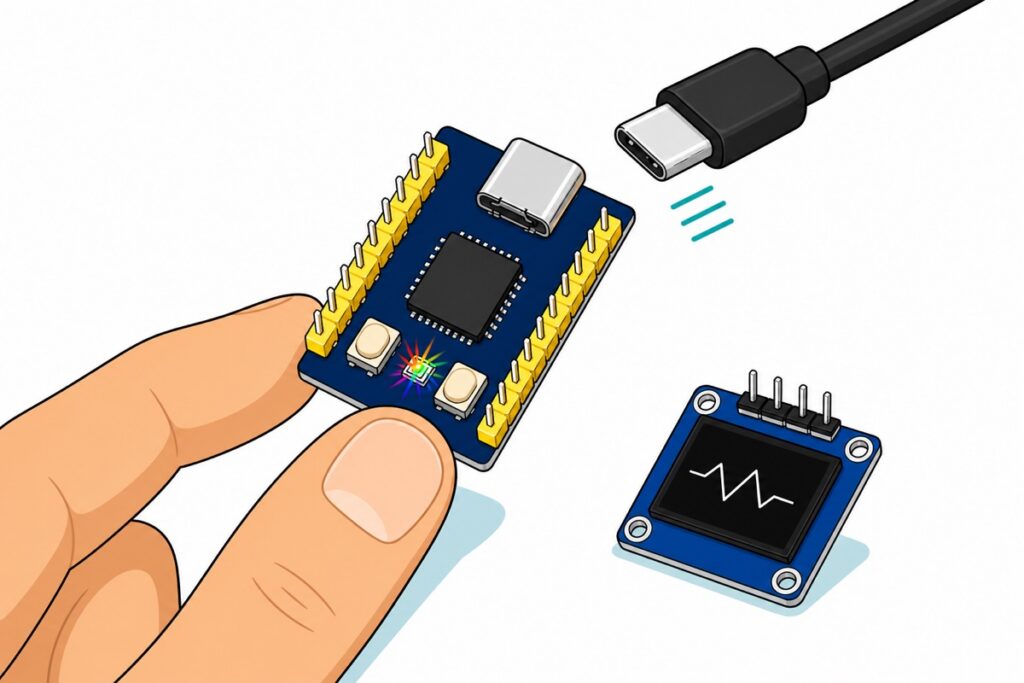
No driver, no COM port: install the Philhower RP2040 core, flash the RP2040-Zero over USB as a flash drive, then wire a 0.96-inch OLED with four jumpers for a live chip-temperature readout.
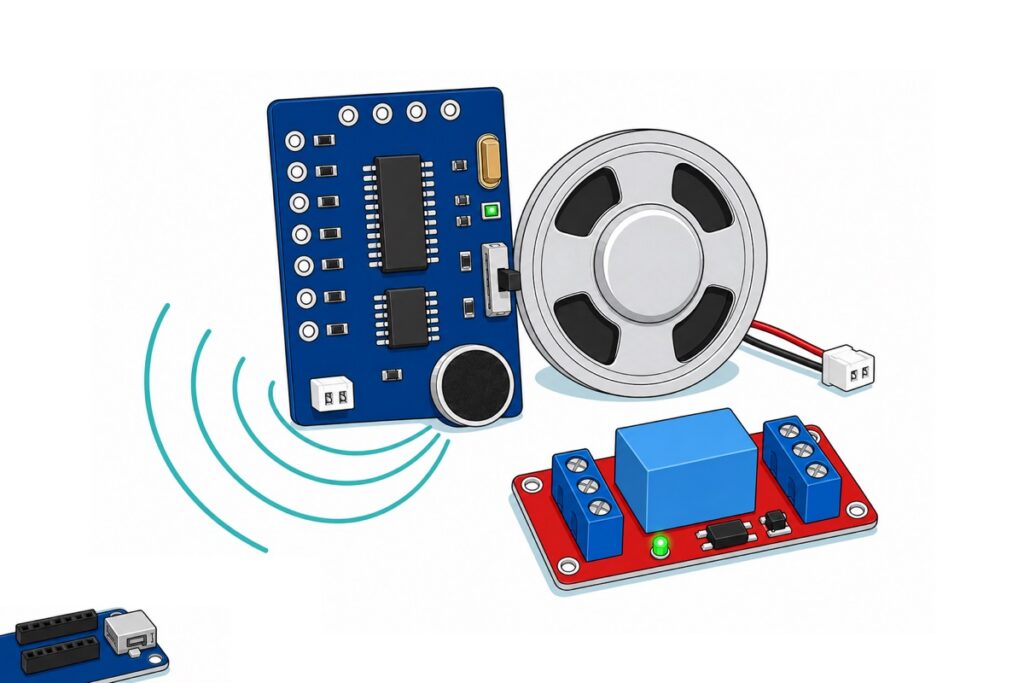
The ZK-VR01 gives you two ways out — a serial T pad and eight command pads. Start with a sketch that only watches, write down what your own board actually does, then latch a relay from it.
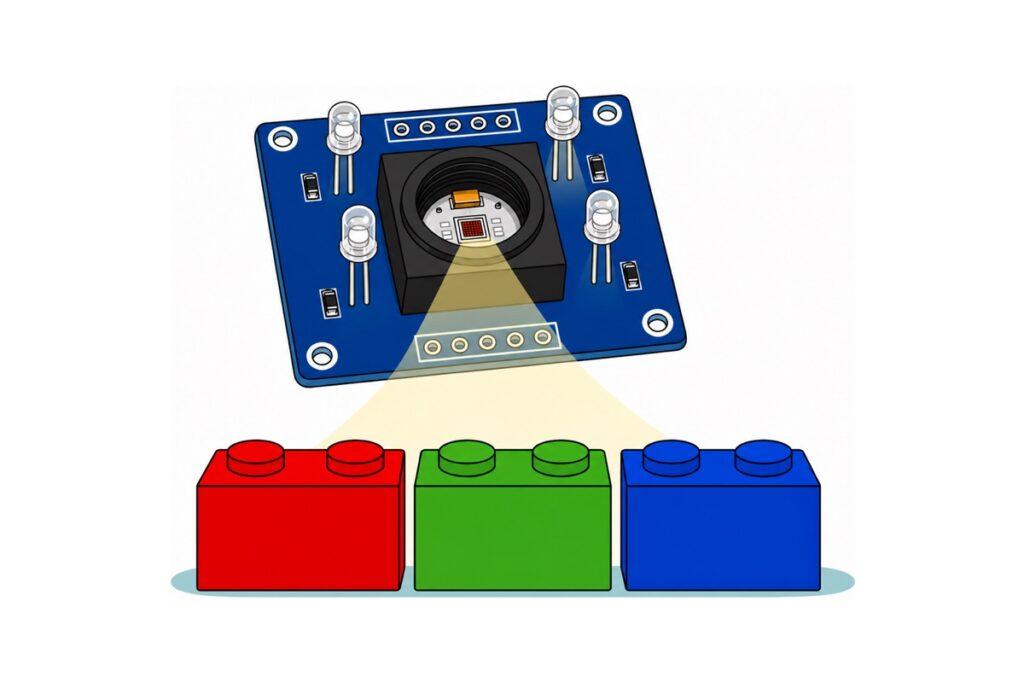
The TCS230 does not report a colour — it reports a frequency, one filter at a time, and your sketch turns three of those readings into a verdict. Wiring, the LED-pin damage trap, why a red object reads lowest, and the calibration that makes sorting repeatable.
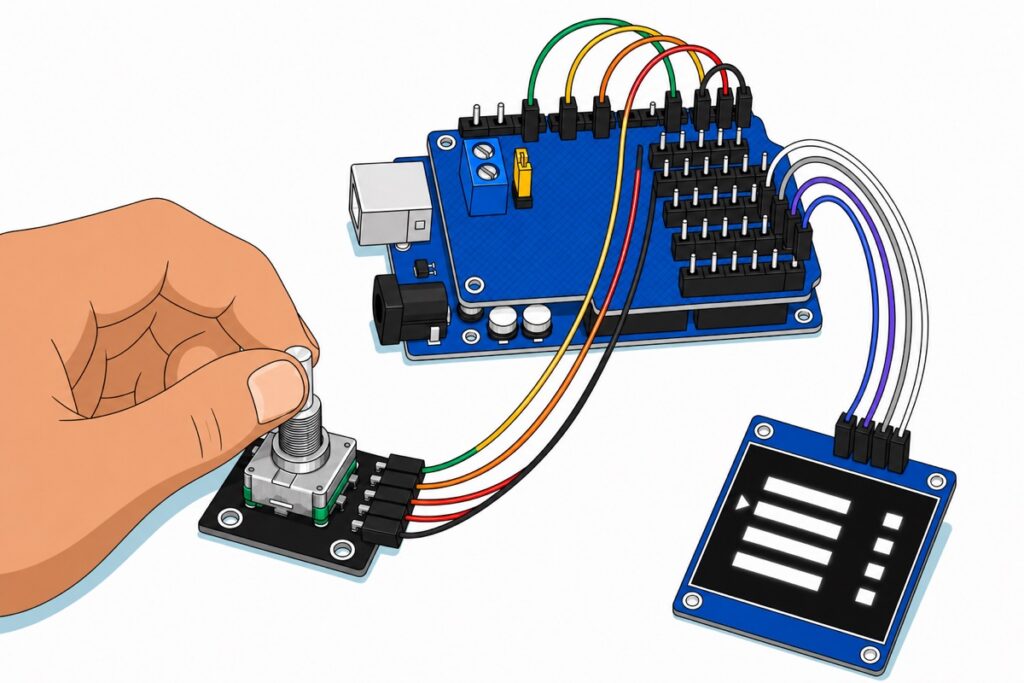
The KY-040’s CLK belongs on D2 because D2 is an interrupt pin. Count detents inside the ISR, call display() only when the count actually changed, and the menu stops skipping items while the screen redraws — plus why one click is four electrical transitions, not one.