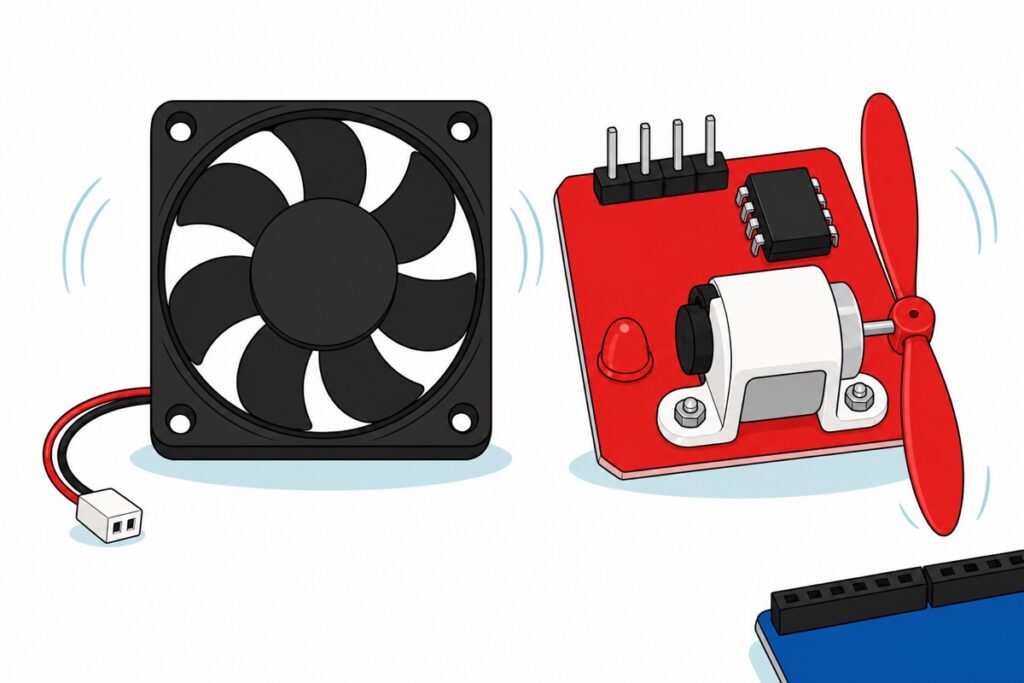
01
Sep
Sep
A 5V or 12V case fan is a sealed brushless unit behind two wires; a “fan module” is a bare brushed motor sold on a driver chip. Which to buy, why neither may hang off an Arduino pin, and the three honest ways to switch one.


A 5V or 12V case fan is a sealed brushless unit behind two wires; a “fan module” is a bare brushed motor sold on a driver chip. Which to buy, why neither may hang off an Arduino pin, and the three honest ways to switch one.
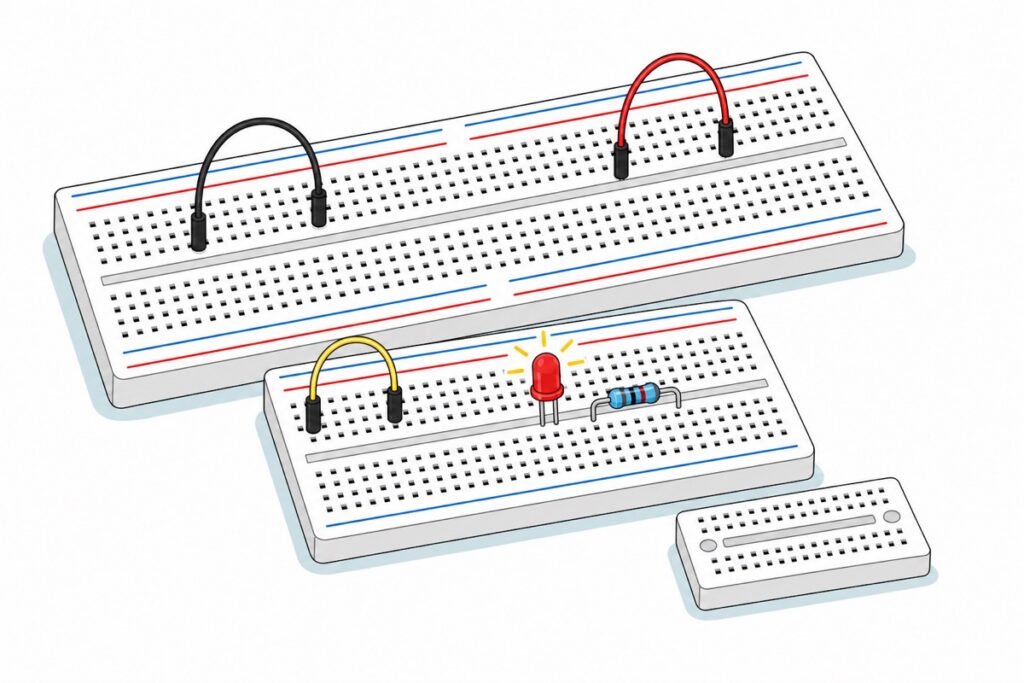
Malaysians call it papan roti. Inside, every group of five holes is one metal clip — here is the hidden hole map, the 170 vs 400 vs 830 size choice, why the 830’s rail breaks in the middle, and the beginner mistakes that kill circuits.
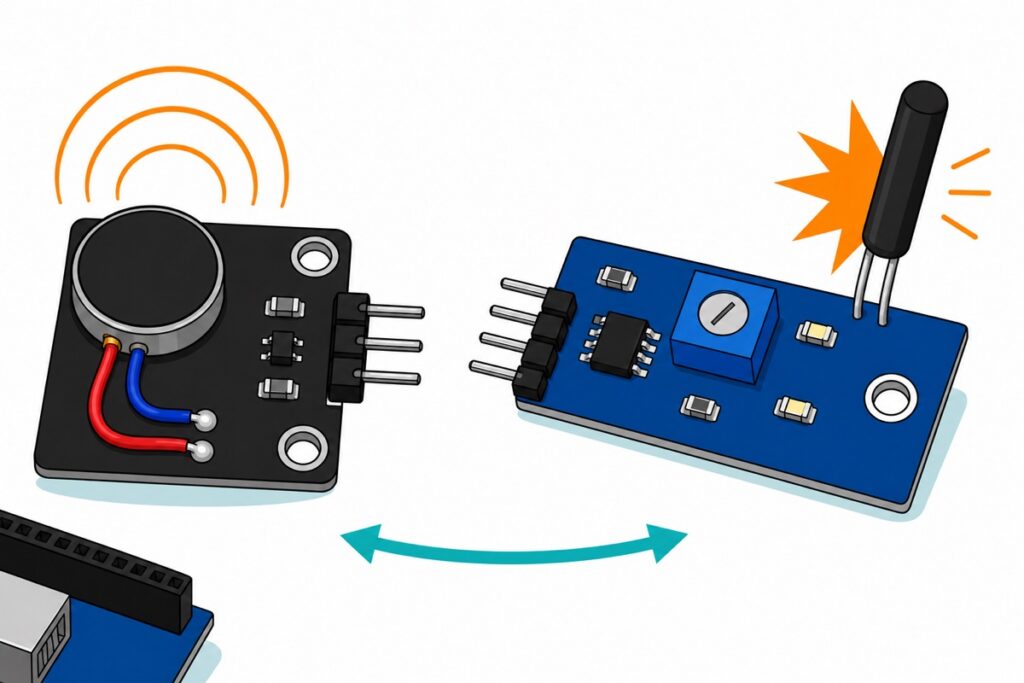
Two parts share the word “vibration” and do opposite jobs. Which one your project needs, how to drive a 3V-6V coin motor from an Arduino without frying a pin, and how to turn the SW-18010P’s millisecond pulses into one clean knock event.
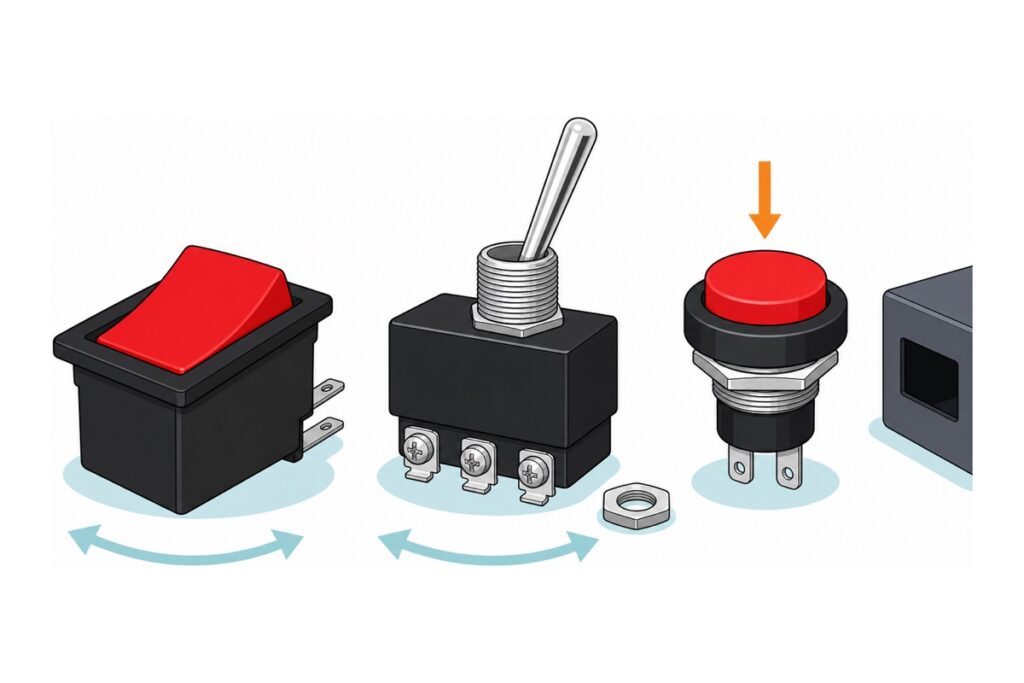
A rocker or a toggle stays where you left it; a push button only acts while your finger is on it. How to read 2-pin, 3-pin and SPST markings, size the panel cut-out before you drill, and check the rating moulded on the body.
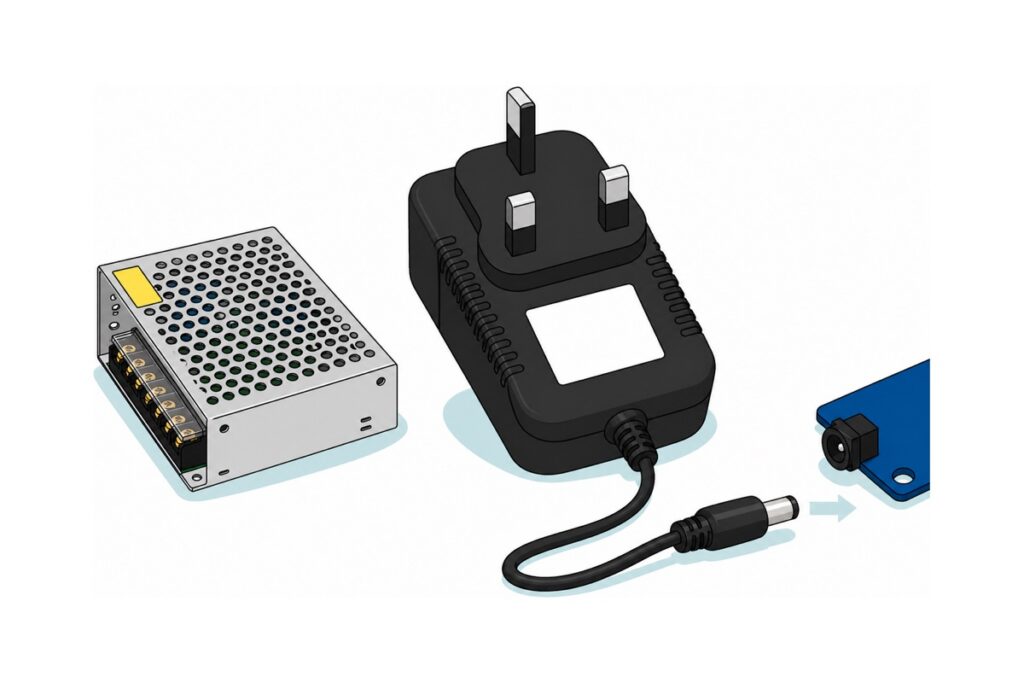
Unplugging a finished project from the laptop means picking a wall supply, and the two numbers on the label do very different jobs. Why the voltage must match what the board’s regulator expects, why a 5 A rating is a ceiling and not a force, and how to avoid the 5.5×2.1 versus 5.5×2.5 barrel trap.
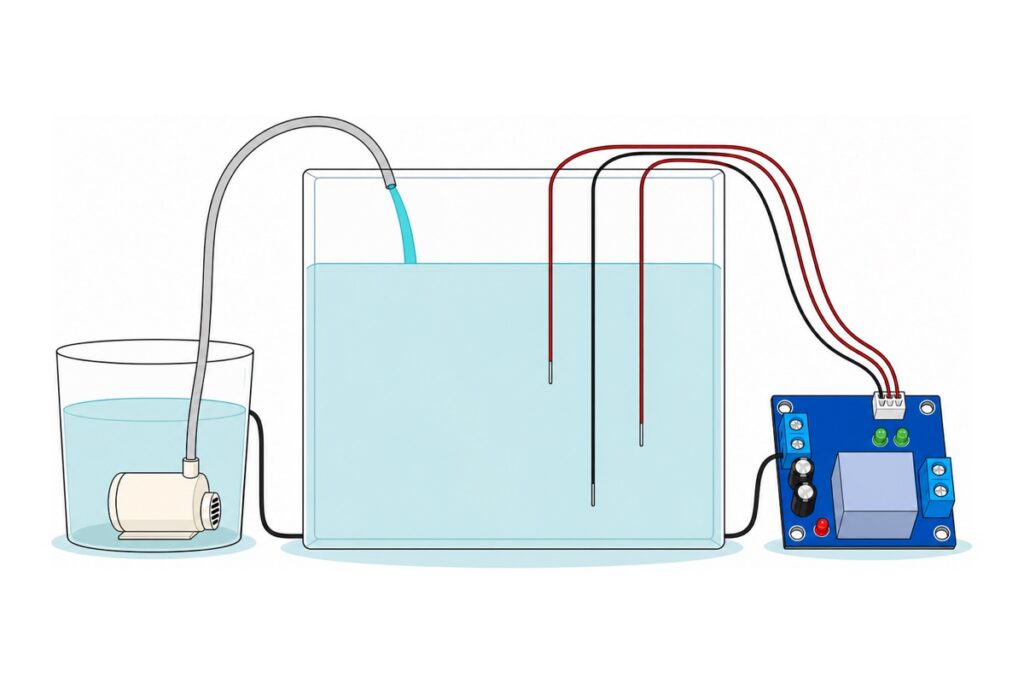
A water level relay controller fills a tank by itself: two conductive probes set the restart and shut-off heights, and the relay switches the pump — no microcontroller and no code.
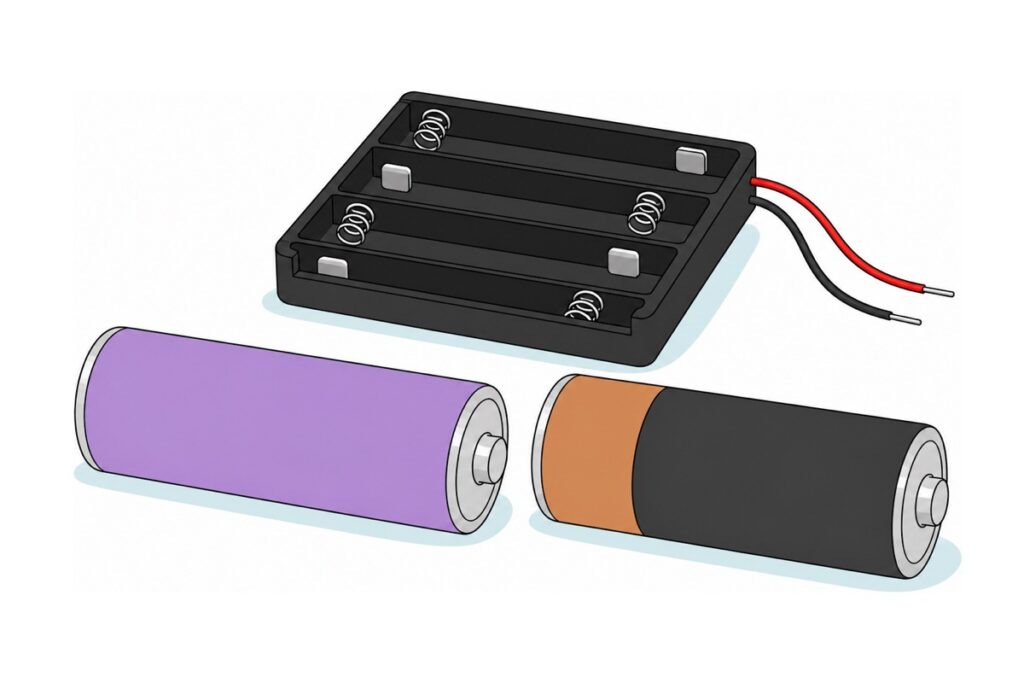
Four fresh alkaline AA cells make about 6.4 V; four charged NiMH make 5.6 V and settle at 4.8 V. That gap decides whether your servo, your 5 V rail or an Arduino’s barrel jack works — with the pack arithmetic, the capacity and self-discharge truth, and when to stop fighting AA cells.
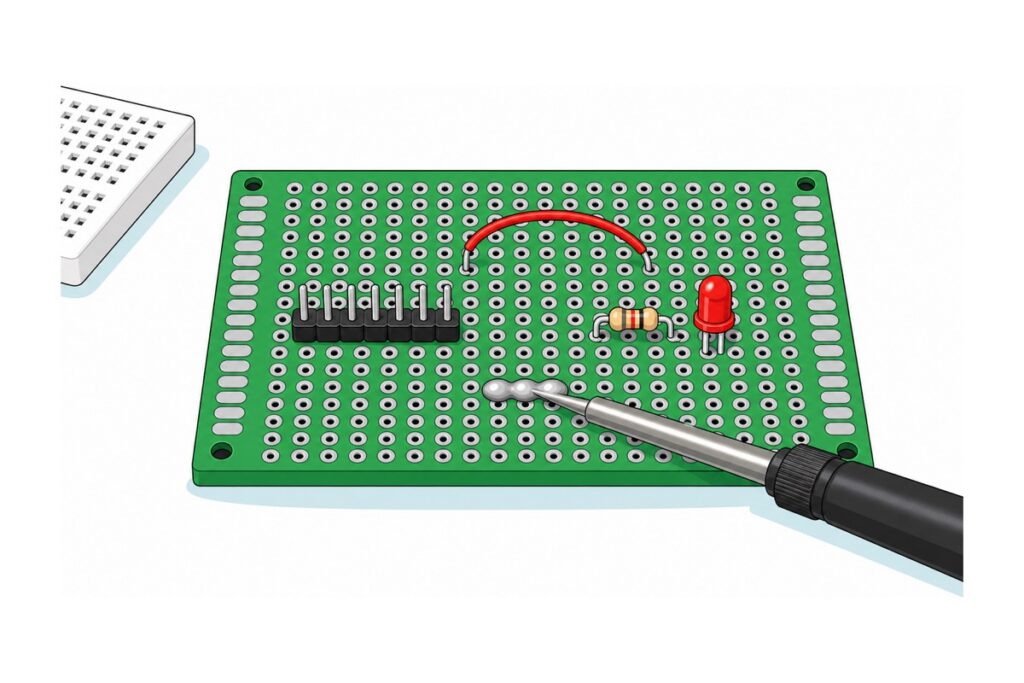
A donut board pre-connects nothing — every pad is an island. How the double-sided plated pad grid works, how to build the ground and power rails a breadboard used to give you for free, the three honest ways to join two pads, and how to plan the layout before the iron is hot.
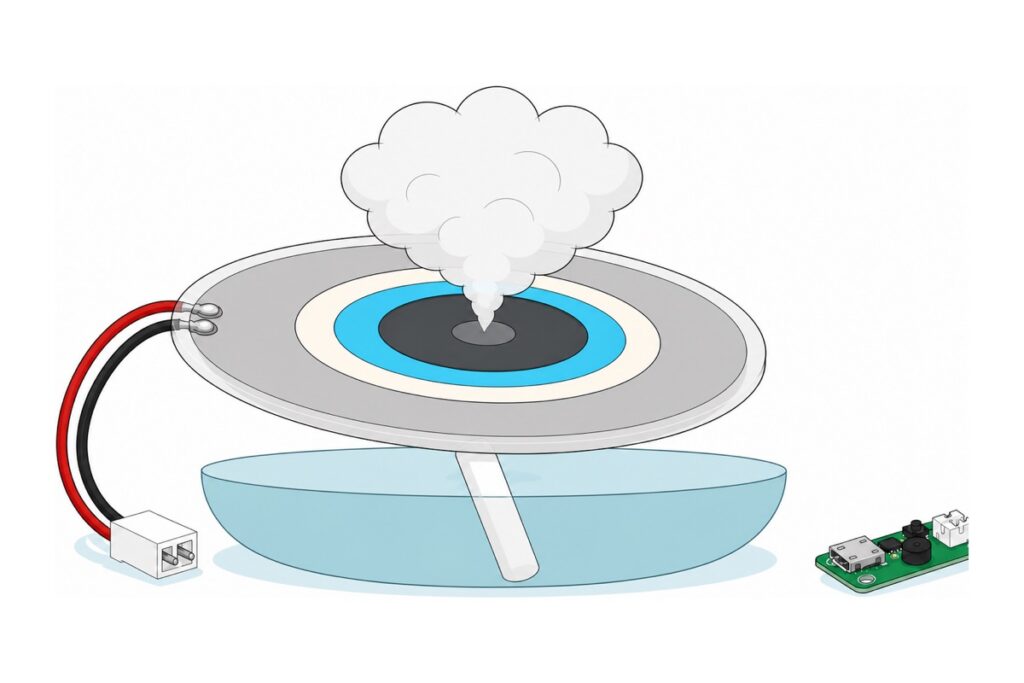
An ultrasonic mist maker is a piezo-driven plate full of micro-holes, and the water it atomises is also its only coolant. Here is how the plate and its 108 kHz driver work, why a dry plate dies permanently, and how to switch the module’s own 5 V supply from an Arduino with a relay and a water-level cut-off instead of driving it from a pin.
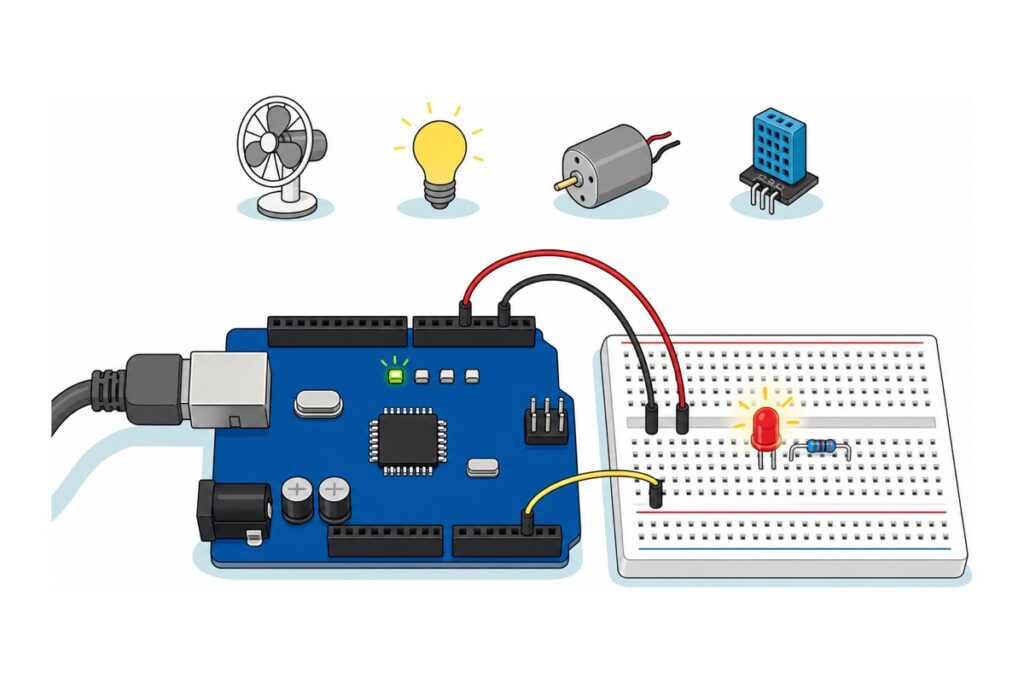
An Arduino is a small circuit board with a single microcontroller chip that runs one program – yours – over and over. What it can and cannot do, whether you need to code first, what is in a starter kit, and a realistic first week.
Log in to your MakerHub account