A 3–5V mini submersible pump gives 70–110 L/hr at zero lift and draws 100–220 mA — far past an Arduino pin. What the numbers really mean once you ask it to lift water, why it must stay submerged, and which of the three switching lanes (relay, IRF520 MOSFET, DRV8833) your build actually wants.
Author Archives: MakerHub Helper
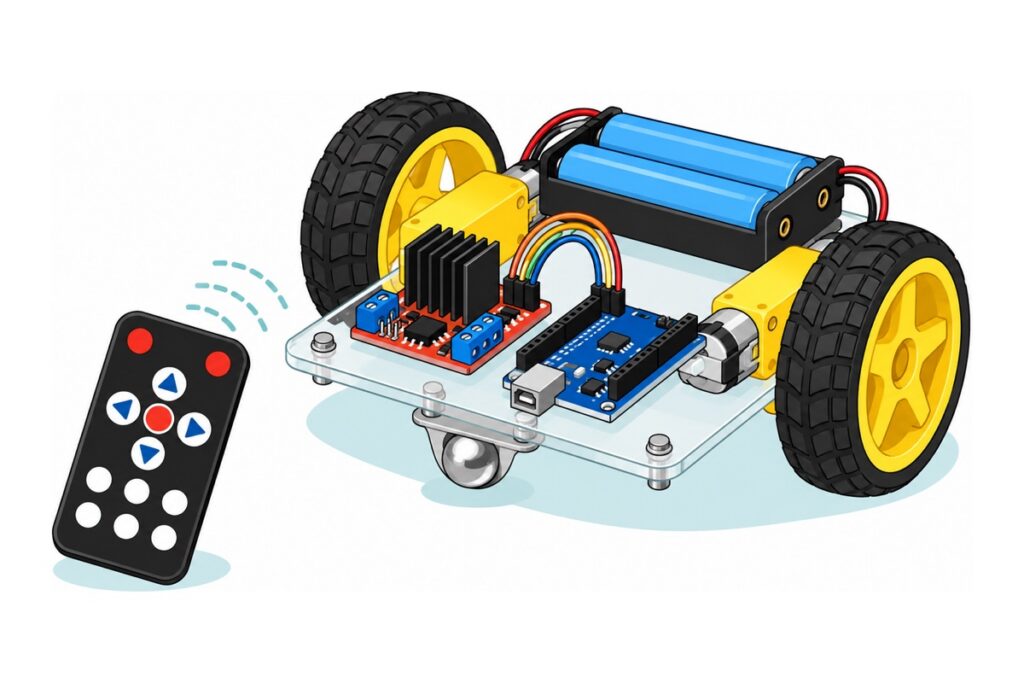
An RBT remote control car is marked in three parts: mechanical system, control system and documentation. Here are the three honest control routes – IR remote, phone over Bluetooth, or a pair of nRF24L01 radios – how they differ in range, cost and difficulty, the mechanical details that earn marks, and what your block diagram has to show.
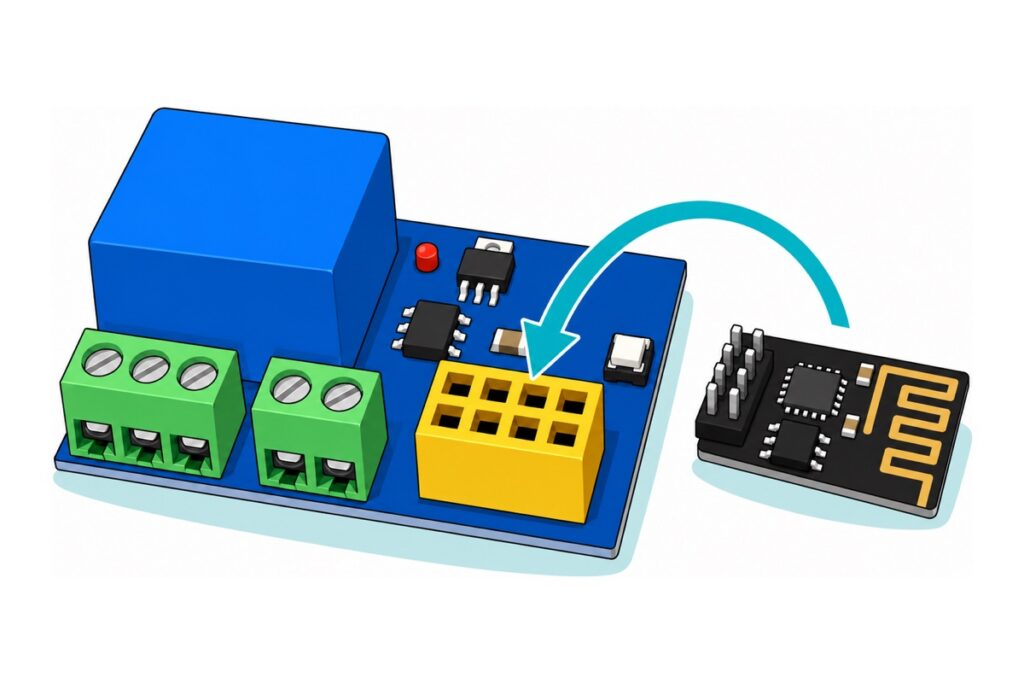
The ESP-01S relay board is a carrier: it ships without the module and switches nothing until that module is flashed. What is on the board, how flash mode works, how to wire 5 V and a load, and where an ESP32 takes over.
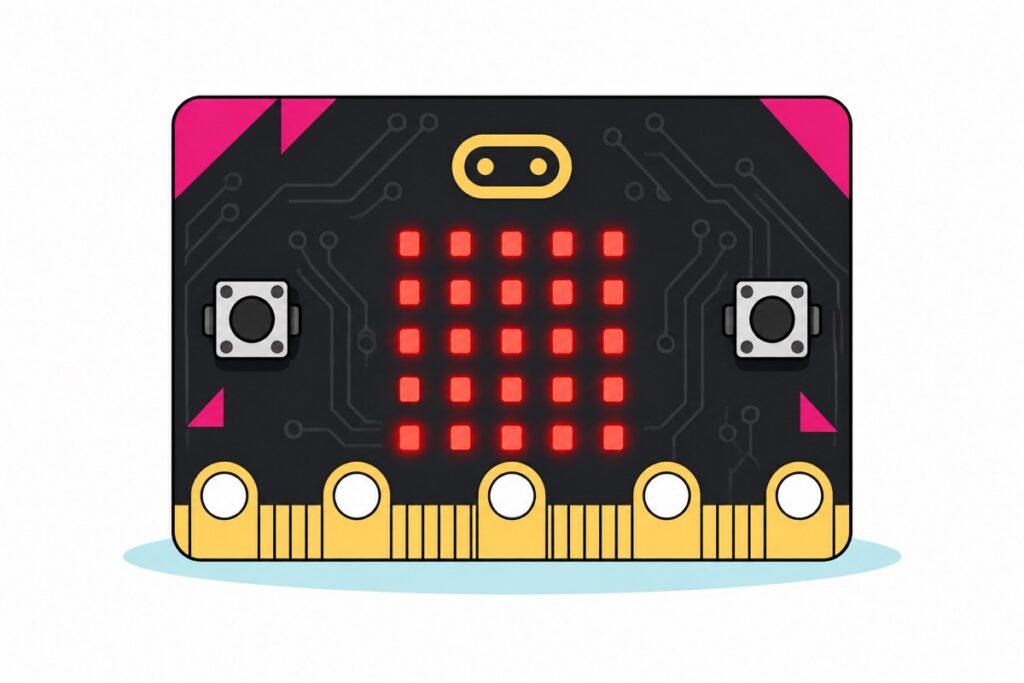
A micro:bit V2 is already complete enough for a full RBT project: 25 LEDs, two buttons, mic, speaker, light, temperature and motion sensors, all built in. No soldering, no wiring, programmed from a browser with MakeCode blocks.
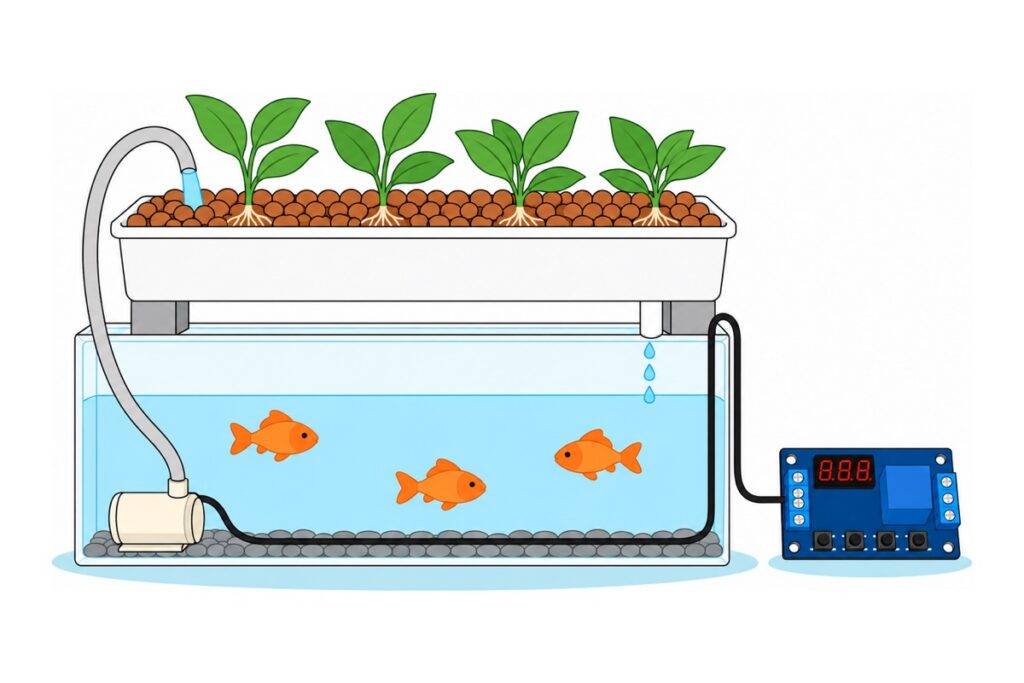
A mini aquaponics system for a school project: fish tank below, grow bed above, and one 5V submersible pump on a timer cycle. Two-tier layout, pump on/off timing, relay wiring, adapter vs battery, the failures that kill it on presentation day, and a six-section report skeleton.
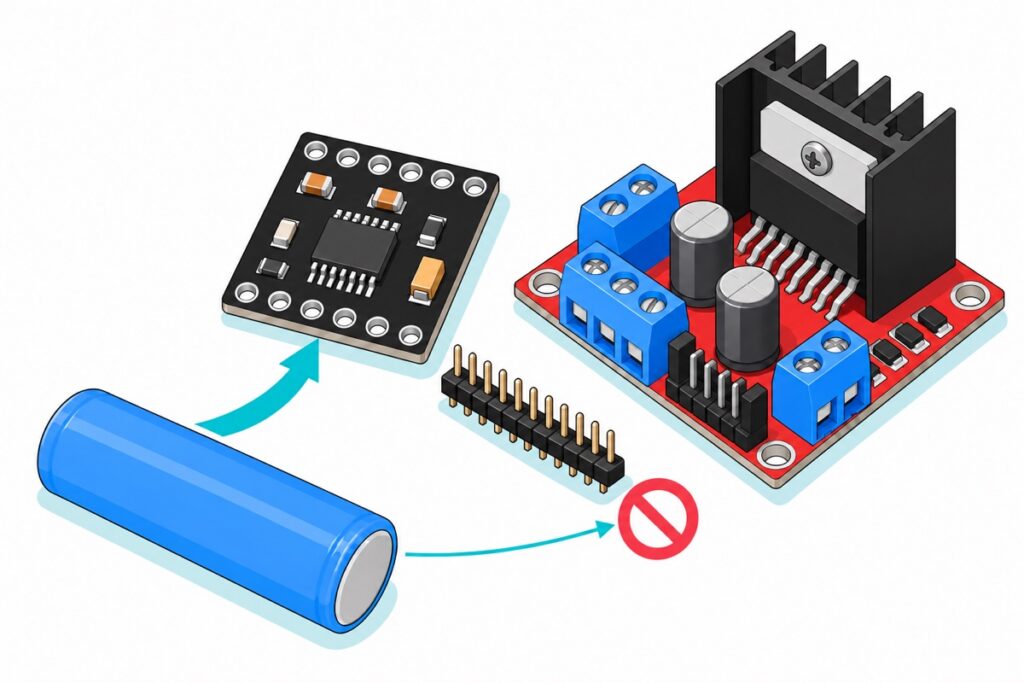
Pick the DRV8833 whenever the motors run off a battery: it starts at 2.7 V and loses about 0.36 V in its own bridge, so a single 18650 drives a robot that browns out an L298N. Wiring, Arduino code, protections and a plain decision rule.
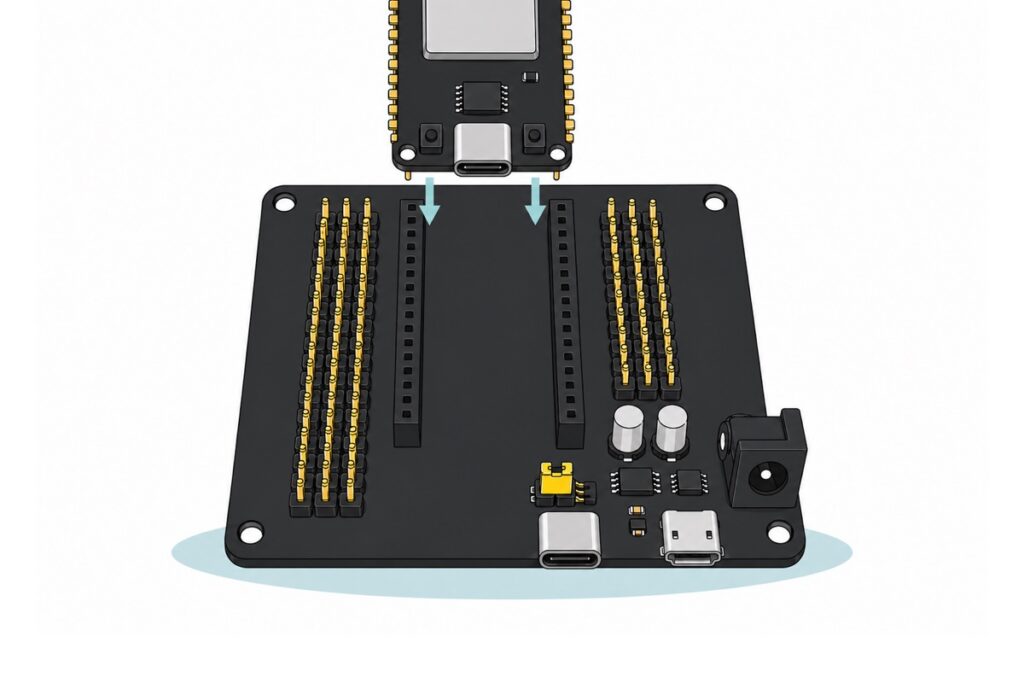
An ESP32 expansion board holds a 30-pin DevKit and re-presents every pin as a labelled G-V-S column on 2.54 mm headers. Here is what that genuinely fixes — reachable pins, printed names, a barrel jack with its own 5 V regulator — what it cannot fix, and when a plain breadboard is the better buy.
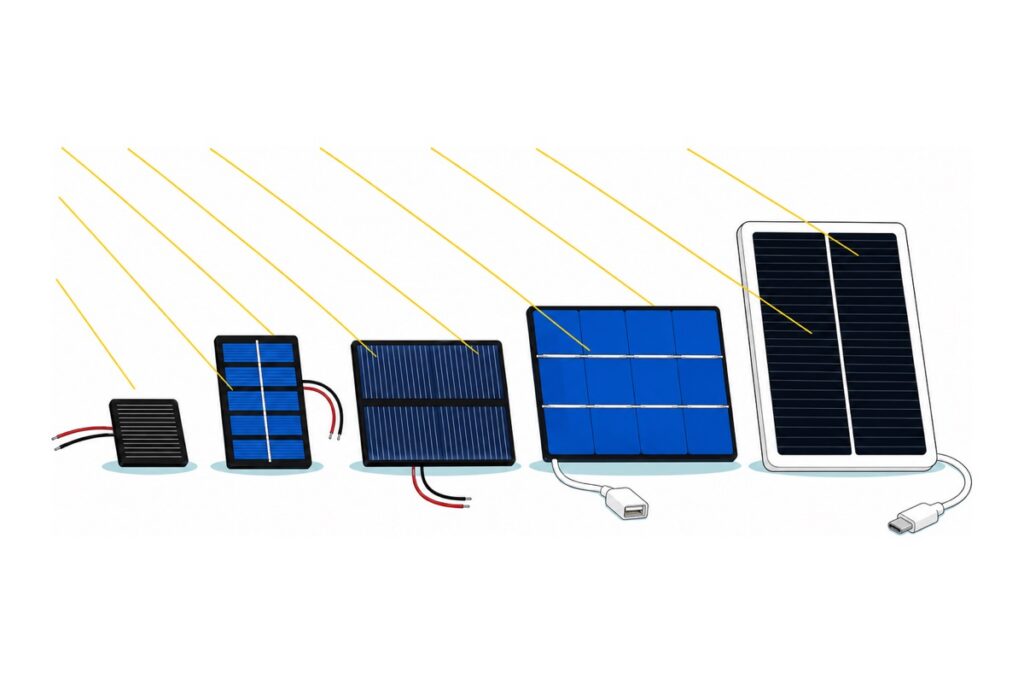
Pick a mini solar panel by the current it actually delivers, not by the number on its label. What 5V and 6V really mean against a TP4056’s 4.0-8.0 V input window, how many mA each size gives in full sun and under Malaysian cloud, why a 2W panel cannot run an Arduino or a water pump directly, and the panel to charge module to 18650 cell to load chain that does work.
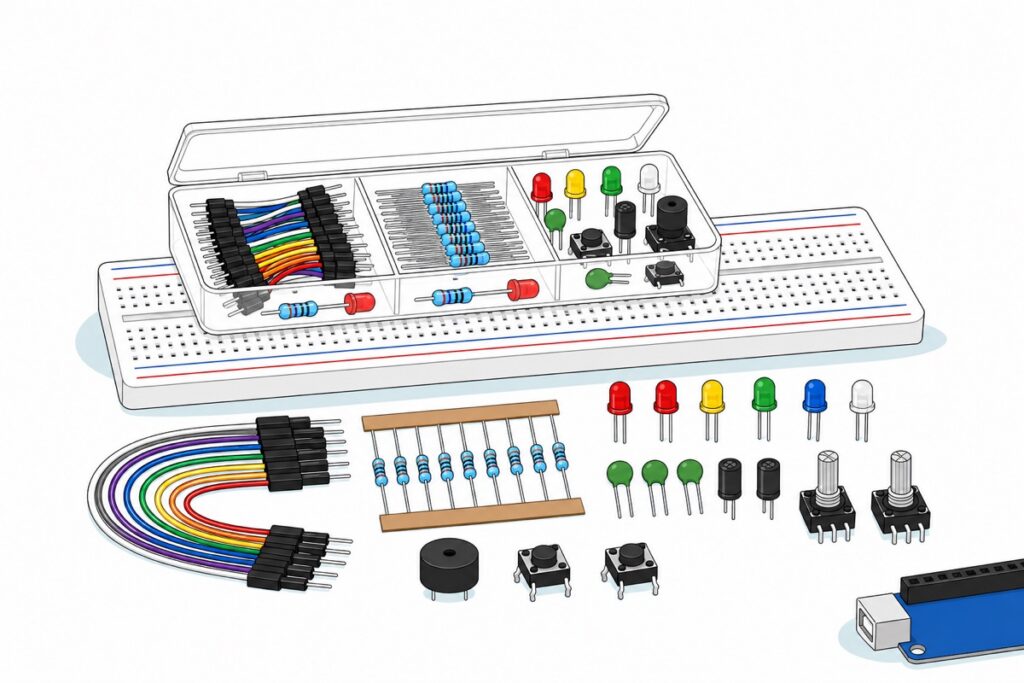
A starter kit is a box of consumables and prototyping plumbing — resistors, LEDs, capacitors, buzzers, buttons, jumper wires and an 830-hole breadboard — with the board as an add-on. No printed book, no LCD, no sensor modules. Here is what is really in the case, the honest case for buying one, and the four parts a beginner in Malaysia actually needs on day one.
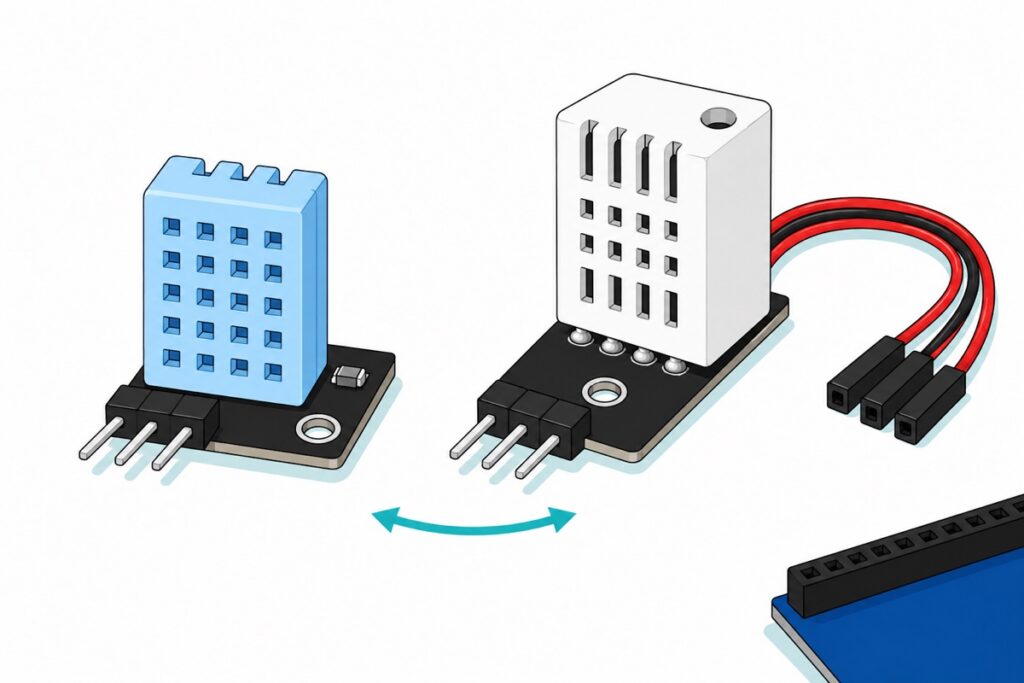
The DHT22 reads 0–100 %RH and −40 to 80 °C; the DHT11 stops at 20–90 %RH and 0–50 °C. Which matters in Malaysia, where the pull-up resistor lives on a 3-pin module versus a bare 4-pin sensor, and the four things that make readings come back as nan or freeze on one number.