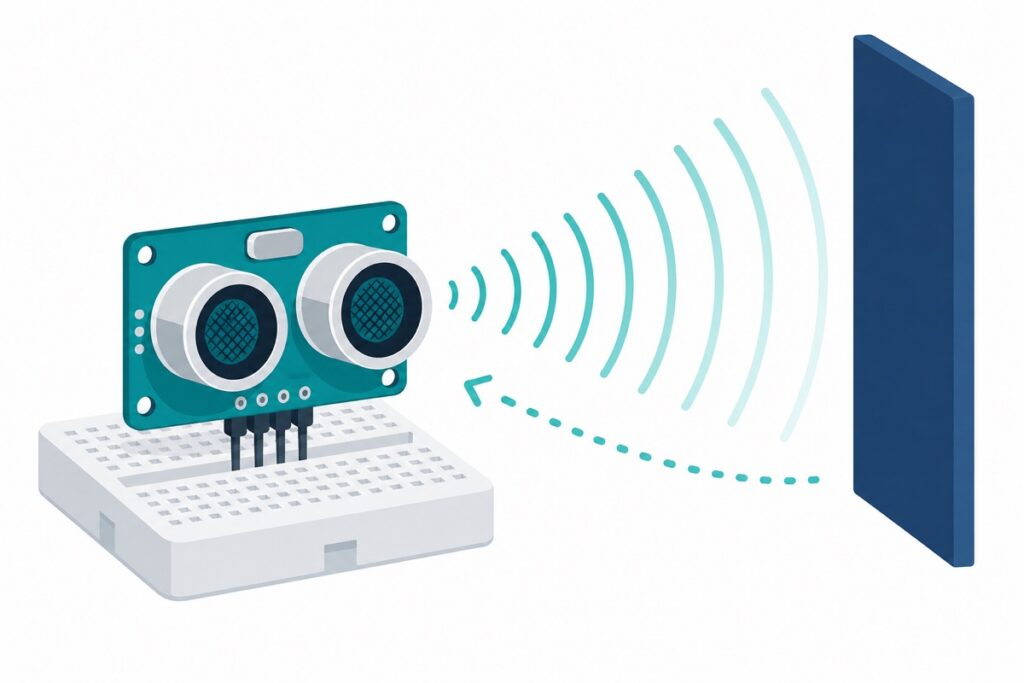
Everything you need to run an HC-SR04 ultrasonic sensor on an Arduino: the four-pin wiring table, a runnable pulseIn() sketch, and why the distance maths divides by 58 — plus the range, beam-angle and 3.3V limits that catch out real projects.
Author Archives: Kelvin Wong
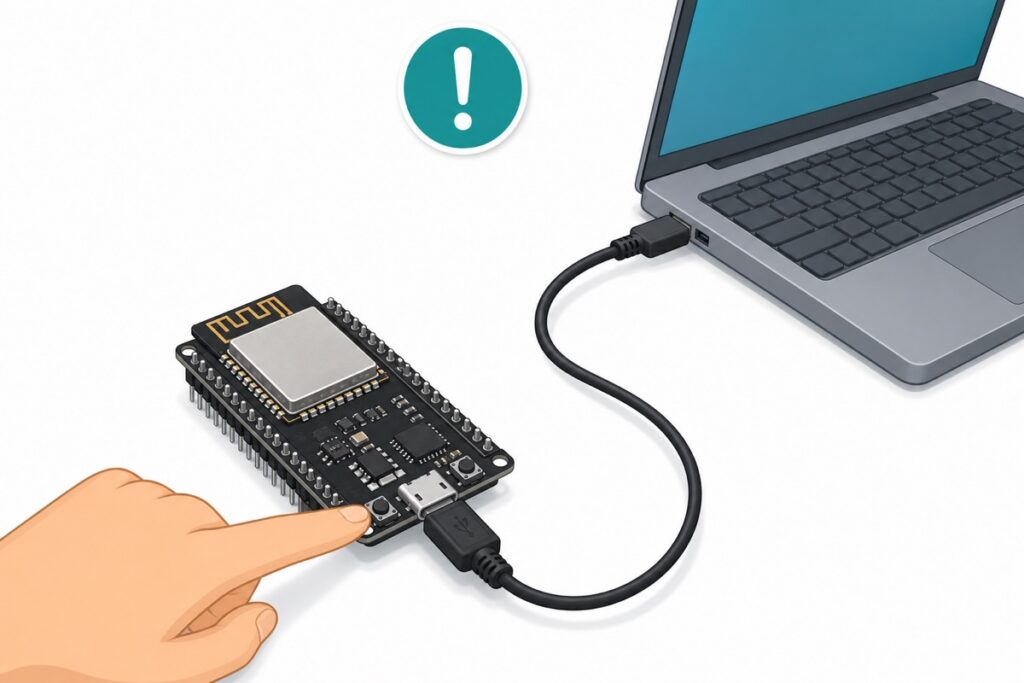
If your ESP32 is not detected in Arduino IDE, the cause is almost always one of three things: a charge-only USB cable, a missing CH340 or CP2102 driver, or a board that needs its BOOT button held during upload. Swap to a proper data cable first — that one step fixes over half the cases […]
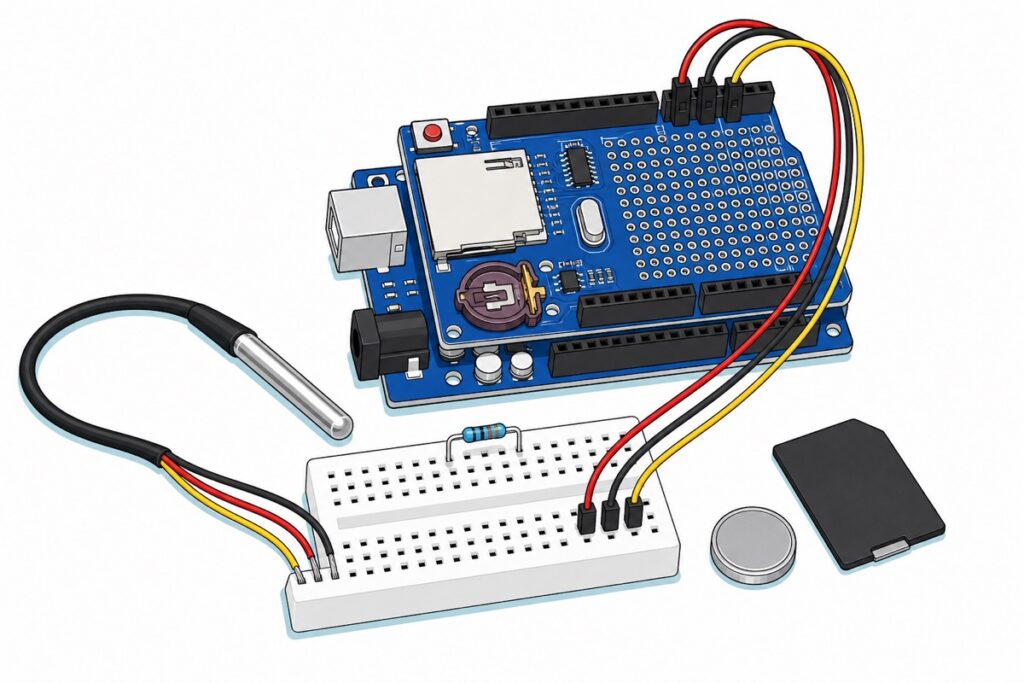
The Data Logging Shield gives an Uno a full-size SD socket and a DS1307 clock. Here is the wiring for a waterproof DS18B20, a compiled sketch that writes timestamped CSV rows, and the two mechanisms that decide whether your log survives a power cut: the SD library’s 512-byte RAM buffer, and the DS1307’s CH bit.
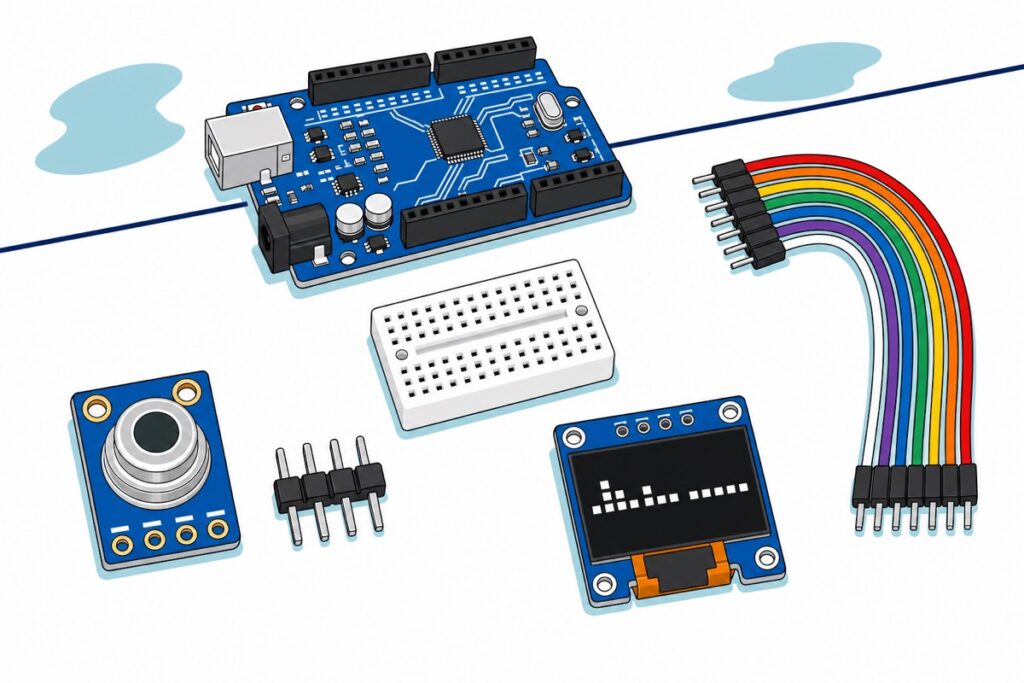
The GY-906 MLX90614 does not measure a point — it averages everything inside a 90° cone, so the spot it reads is twice as wide as its distance. Here is the wiring, a compiled sketch, the emissivity fix for shiny metal, and why this is not a fever thermometer.
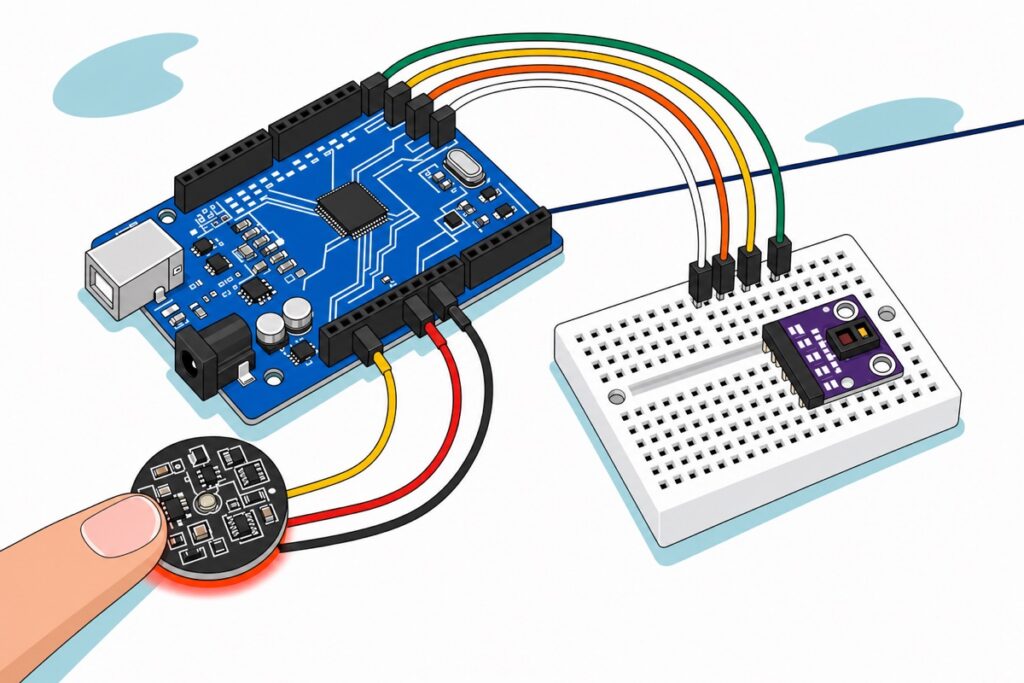
A pulse sensor and a MAX30102 both measure light, not heartbeats. Wire both to one Arduino Uno, plot the raw PPG waveform with no library, read part ID register 0xFF to find out which die you actually have, and diagnose the silent I2C bus that makes a perfectly wired module invisible. Neither part is a medical device.
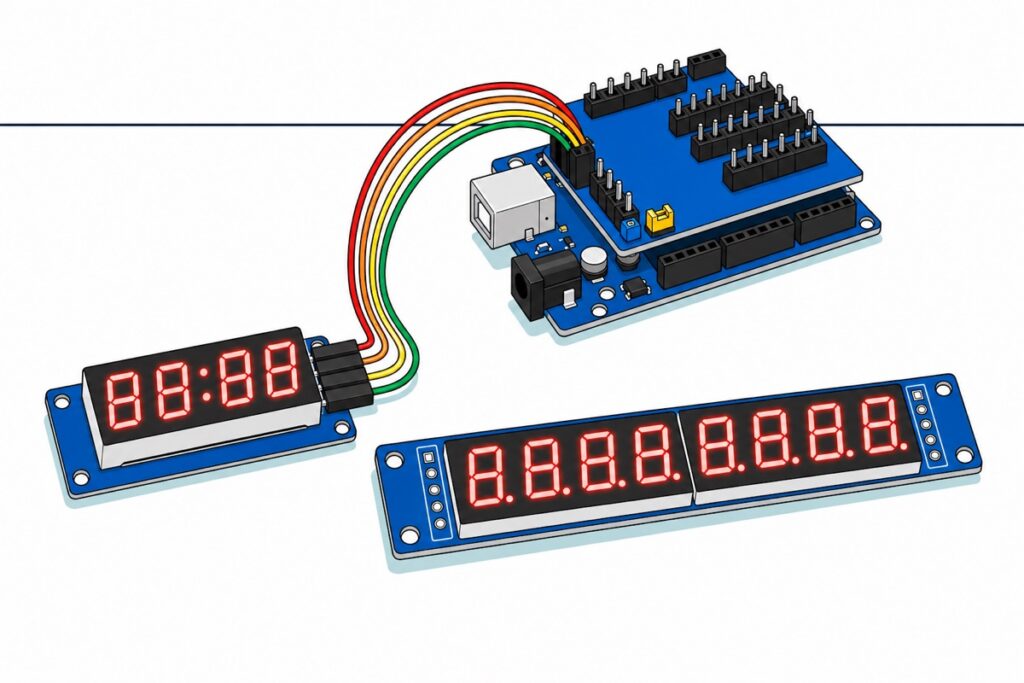
The TM1637’s two wires are not I2C, and the MAX7219’s three pins never grow no matter how many panels you chain. That asymmetry — plus what is actually in each bag — decides which 7-segment display your Arduino project should use.
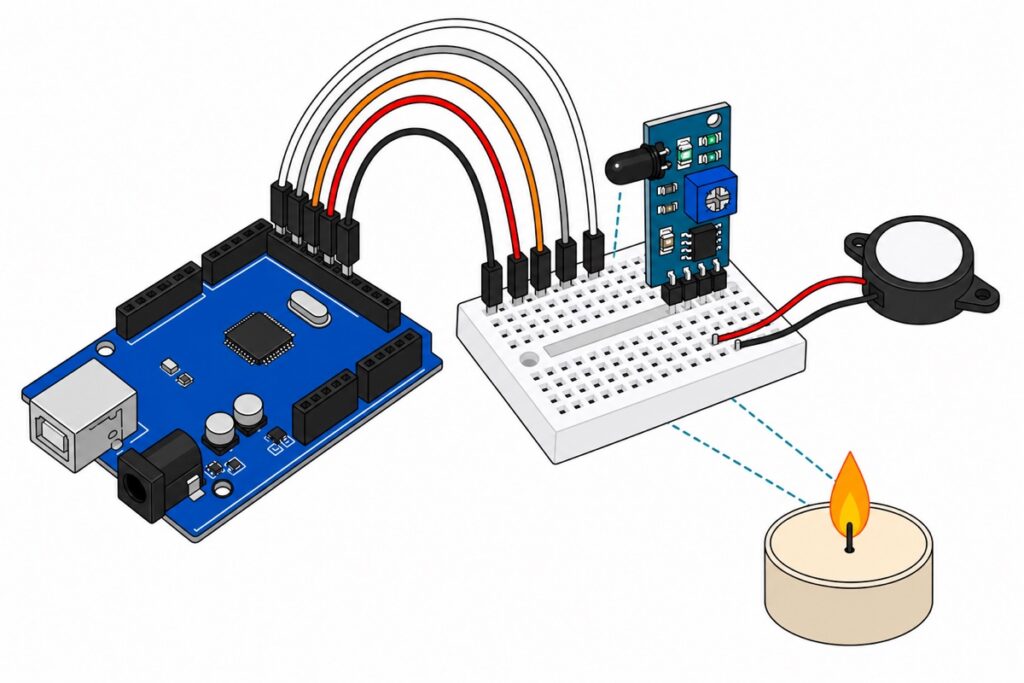
A flame sensor feels no heat — it sees 760–1100nm infrared light. Wire the FLAME4P to a buzzer on an Arduino Uno, calibrate the LM393 threshold by measurement instead of guesswork, and know exactly where this classroom alarm’s limits are.
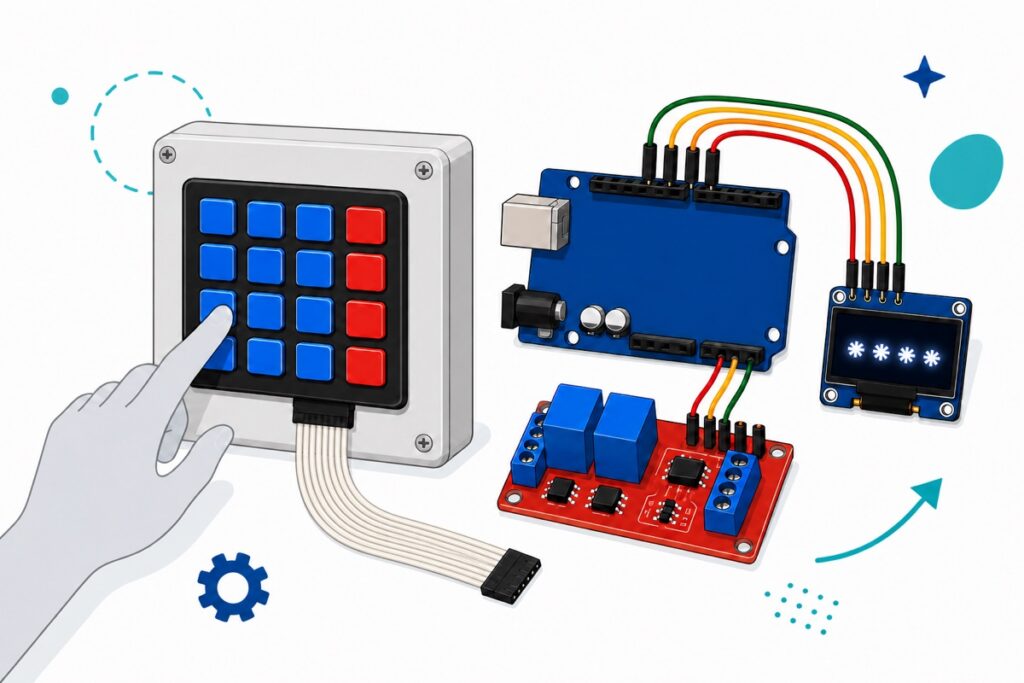
Wire a 4×4 membrane keypad to an Arduino Uno, store the code in EEPROM and switch a 12V latch through a relay module — with the wrong-attempt lockout that is what actually makes the lock worth building.
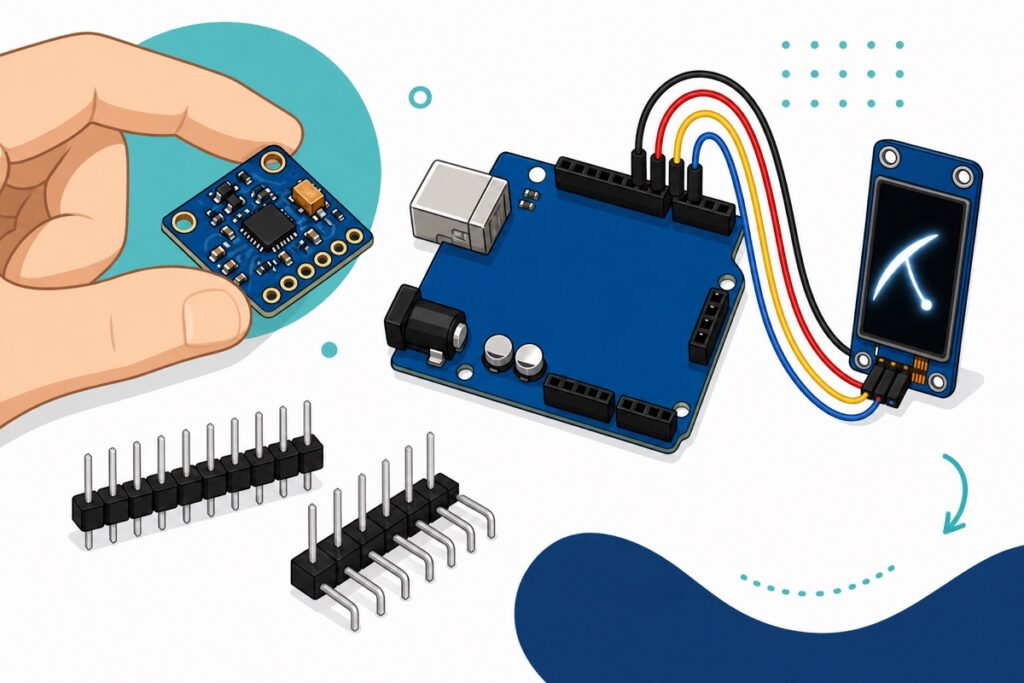
Read the GY-521’s raw accelerometer and gyro values on an Arduino Uno, convert them with the real datasheet scale factors, and fuse them with a complementary filter into a stable live tilt angle on a 0.96-inch OLED.
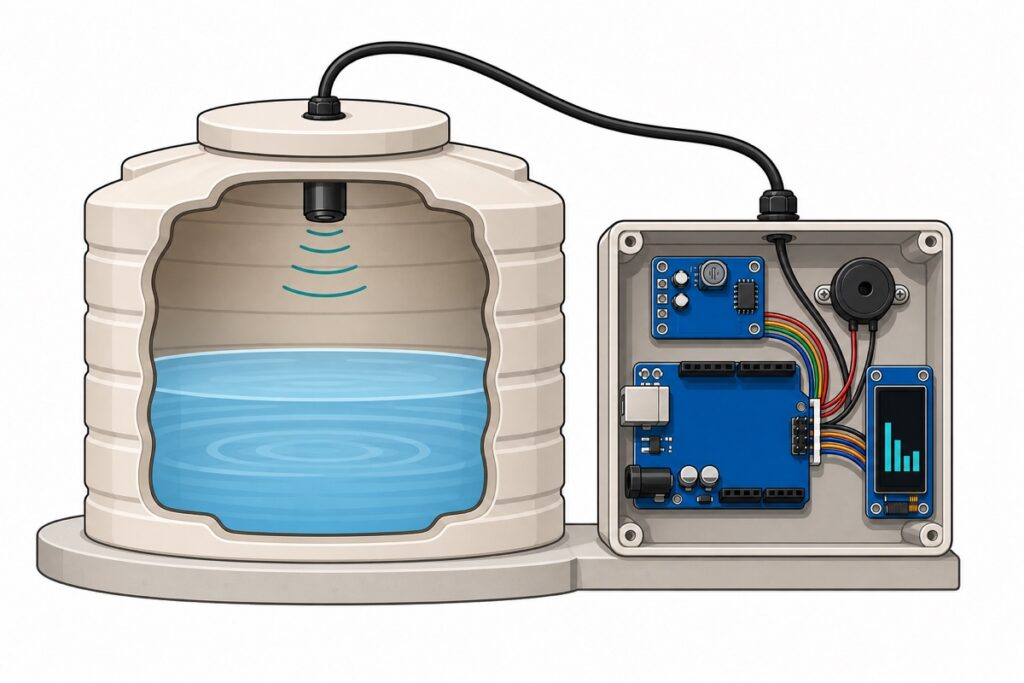
Fit a JSN-SR04T waterproof probe to your water tank lid and an Arduino Uno turns the echo into a live level percentage on an OLED, with a buzzer alarm below 20%. Only the probe goes near water.