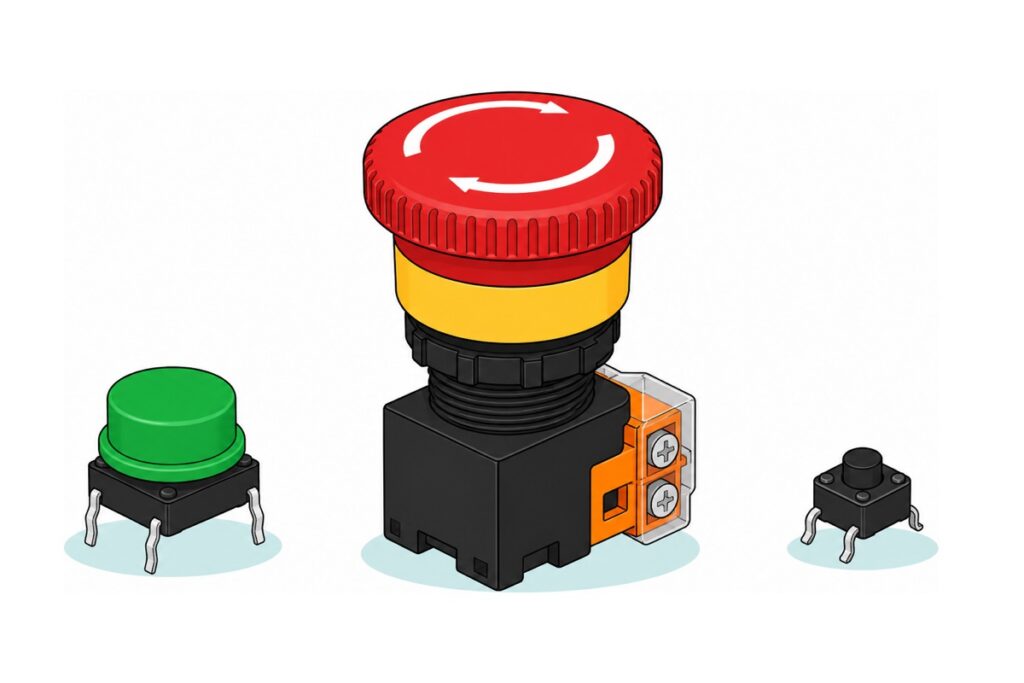
Momentary, latching or maintained; NO versus NC and why every emergency stop is wired NC; why a floating pin presses itself and how INPUT_PULLUP fixes it; which two legs of a 6×6 tactile switch to use; and a millis() debounce that does not block the rest of your sketch.
Author Archives: Kelvin Wong
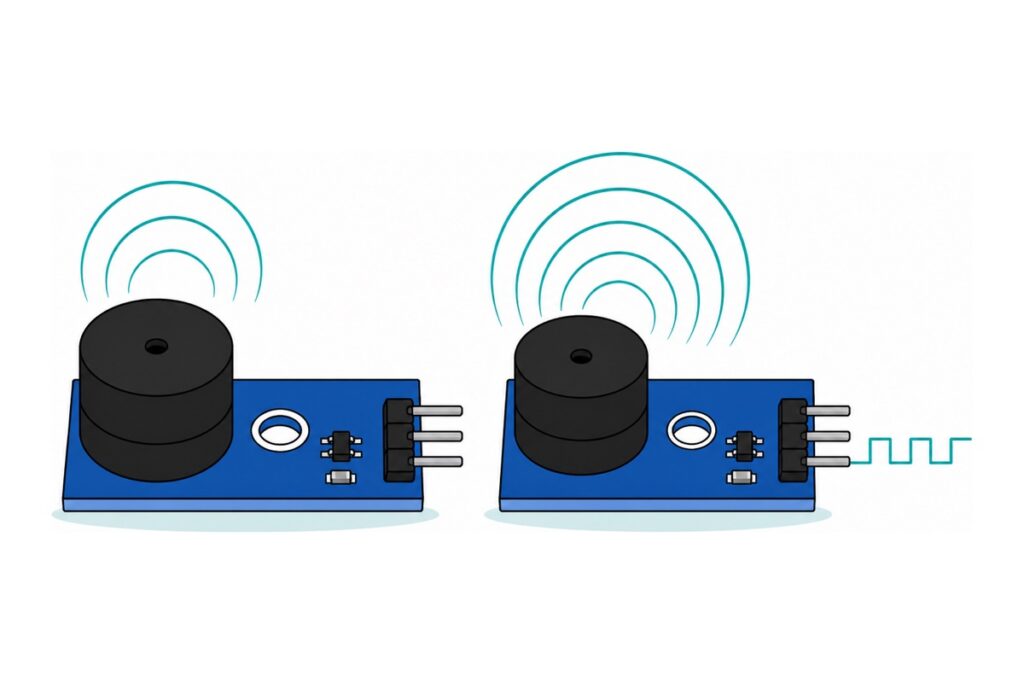
An active buzzer carries its own oscillator and holds one fixed note; a passive buzzer only makes the waveform you feed it. How to tell our lookalike modules apart, why both are silkscreened low-level trigger, how tone() melodies work, and a vibration alarm that only sounds when it should.
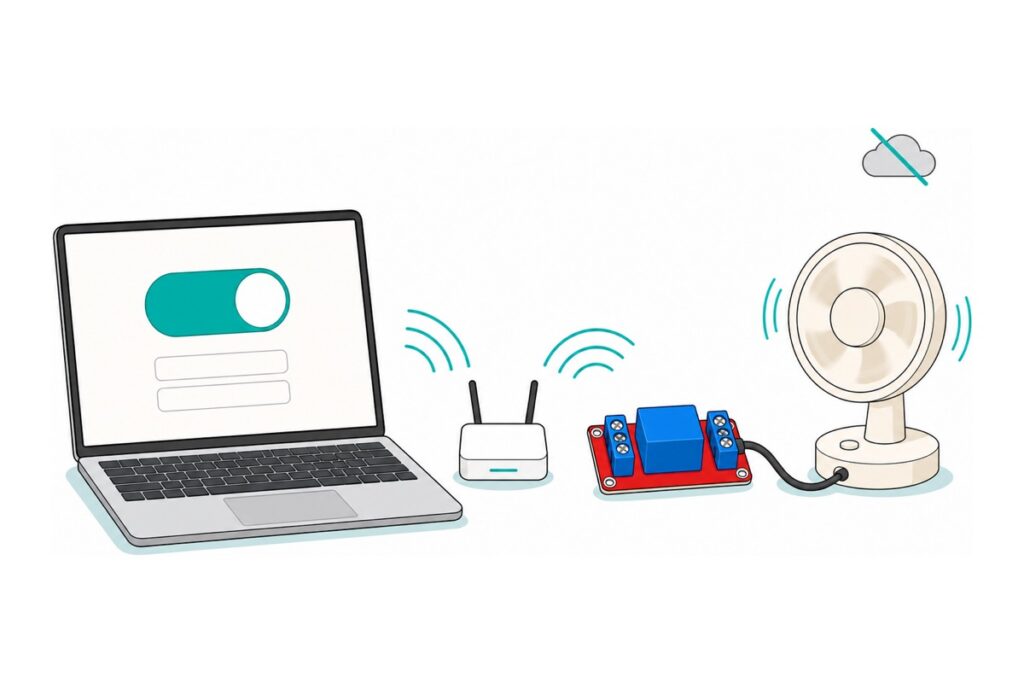
Flash one sketch and the ESP32 serves its own control page: open esp32.local or the board’s IP in any browser on your WiFi and two buttons switch a 5 V relay. No app, no account, no internet — with the full sketch, wiring table, boot-safe GPIO reasoning and an honest WebServer.h vs ESPAsyncWebServer call.
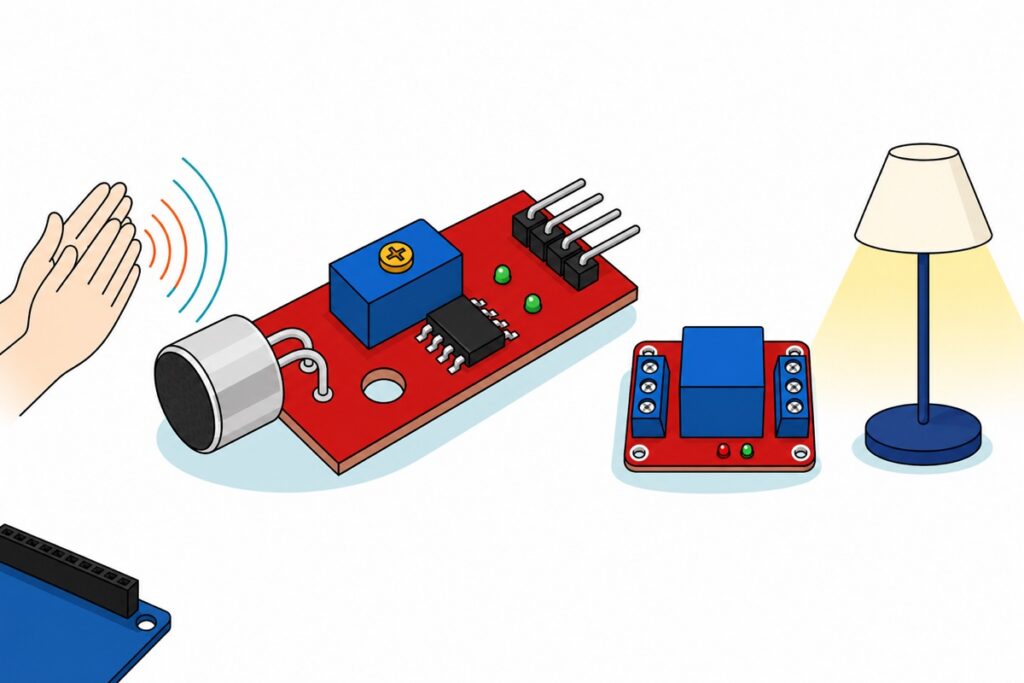
Read the KY-037’s analog pin instead of its trimmer-set digital one: measure the peak-to-peak swing in a 20 ms window, track the room’s noise floor, and let two claps 120–800 ms apart toggle a 5 V relay. Full Uno sketch, wiring table, and the mechanism behind why the usual build drifts.
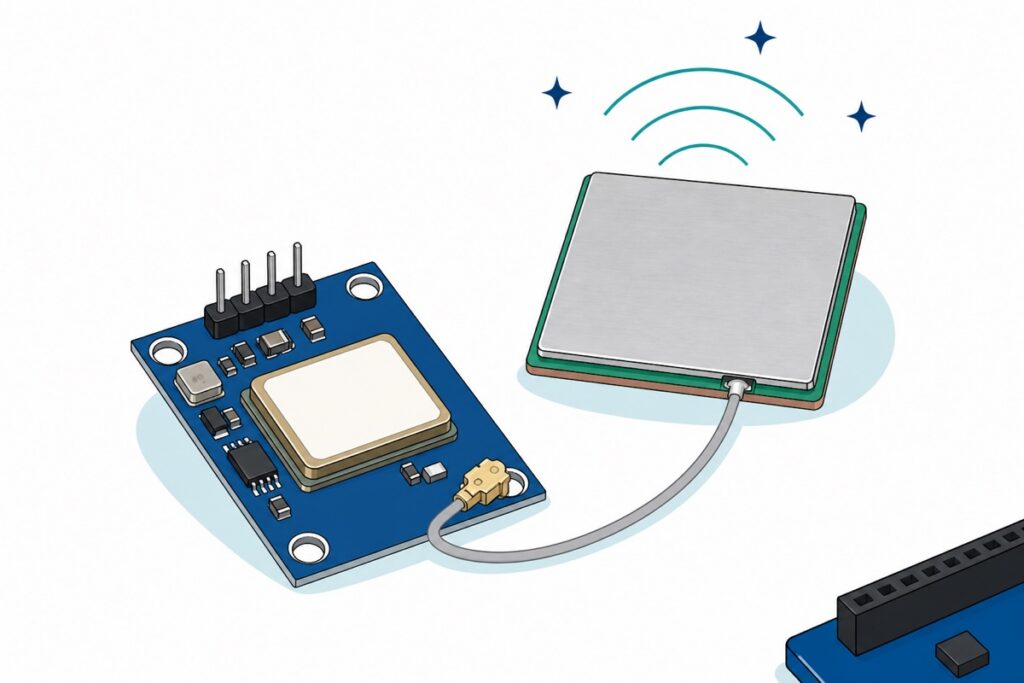
Three wires, TinyGPS++ and a clear view of the sky. Why a NEO-6M that never blinks indoors is working perfectly, and how to tell a wiring fault from a sky fault in two minutes.
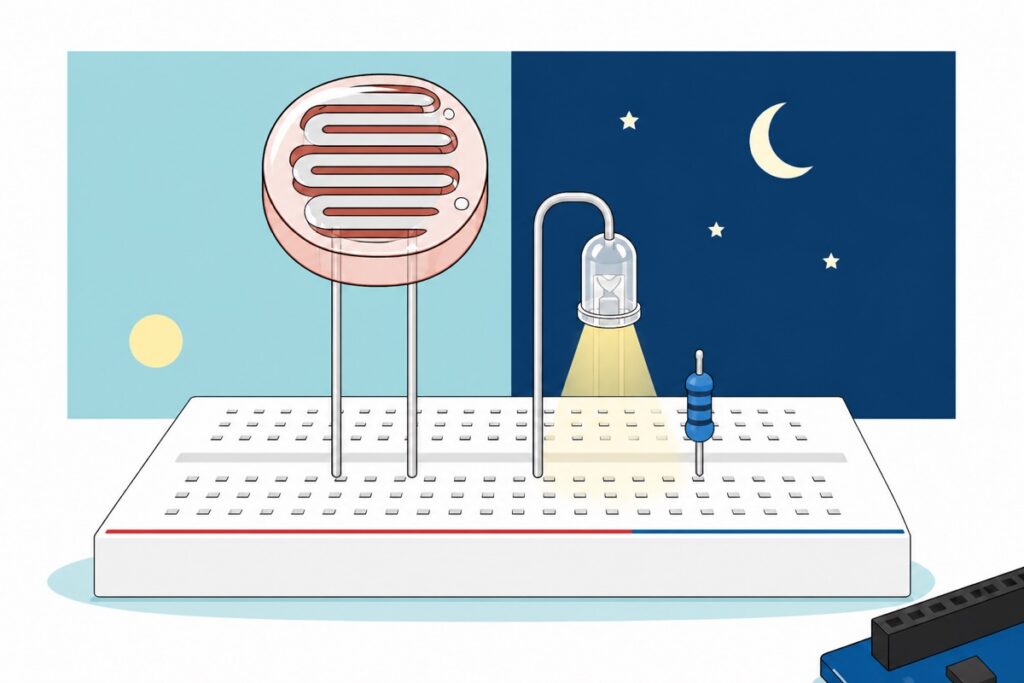
An LDR plus one fixed resistor makes a voltage divider on A0, and two thresholds in code keep a dusk light from flickering. Wiring, calibration and a 12V relay upgrade.
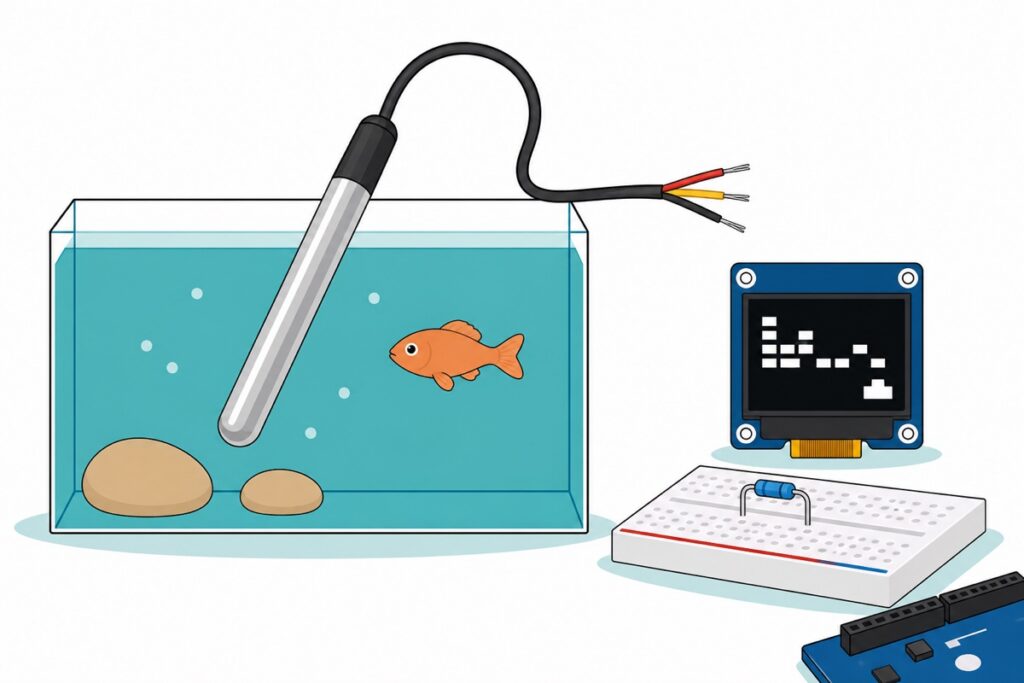
A waterproof DS18B20 reads water temperature over one Arduino pin — red to 5 V, black to GND, yellow to D2, and one mandatory 4.7 kΩ pull-up. Full OLED sketch, several probes on one pin, and what −127 and 85.00 are telling you.
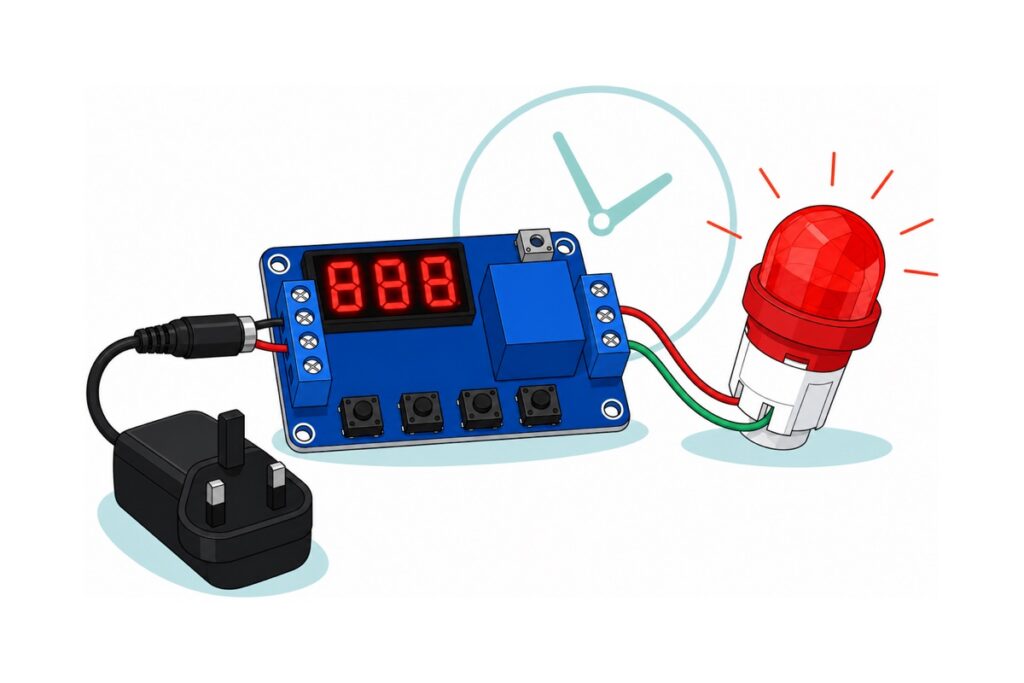
How to wire and set a multi-function 12V delay timer relay module – choosing on-delay, off-delay or cycle mode, setting the time band, and a worked zero-code auto-off light.
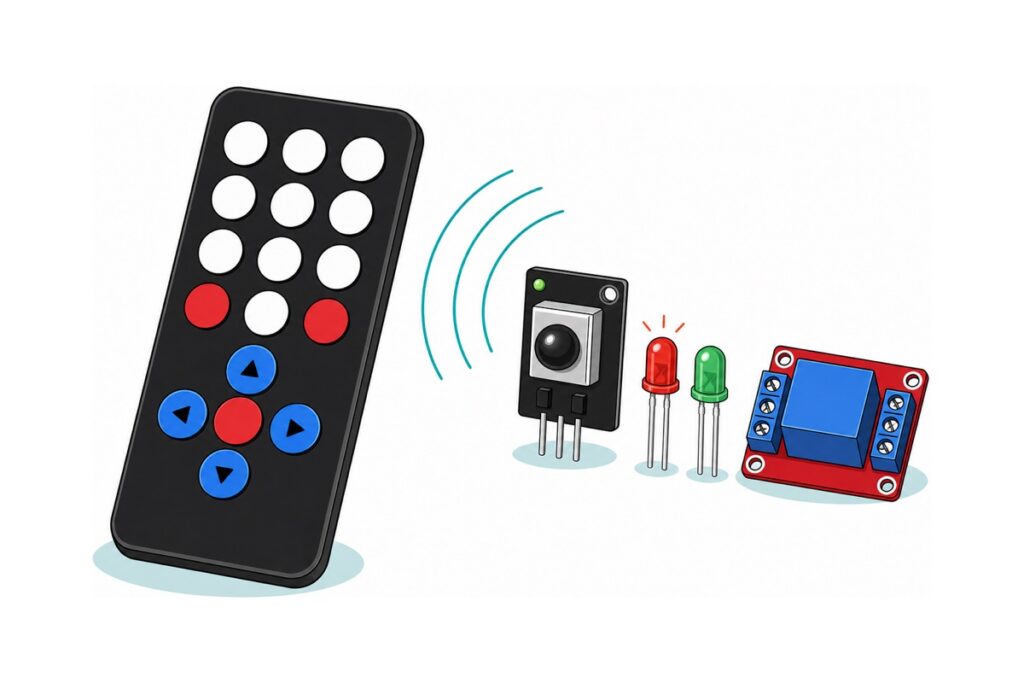
The HX1838 receiver needs one Arduino pin and one library — and the IRremote v2-to-v4 change is why so much copied IR code stops working. Decode your own buttons, then drive two LEDs and a relay.
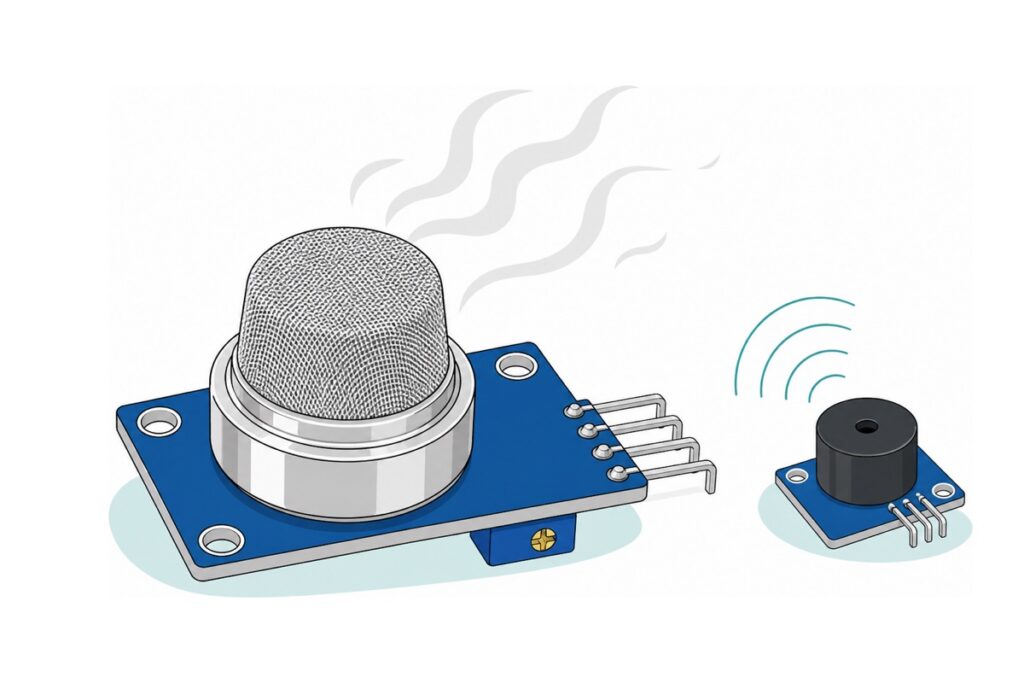
An MQ-2 module tells you the air has changed, not how many ppm. Warm it up, let the Arduino learn what clean air reads, and alarm on the rise — with wiring, working code, honest calibration limits and a relay-driven exhaust fan upgrade.