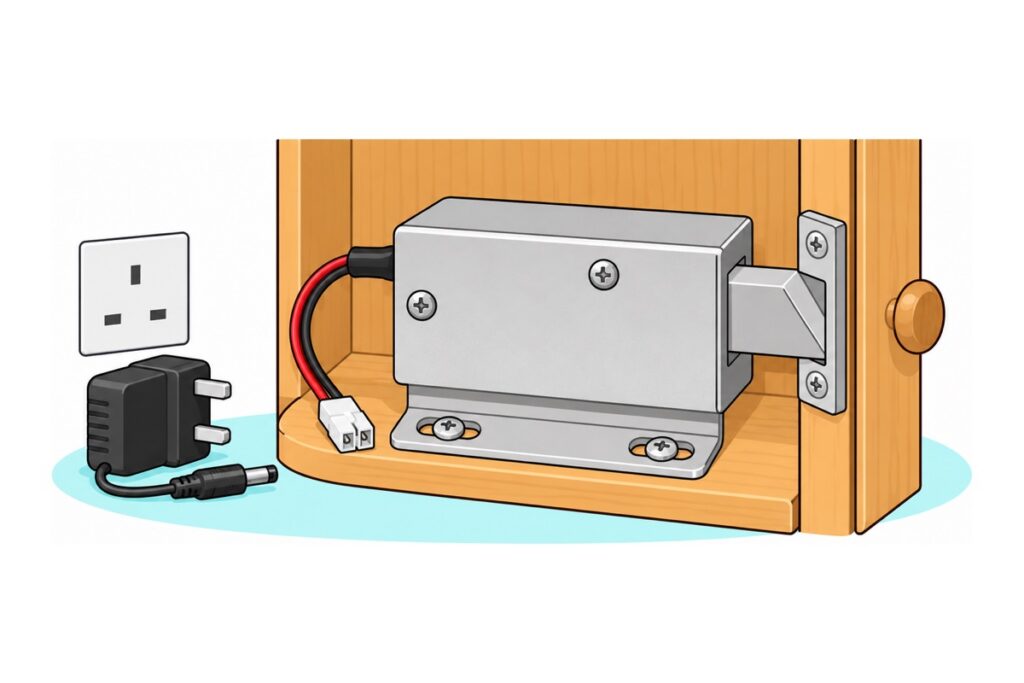
A 12V solenoid lock is fail-secure: it stays locked with no power and opens only while 12V flows through its coil. This guide explains why it can’t run from an Arduino pin or a powerbank, how to switch it with a relay or an IRF520 MOSFET from its own supply, why the flyback diode is required, and how to mount it so the bolt doesn’t jam.
Author Archives: Amir Hakim
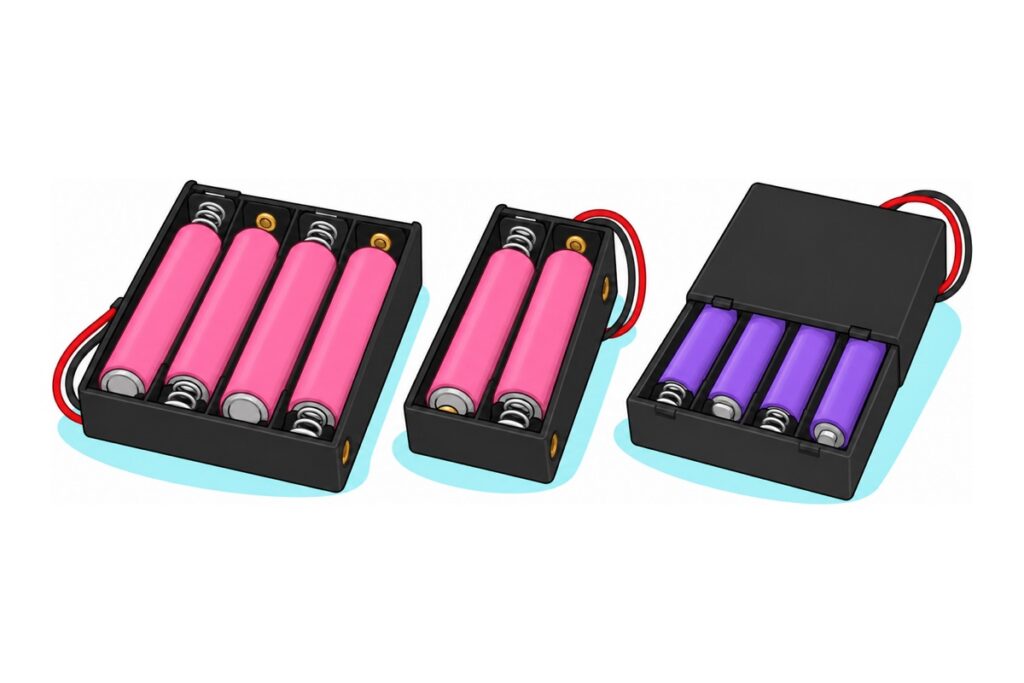
Pick a battery holder by the voltage it makes, not by how many cells it takes. The slots are wired in series: four NiMH AAs make 4.8 V for servos and two 18650s make 7.4 V for an Uno’s barrel jack. This guide also covers why a holder with one unseated cell looks like a dead battery, and when the covered AA case with a switch is worth buying.
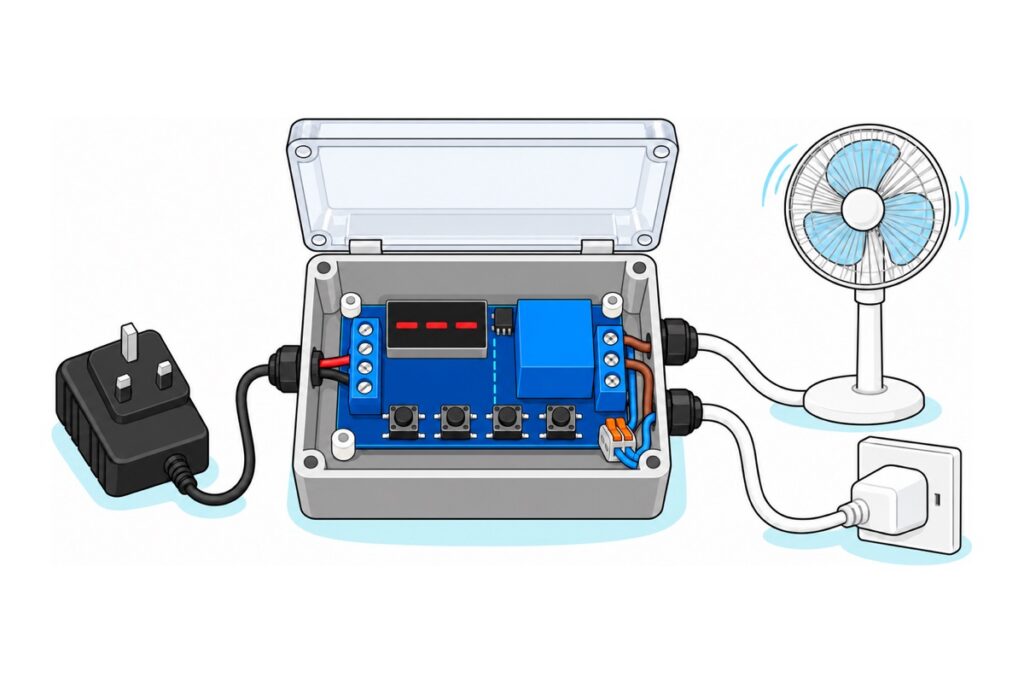
A 220V timer relay module switches a mains appliance only through its relay contacts. The board runs on low-voltage DC and the trigger stays a low-voltage signal. This guide shows how to wire the live through COM and NO, how to tell a DC-supplied board from a mains-powered one, how to check the wiring with the plug pulled, and when a plug-in timer is the better choice.
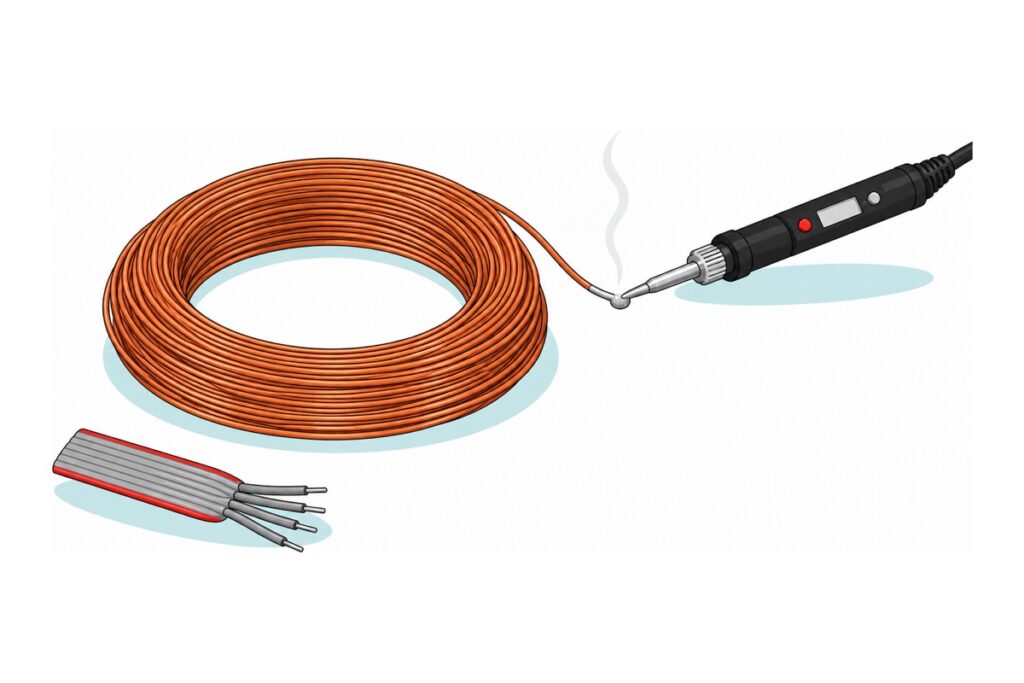
Solder won’t stick to enamelled (magnet) wire until the coating is scraped or burned off, ribbon cable needs short 1–2 second touches, and stranded wire gets only a thin tin at the tip. Plus the honest list of metals a 60–80 W pencil iron will never solder.
A 3–5V mini submersible pump gives 70–110 L/hr at zero lift and draws 100–220 mA — far past an Arduino pin. What the numbers really mean once you ask it to lift water, why it must stay submerged, and which of the three switching lanes (relay, IRF520 MOSFET, DRV8833) your build actually wants.
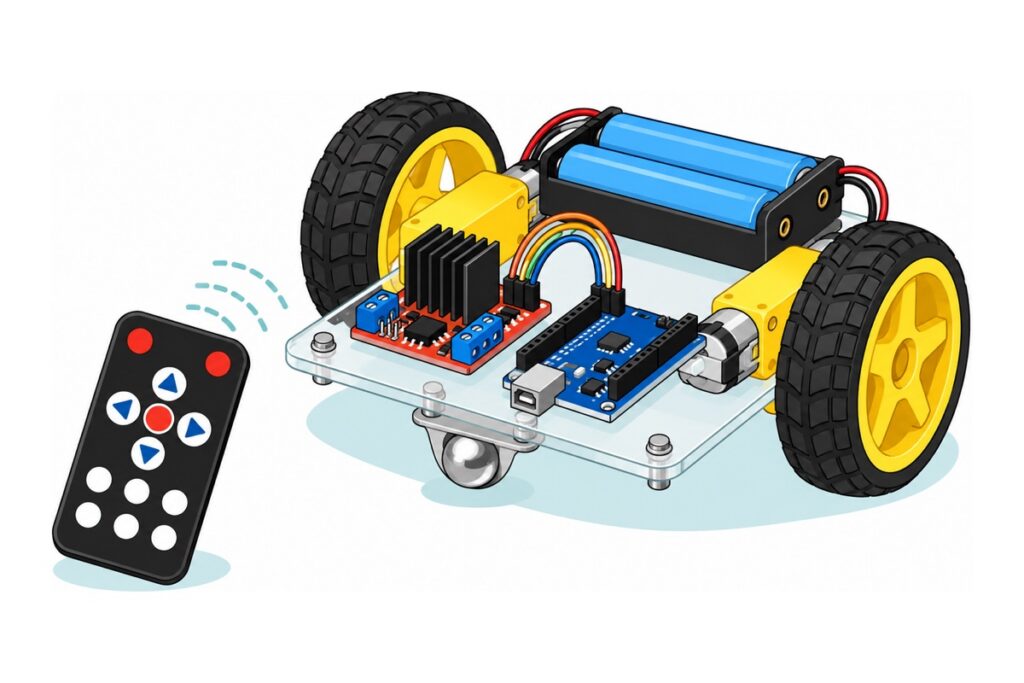
Block diagram, components by element and a sketch checklist for the RBT remote control car (kereta kawalan jauh), then how to build it and pick an IR, Bluetooth or nRF24L01 remote.
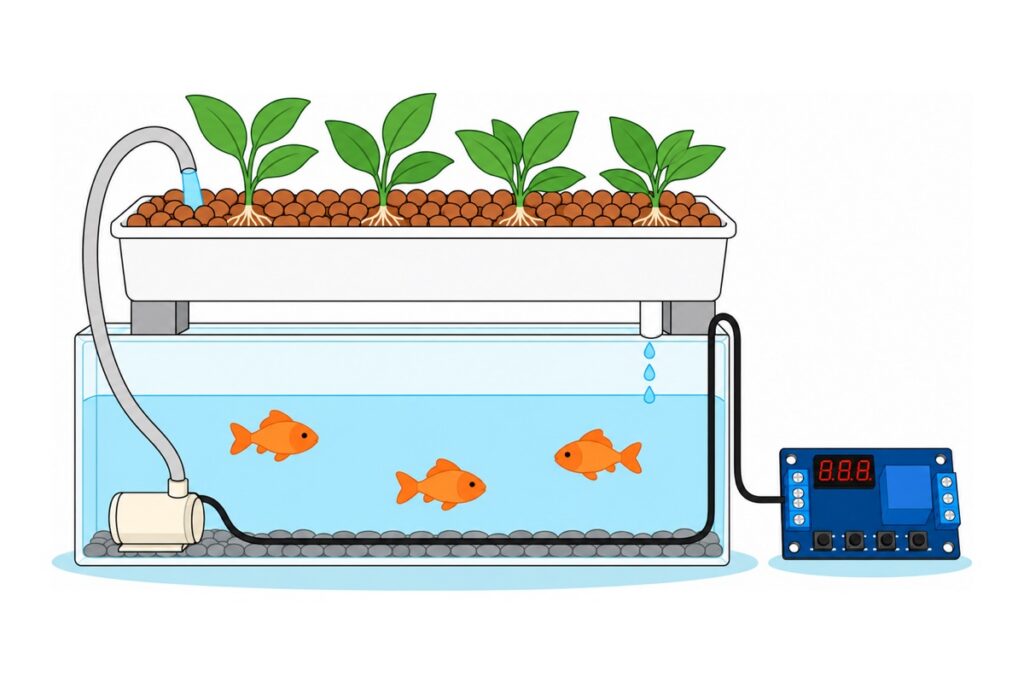
A mini aquaponics system for a school project: fish tank below, grow bed above, and one 5V submersible pump on a timer cycle. Two-tier layout, pump on/off timing, relay wiring, adapter vs battery, the failures that kill it on presentation day, and a six-section report skeleton.
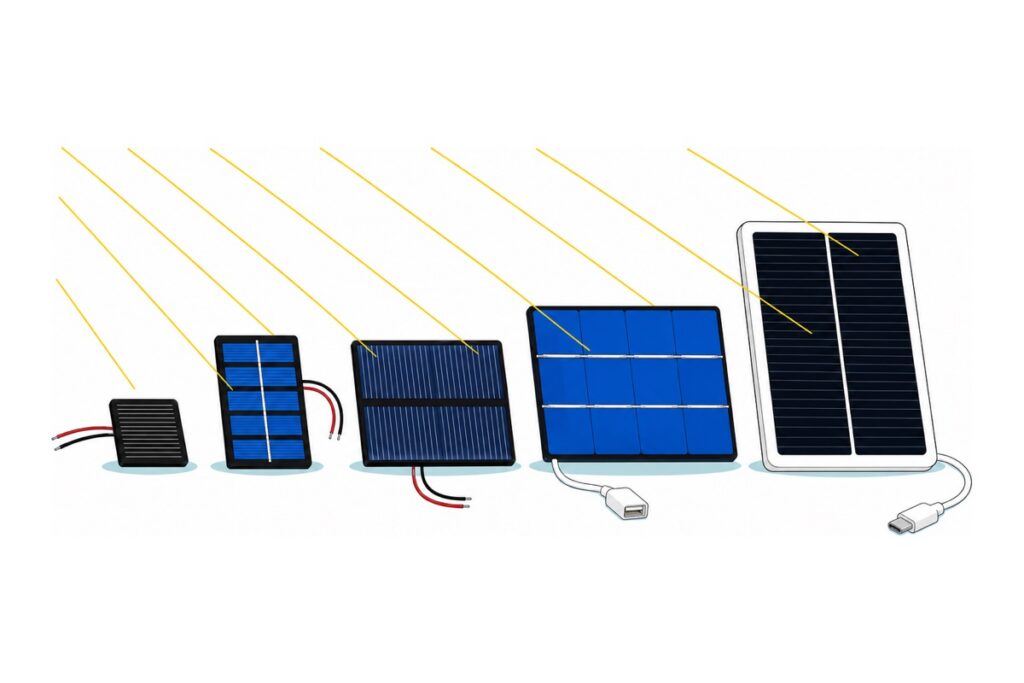
Pick a mini solar panel by the current it actually delivers, not by the number on its label. What 5V and 6V really mean against a TP4056’s 4.0-8.0 V input window, how many mA each size gives in full sun and under Malaysian cloud, why a 2W panel cannot run an Arduino or a water pump directly, and the panel to charge module to 18650 cell to load chain that does work.
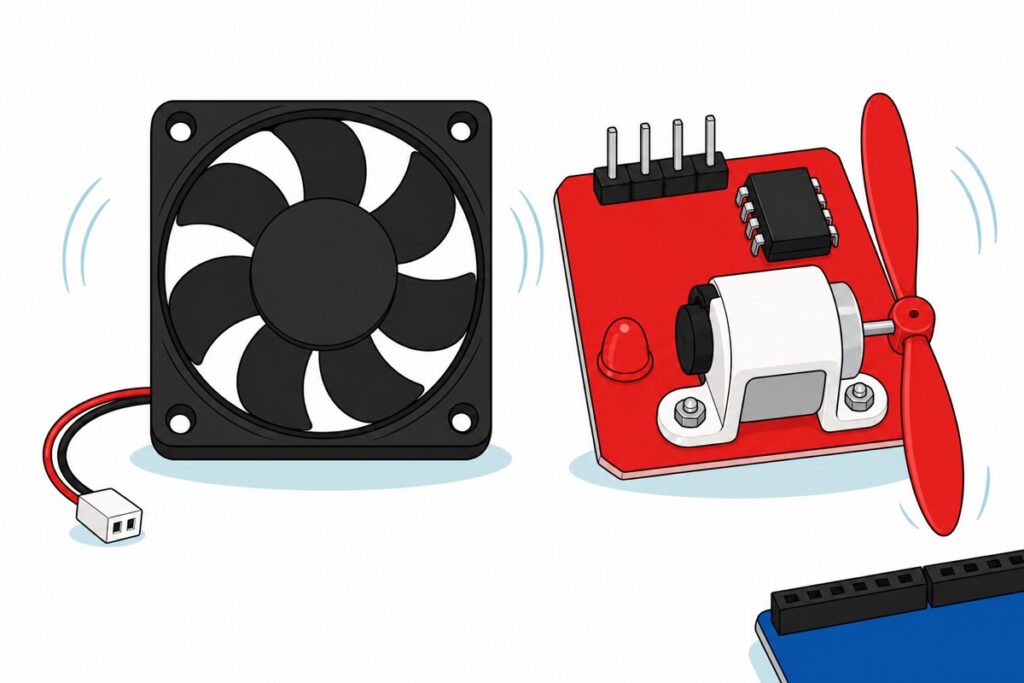
A 5V or 12V case fan is a sealed brushless unit behind two wires; a “fan module” is a bare brushed motor sold on a driver chip. Which to buy, why neither may hang off an Arduino pin, and the three honest ways to switch one.
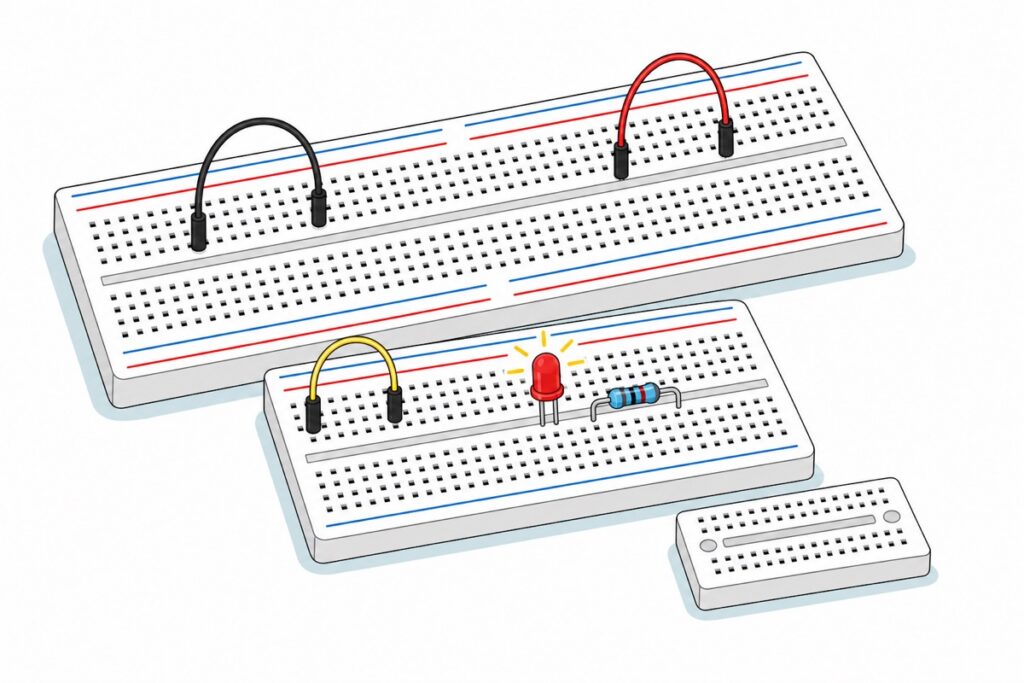
Malaysians call it papan roti. Inside, every group of five holes is one metal clip — here is the hidden hole map, the 170 vs 400 vs 830 size choice, why the 830’s rail breaks in the middle, and the beginner mistakes that kill circuits.