

Tutorials
Lithium Battery Types: Li-ion 18650 vs LiPo vs LiFePO4
Aug
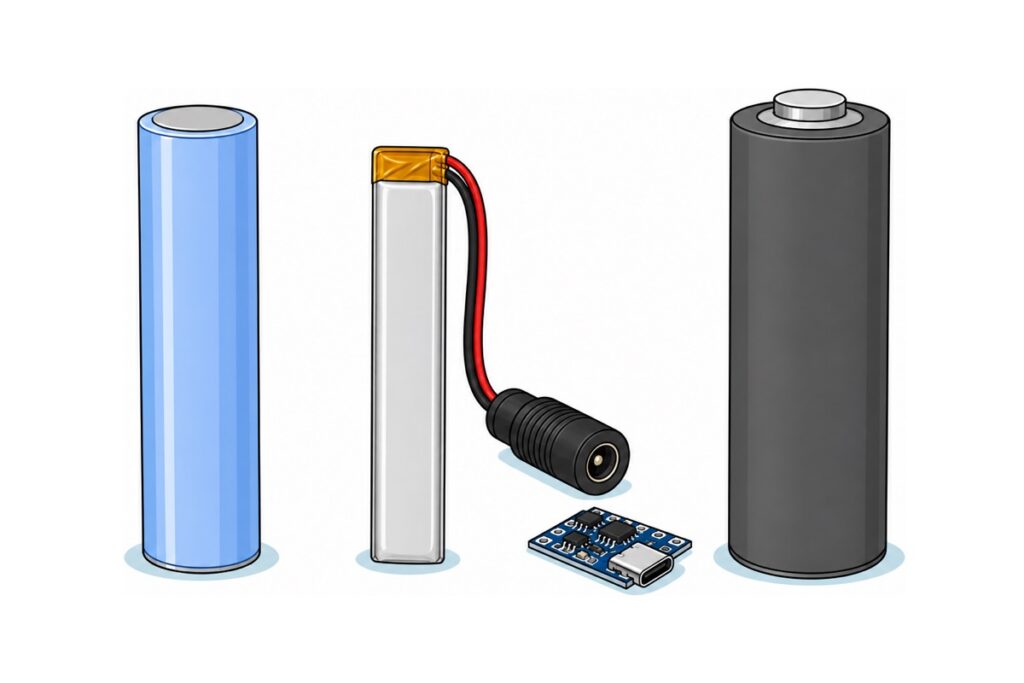
The three lithium battery types you will meet are cylindrical Li-ion (the 18650, for example), the soft LiPo pouch, and LiFePO4. Li-ion and LiPo share the same voltage — 3.7 V nominal, 4.2 V full — and differ only in their container: a rigid steel can versus a foil pouch. LiFePO4 is a different chemistry: 3.2 V nominal, 3.65 V full, so a 4.2 V charger must never touch it.
Short answer: an 18650 in a holder for Arduino and ESP32 bench work, a LiPo pouch when the project space is genuinely thin, and LiFePO4 for hot outdoor installs. One thing to plan for early: none of them can connect straight to your board’s 5 V or 3.3 V pin.
What does “lithium battery” actually mean?
Every cell in this guide is a lithium-ion cell. While charging, lithium ions move from the positive electrode to the negative one and are stored there; while the cell is in use they flow back, and the electrons travelling with them are your project’s current. The “type” names you see on the market really refer to the positive electrode material, because that material is what sets the cell’s voltage.
Our 18650 cells carry the marking ICR on the wrap. In the IEC marking system, I means lithium-ion, C means cobalt (LiCoO₂) and R means a round container. That second letter changes with the chemistry, and it also predicts how hard the cell can push current: a chemistry that packs the most energy into the fixed 18 × 65 mm volume needs thicker layers of active material, and thicker layers mean higher internal resistance. A high-capacity cell is not a high-power cell.
| Wrap marking | Positive electrode | What it tells you |
|---|---|---|
ICR |
Cobalt (LiCoO₂) | Highest energy per gram, moderate current — the ordinary 18650, ours included |
INR / IMR |
Nickel / manganese | Lower capacity, far higher current — cells for heavy loads |
IFR (LFP) |
Iron phosphate | True LiFePO4, 3.2 V nominal — this is the letter to look for |
LiPo is not a different chemistry. Its electrolyte is a polymer gel rather than a liquid, and its container is a foil pouch rather than a steel can — but the electrodes are the same, so its voltage is identical to an 18650’s. Only the shape and the way it fails change.
LiFePO4 really is another chemistry: its positive electrode is lithium iron phosphate. That phosphate bond is more thermally stable, but it also holds a lower voltage — and that half-volt difference is behind nearly every piece of practical advice below.
What we stock — one representative for each route
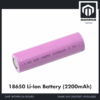 3.7V 18650 Battery Rechargeable Li-Ion Battery 1200mAh 2200mAh 3200mAh Flat Top - 18650 Li-Ion Battery (2200mAh)
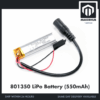 3.7V Li-Po Battery Lithium Polymer Battery 801350 103450 Rechargeable - 801350 LiPo Battery (550mAh)
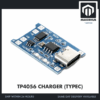 TP4056 18650 Battery Charger Module Lithium Ion Battery Li-ion Battery Charger Type C Micro USB - TP4056 CHARGER (TYPEC)
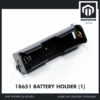 18650 Battery Holder 1/2/3/4 Slot 3.7V Battery Cell Housing Battery Case Battery Casing - 18650 BATTERY HOLDER (1)
Optional extras
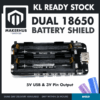 Dual 18650 Lithium Battery Holder Shield V3 Power Module 5V USB 3V Pin Output Charging
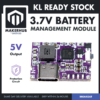 3A 3.7V BM Protection Circuit Module Li-ion Lithium Battery Charging Board
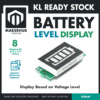 Battery LED Capacity Indicator Lithium Ion Battery Level Tester Green Display Battery like disply
Three different ways to turn one 3.7 V cell into a project supply: a dual-18650 shield for ESP32 boards, an IP5310 module that charges and boosts to 5 V in one go, and a battery level indicator so you see a nearly empty cell before it gets too empty.
Why does a “3.7 V” battery read 4.2 V on a multimeter?
The 3.7 V printed on a Li-ion wrap is the nominal voltage — a rough average across one discharge cycle, not a reading at any given moment. A freshly charged cell reads about 4.2 V and counts as empty around 3.0 V. Those three numbers are a window, and every chemistry has its own.
| Chemistry | Nominal | Full | Empty | Typical cycles | Energy per kg |
|---|---|---|---|---|---|
| Li-ion ICR (18650) | 3.7 V | 4.2 V | 3.0 V | 500–1000 | 150–200 Wh |
| LiPo (pouch) | 3.7 V | 4.2 V | 3.0 V | 300–500 | 150–200 Wh |
| LiFePO4 | 3.2 V | 3.65 V | 2.5 V | 2000+ | 90–120 Wh |
A lithium charger works in two phases: it pushes a constant current until the cell reaches its full voltage, then holds that voltage and lets the current taper off by itself. So the charger’s entire job is to bring the cell up to its own full voltage and then stop. Two things follow immediately.
First, a 4.2 V charger must never touch a LiFePO4 cell. That cell is already saturated at 3.65 V, so a 4.2 V charger keeps pushing another 0.55 V into a cell that is already full, and the surplus energy comes out as heat and chemical damage. The TP4056, the IP5310 and almost every cheap “lithium charging module” are fixed at 4.2 V.
Second, the opposite direction is not dangerous, only wasteful: a 3.65 V charger stops pushing the moment a Li-ion cell reaches 3.65 V, long before that cell is half full. Every 70 mV below 4.2 V throws away roughly 10% of usable capacity, and 3.65 V is 550 mV below it.
If you want to see these cells held and compared physically — real size, weight, and what a finished pack looks like — this video does it from an RC hobby angle.
What do numbers like 18650 and 801350 mean?
The number on a lithium cell is its physical size, not its capacity. Cylindrical cells use the first two digits for the diameter in mm and the next three for the length in tenths of a mm: 18650 means 18 mm diameter × 65.0 mm long. Pouch cells use three pairs of digits instead — thickness, width, length: 801350 means 8.0 mm thick × 13 mm wide × 50 mm long.
| Code | Shape | Size | Commonly used for |
|---|---|---|---|
| 18650 | Cylindrical | 18 × 65 mm | Holders, shields, power banks |
| 14500 | Cylindrical | 14 × 50 mm | AA size — but 3.7 V, not 1.5 V |
| 801350 | Pouch | 8.0 × 13 × 50 mm | Thin projects, small enclosures |
| 103450 | Pouch | 10 × 34 × 50 mm | Higher-capacity pouches |
| 32650 | Cylindrical | 32 × 65 mm | The common LiFePO4 size |
One size trap comes up again and again: a protected 18650 carries a small circuit board under the wrap at its negative end, so it grows to 68–70 mm and usually will not fit a 65 mm holder. Our 18650 cell is the flat-top type without that board, so it fits perfectly, and its protection comes from the charging module instead. The same shape also comes in 1200 mAh and 3200 mAh versions.
Why does the container decide the danger?
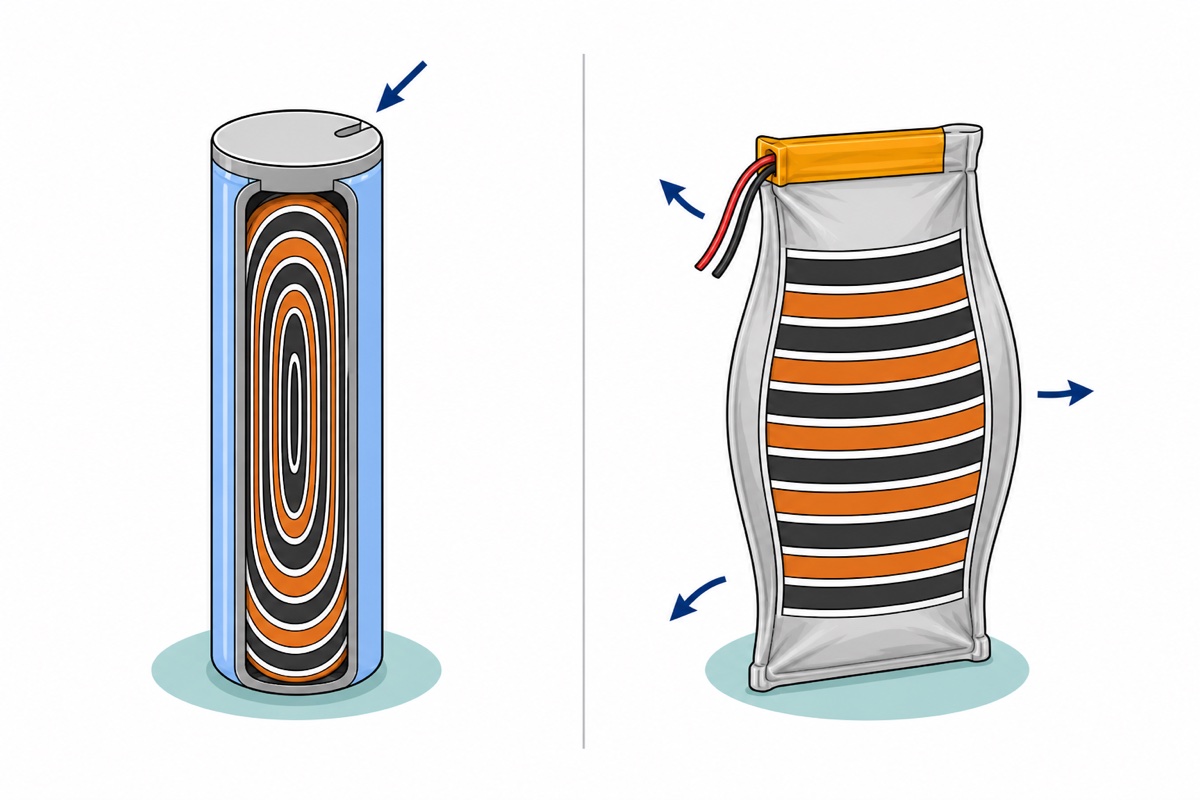
Between the two electrodes inside any lithium cell sits a plastic separator layer about 20 microns thick — thinner than a human hair. As long as that layer is intact, current can only leave through the terminals. Puncture it and the two electrodes touch directly at one tiny point, the cell’s entire current concentrates there, and the local heat climbs very fast. That is the real reason behind the advice “never puncture a lithium battery”.
This is where the container becomes the safety story. An 18650 sits inside a rigid steel can with a relief vent at its positive end: hard to puncture, and if the internal pressure rises it releases gas through that vent. A LiPo pouch is wrapped in laminated aluminium foil as thin as paper — light and slim, but a screw or the edge of an enclosure is enough to damage it.
Decomposing electrolyte produces gas in both containers, but only the pouch shows it: it swells until its shape changes. A swollen LiPo pouch is retired. Do not charge it, do not press it flat, take it to a battery recycling point.
| Real hazard | What happens inside | How to avoid it |
|---|---|---|
| Puncture or crush | The 20-micron separator tears, the electrodes touch directly, and heat concentrates at one point | Keep cells in a holder or a hard case, never loose in a bag |
| Over-discharge | Below about 2.5 V the cell starts losing capacity permanently; if it is left sitting below about 1.5 V the copper current collector dissolves as well and can redeposit as a metallic short inside the cell | Use a protected module, or watch the level with an indicator |
| Wrong charger voltage | The cell is pushed past its own full voltage; the surplus energy becomes heat | One charger per chemistry; never mix 4.2 V with LiFePO4 |
| Shorted terminals | A cell’s internal resistance is only tens of milliohms, so tens of amps flow instantly | Never carry loose cells with keys or coins; the can body is the negative pole, so a torn wrap is already an exposed terminal |
And here is what is not a hazard: 3.7 V cannot give you an electric shock through dry skin, and a cell charged with the right module, stored at room temperature and not physically damaged is an ordinary, safe component. We sell cells, holders and charging modules — not assembled packs — so the protection around the cell is part of the builder’s job.
How to charge each type of lithium battery
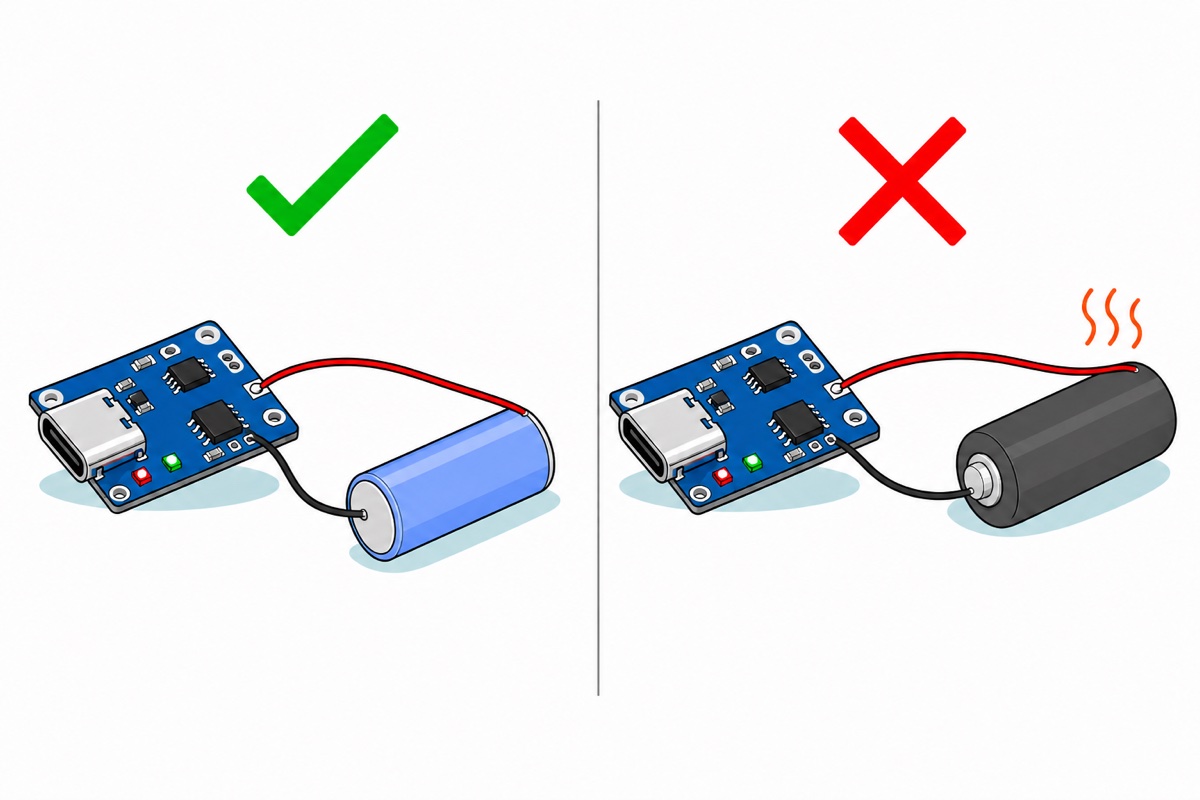
The TP4056 Type-C module is the simplest route for a single Li-ion or LiPo cell. That 25 × 16.5 mm blue board carries three chips: the TP4056 itself, which charges at a fixed 4.2 V set inside the chip (datasheet), and a protection pair — a DW01A-type controller with the twin MOSFET that acts as its switch. That pair disconnects the load when the current spikes, and when the cell falls to about 2.4 V; the 3.0 V figure often listed for boards of this kind is the voltage at which it reconnects, not the voltage at which it cuts out. Make 3.0 V your own stop-using point and leave the chip as an emergency brake. That protection acts on the OUT+/OUT- pads, not on the B+/B- pads where the cell connects, so our flat-top cell is protected only when the project draws its power from OUT. For pad-by-pad wiring, follow our guide on how to use a TP4056 to charge an 18650 safely — this guide will not repeat it.
Match the charge current to the cell size. The TP4056’s charge current is set by a single Rprog resistor on the board, so 1 A is a board choice, not a law of chemistry.
| Cell | 1 A into this cell | Verdict |
|---|---|---|
| 18650 2200 mAh | 0.45C | Comfortable — this is the cell the module was designed for |
| 801350 pouch 550 mAh | 1.8C | Far too fast: this pouch is rated 0.5C continuous and 1.0C maximum. Pick a module set to around 250–300 mA |
A single lithium cell cannot feed a board’s rail directly, and the voltage window above explains why: its range straddles 3.3 V and never reaches 5 V.
| Board rail | Needs | One lithium cell (4.2–3.0 V) |
|---|---|---|
| ESP32 dev board 3.3 V pin | 3.0–3.6 V | Too high with a full cell, too low with a nearly empty one |
| Uno or ESP32 5 V pin | 5 V | Never gets there — needs a boost |
| Uno barrel jack | 7–12 V | Far too low |
So there is always a module between the cell and the board, and there are two ready-made routes. The IP5310 module charges the cell over USB-C and boosts its output to 5 V at the same time, protection included — essentially a power bank board. The dual-18650 shield does the same job for ESP32 and Arduino boards through the USB-A port and the 5V/3V pins along its edge. The shield’s two 18650 bays are wired in parallel, not in series: a series arrangement would give 7.4–8.4 V and need a buck converter, whereas this shield boosts a 3.7–4.2 V rail to 5 V through a single-cell charging path. Two cells there mean double the runtime, not double the voltage — see our buck versus boost guide.
A battery level indicator reads the pack voltage and lights up to four bars. Because a lithium cell’s voltage stays almost flat through the middle of its window and then drops sharply at the end, the reading is useful as a “nearly empty” warning, not as an exact percentage.
LiFePO4 needs a dedicated 3.65 V charger, so you buy two things instead of one — which is why it rarely pays off for bench work. It pays off when the project box lives outdoors: a sealed box under the Malaysian sun easily reaches 50–60 °C, and at that temperature a cobalt cell loses capacity far faster than at room temperature even while merely sitting in storage, while the LiFePO4 phosphate bond holds up better. We stock 18650 Li-ion cells, LiPo pouches, holders and 4.2 V charging modules — not LiFePO4 cells or chargers — so if your project needs LiFePO4, buy the cell together with a matching charger as one set.
So which one should you pick for an Arduino or ESP32 project?
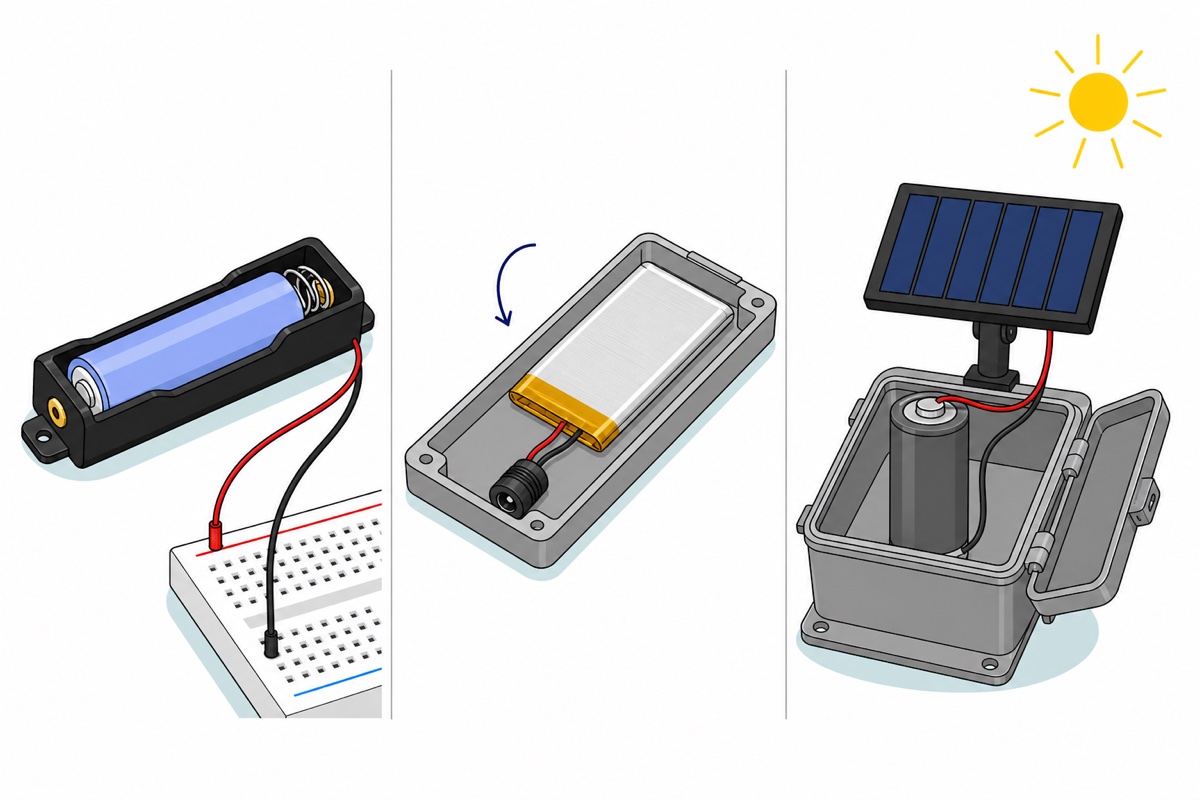
For bench work, one 18650 cell in a single-slot holder is the right default: the cell swaps out without soldering, the steel can forgives rough handling, and every ordinary charging module was designed for it. A three-slot holder is there if you need more, but building a pack brings its own series-versus-parallel decision — our guide to 18650 charging boards and holders covers it. A cell and a holder alone still do not give you 5 V — a boost module is the third part of the same order.
The current limit is the second filter, and internal resistance is how it works. An 18650 of this class sits around 25 mΩ: at 2.2 A it throws away about 0.12 W as heat, but at 10 A it throws away 2.5 W inside a 46 g can. That is why the continuous figure, not a momentary peak, decides a project: an ICR cell is comfortable at around 1C, so a 2200 mAh cell means roughly 2.2 A continuous. Plenty for an ESP32 with Wi-Fi (its peak stays under half an amp), but not for several motors or servos at once. If your ESP32 dies the moment Wi-Fi comes on, the cause is usually the rail rather than the cell — see our ESP32 power supply guide.
| Your project | Pick | Why |
|---|---|---|
| Arduino/ESP32 prototype on the bench | 18650 in a holder | Swappable cell, hard can, supported by every charging module |
| Portable ESP32 that needs 5 V directly | Dual-18650 shield | Two parallel cells + a 5 V boost + a charging port on one board |
| Thin enclosure, wearable, 8 mm of space | 801350 LiPo pouch | Flat shape; no cylinder will fit — but only ~275 mA continuous |
| Outdoors, hot, solar, running for years | LiFePO4 (look for IFR or LFP) |
2000+ cycles and more stable when hot; off our shelf, so buy the cell and a 3.65 V charger as one set |
| Several motors or servos | Not a single ICR cell | Limited to about 1C; you need a pack or high-rate cells |
For the thin route, our 801350 LiPo pouch comes protected and pre-wired; the same pouch shape also comes in the 103450 size. One number to check before you choose it: this 550 mAh pouch is rated 0.5C continuous (roughly 275 mA) with 1.0C peaks. Enough for a clock, small sensors and LEDs, but tight for an ESP32 transmitting Wi-Fi — the radio’s peaks already come close to that limit. For an outdoor solar install, our solar panel and 18650 guide shows the same system shape with the chemistry we stock.
Common mistakes we see
Picking a cell on mAh alone. Capacity tells you how long, not how hard — a cell built for maximum capacity is always rated for less current than a cell built for current. Ignore cells printed 9800 mAh, too: the 18 × 65 mm cylinder volume is fixed, so the best 18650s on the market stop at around 3500 mAh.
Charging a LiPo pouch straight from a 5 V phone charger. A phone charger gives a fixed 5 V with no constant-current phase and no stopping point at 4.2 V. The protection board on the pouch may cut it off, but that is an emergency brake, not a charging method. Use a real 4.2 V charging module.
Running an unprotected cell until the project dies by itself. A cell that falls far below 3 V may look recovered after a charge, but some of its capacity is gone for good, and that is the cell that fails a few weeks later. A cell that has been sitting below 1.5 V should be disposed of, not recharged. Draw project power from the charging module’s OUT pads, not straight from the cell terminals.
Trying to plug a LiPo pouch into the Arduino Uno’s barrel jack. Our 801350 pouch tail ends in a female 5.5 × 2.1 mm DC socket, the same kind as the socket on the Uno board — two female sockets cannot mate. And even if they could, 3.7 V is far below the 7–12 V range that board’s voltage regulator needs. Connect the pouch to a charging module or a boost module.
FAQ
What does lithium battery mean?
A rechargeable cell that stores energy by moving lithium ions between two electrodes. The type names — Li-ion, LiPo, LiFePO4 — refer to the positive electrode material and the shape of the container, and that is what sets the voltage.
What are the advantages of lithium-ion over lithium polymer (LiPo)?
Cylindrical Li-ion cells like the 18650 are tougher thanks to the steel can, swap out without soldering, and survive more cycles. LiPo can be made thin and light, so it wins when the project space is flat.
Which type of lithium battery is safest?
LiFePO4, because its phosphate bond is more thermally stable and its full voltage is lower. But all three are safe when charged with the right charger, never punctured, and never run too deeply flat.
Can I charge a LiFePO4 battery with a TP4056 module?
No. The TP4056 is fixed at 4.2 V inside the chip, while a LiFePO4 cell is already full at 3.65 V, so the module would keep pushing voltage into a cell that is already saturated. LiFePO4 needs a 3.65 V charger.
What is the real size of an 18650 lithium battery?
18 mm diameter and 65 mm long — that is what the number means. Protected cells grow to 68–70 mm because of the small circuit board at the negative end, and often will not fit an ordinary holder.
Last updated August 2026. Stuck? Chat with us on WhatsApp.

Pingback: IoT Project Ideas for FYP: 10 You Can Finish Alone