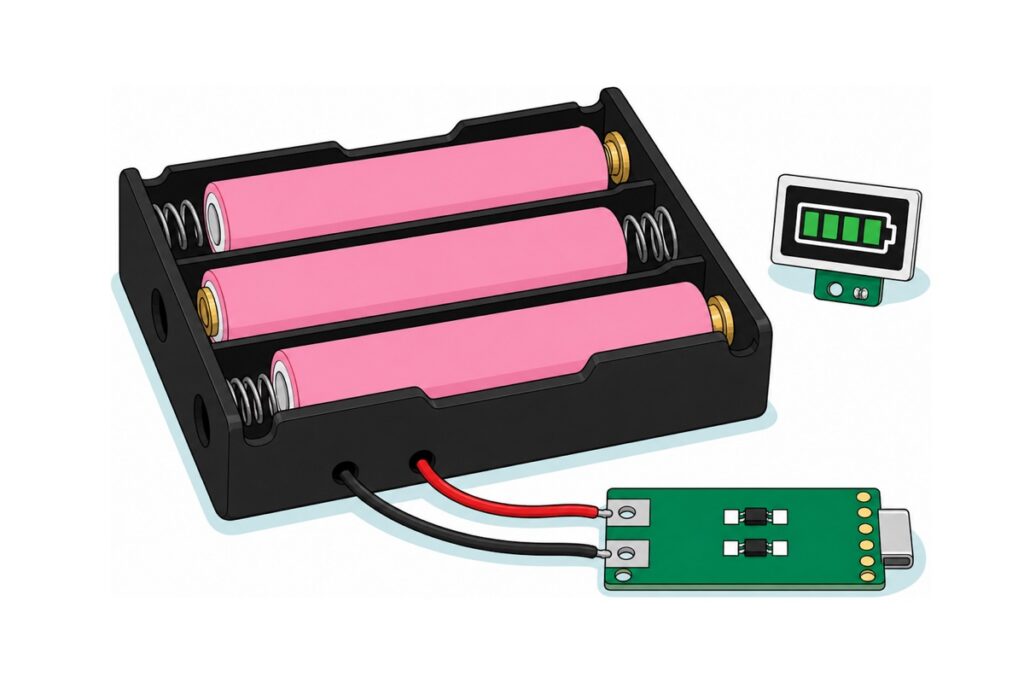
Multi-slot 18650 holders wire their slots in series, so three cells make an 11.1 V pack (12.6 V full) at one cell’s capacity — and a TP4056 can never charge it. A complete 3S build with a USB-C charging board and a four-bar capacity indicator, with the arithmetic behind every number.
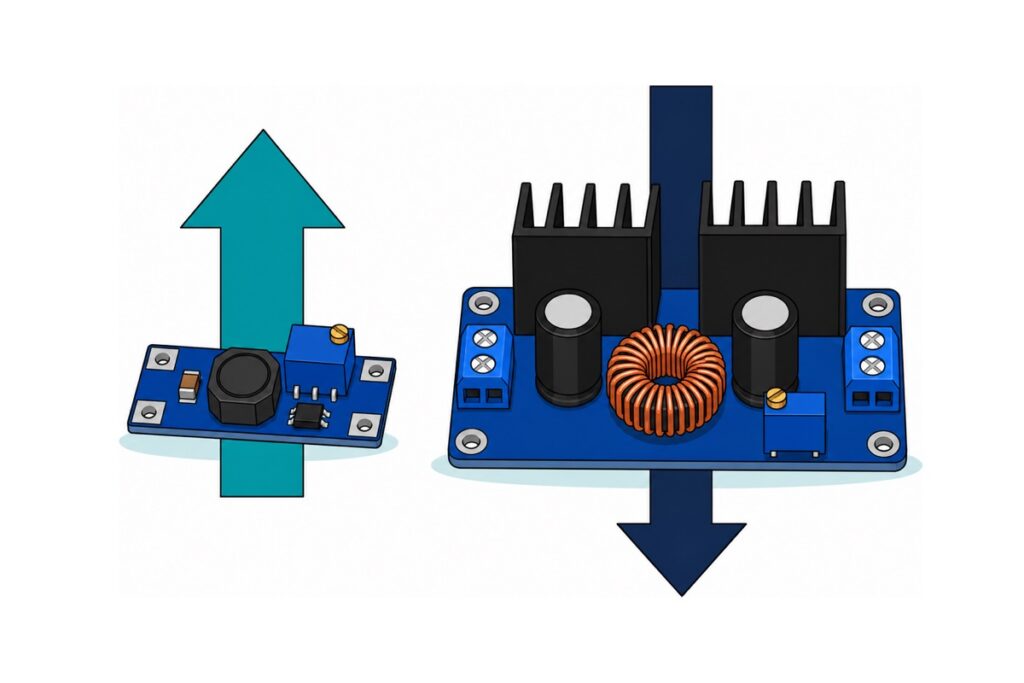
Compare your source voltage with the voltage your load needs: source higher means a buck (LM2596, XL4016), source lower means a boost (MT3608, XL6009). Includes the power-balance arithmetic behind every converter’s current rating, and why a linear regulator or a resistor divider is not a substitute.
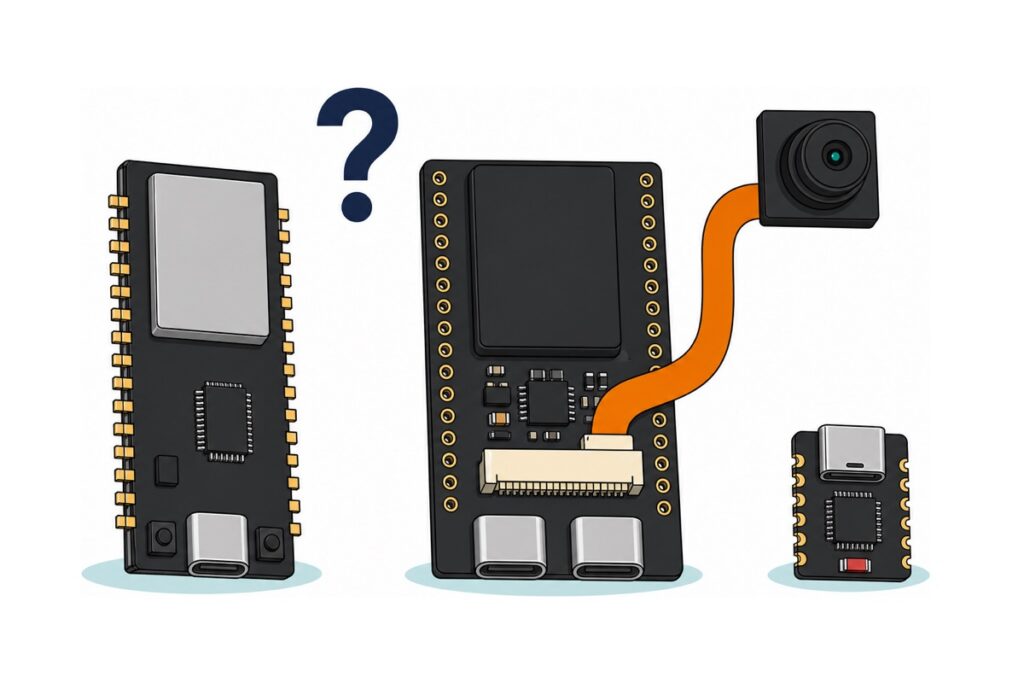
Five listings all say “ESP32” and differ in ways the shelf label never shows. This guide settles the four axes that decide which one you should buy: the USB chip (CH340 vs CP2102, and which board is Type-C), the header length (30 vs 38 pins, and how many of those eight extras are actually usable), the chip generation (classic LX6, S3 with PSRAM, C3 RISC-V), and the entry you pick in the Arduino IDE board list.
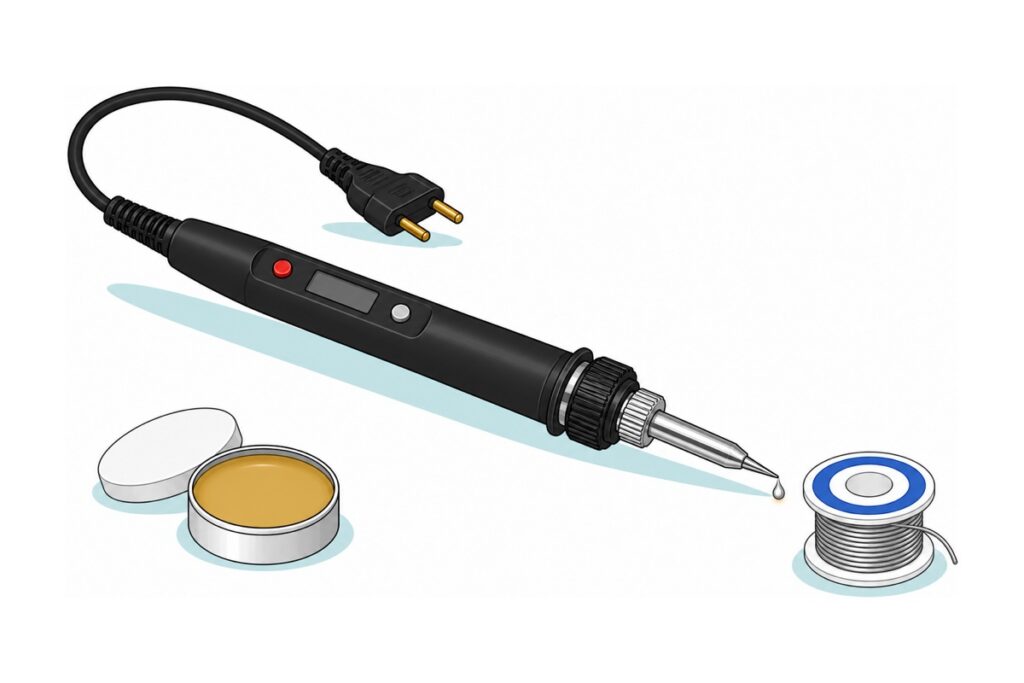
Which soldering iron to buy first, what flux actually does to the metal, and the five reasons a joint refuses to take — with the fix for each.
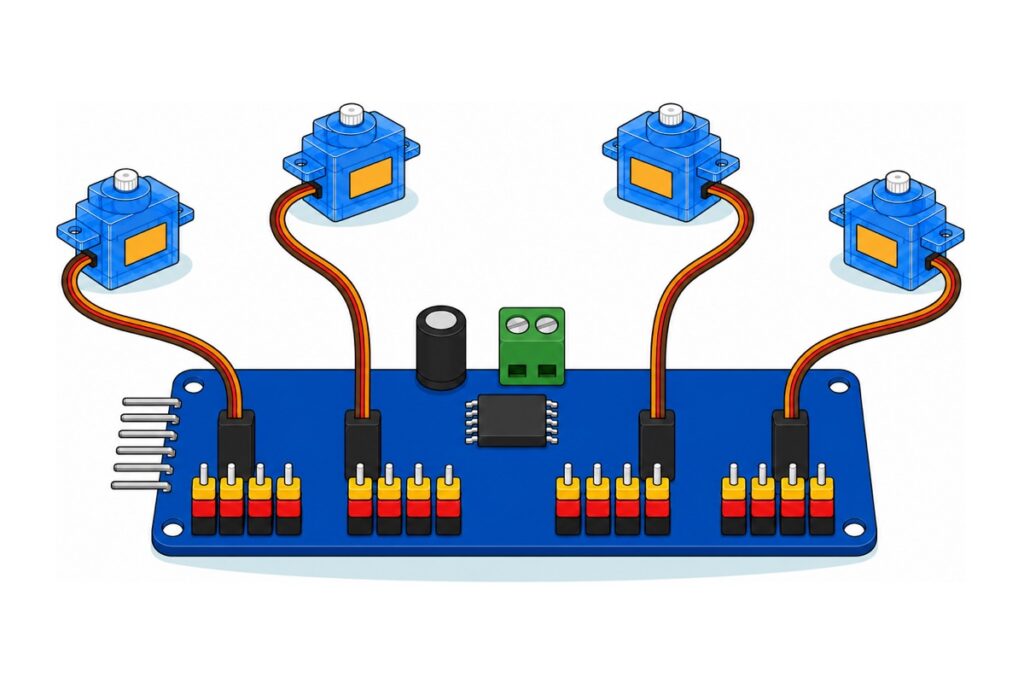
Servos brown out an Arduino because they pull amps from a rail rated in milliamps. The PCA9685 gives them their own power rail, two I2C wires, and 16 channels you calibrate per servo.
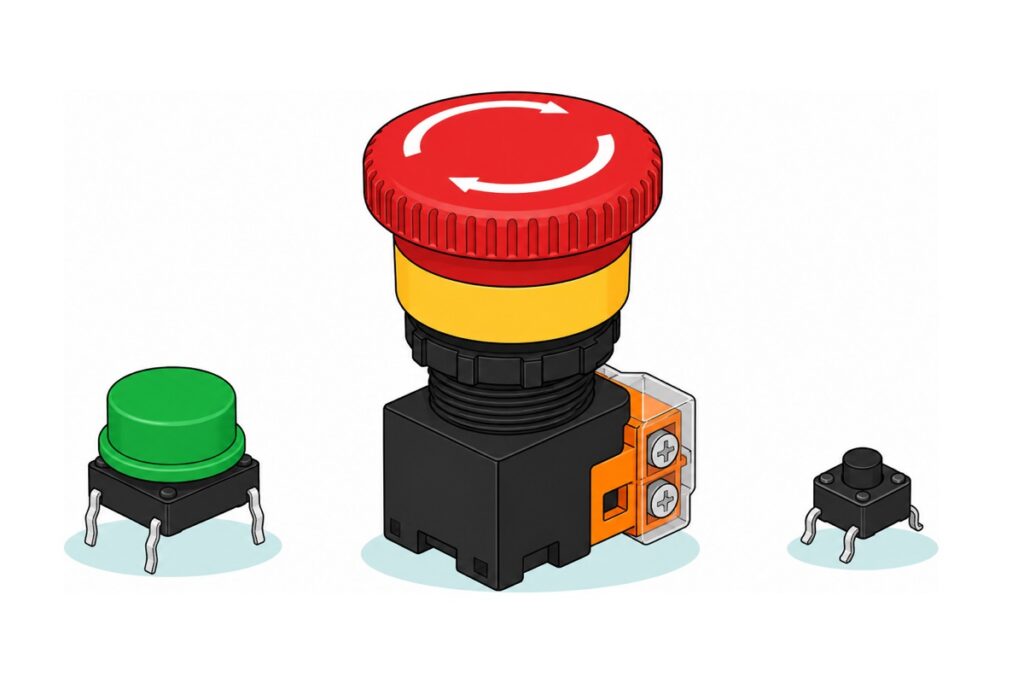
Momentary, latching or maintained; NO versus NC and why every emergency stop is wired NC; why a floating pin presses itself and how INPUT_PULLUP fixes it; which two legs of a 6×6 tactile switch to use; and a millis() debounce that does not block the rest of your sketch.
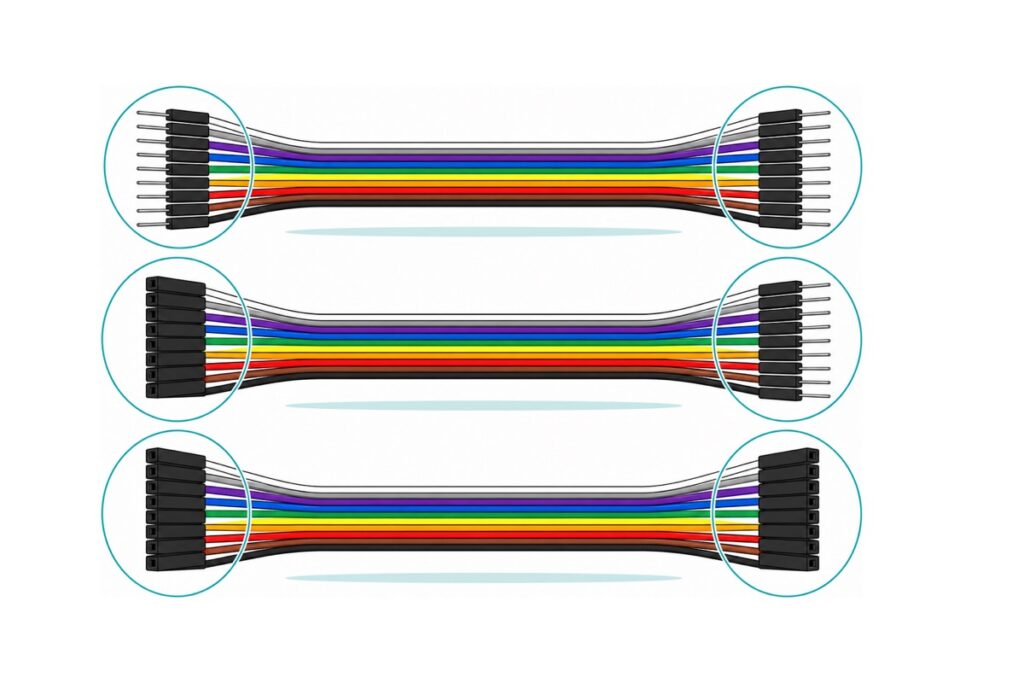
You never choose a jumper wire by preference — you read the two things you are joining and the gender falls out. The gender-chain rule, Dupont vs JST, and a job-to-SKU table.
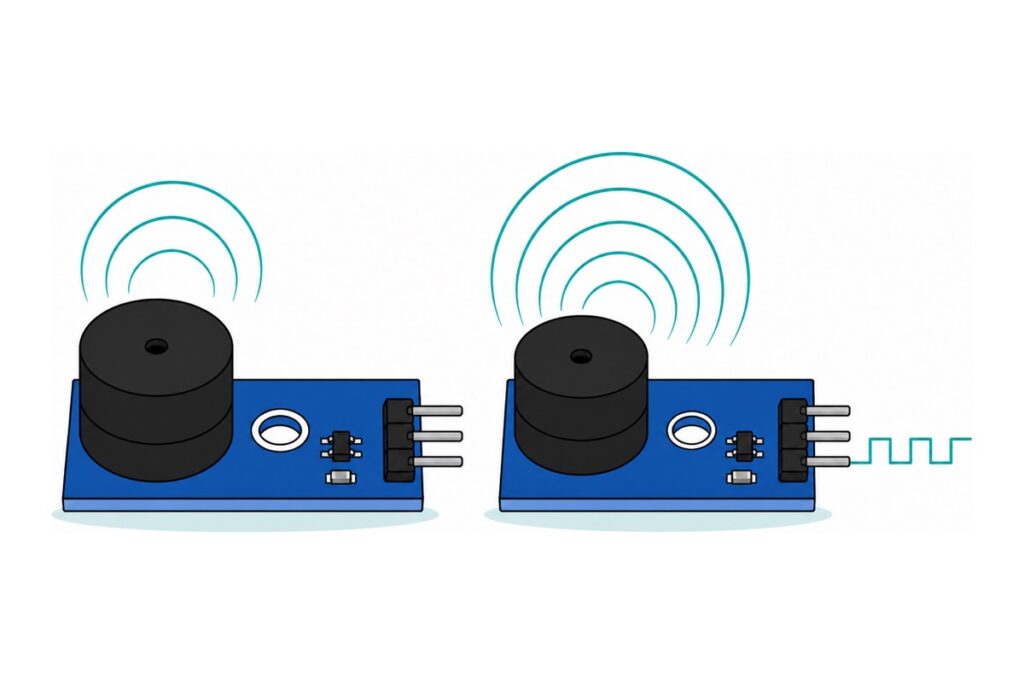
An active buzzer carries its own oscillator and holds one fixed note; a passive buzzer only makes the waveform you feed it. How to tell our lookalike modules apart, why both are silkscreened low-level trigger, how tone() melodies work, and a vibration alarm that only sounds when it should.
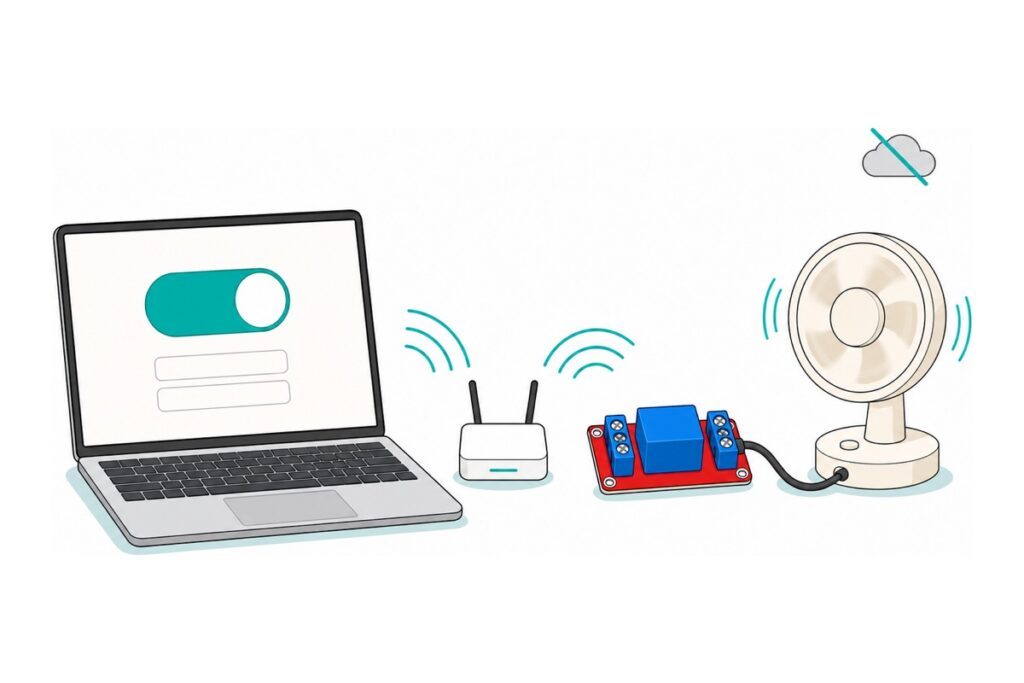
Flash one sketch and the ESP32 serves its own control page: open esp32.local or the board’s IP in any browser on your WiFi and two buttons switch a 5 V relay. No app, no account, no internet — with the full sketch, wiring table, boot-safe GPIO reasoning and an honest WebServer.h vs ESPAsyncWebServer call.
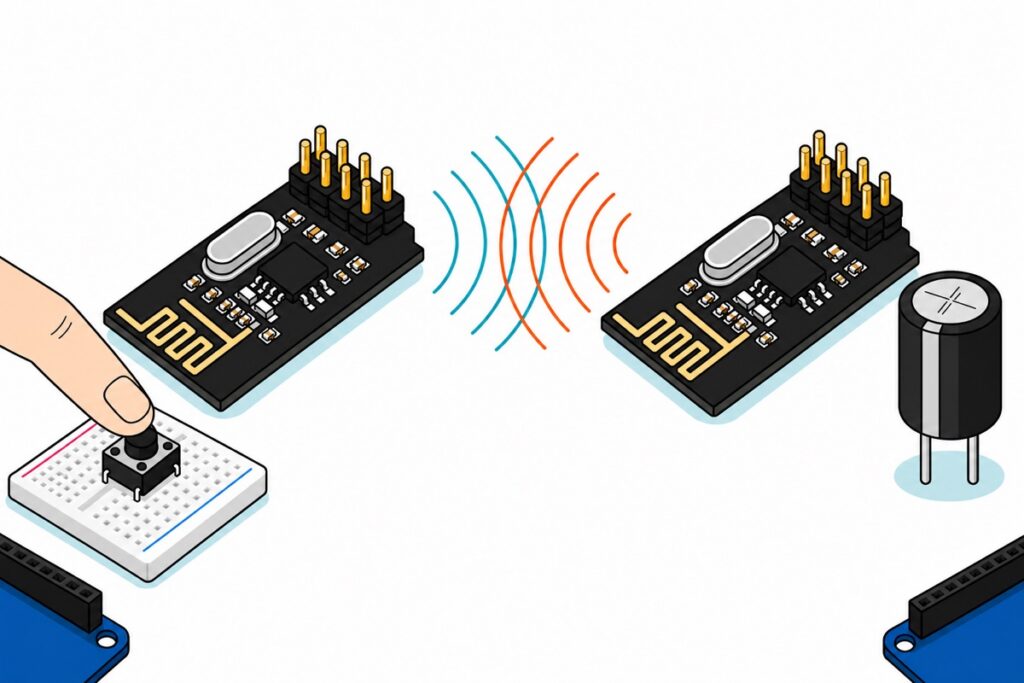
Two Arduinos, two nRF24L01 modules, one button and one capacitor. Working transmitter and receiver sketches, the full wiring table, and the arithmetic behind the 10–100 µF fix that turns a dead link into a reliable one.